
Haruka Nogizaka's Secret
📺Anime Details
📝Editorial Analysis
The fluorescent hum of the school hallway at 3:15 p.m., just after club activities end — Haruka stands perfectly still beside her locker, white uniform crisp, hair catching light like spun silver, while a stray breeze lifts one strand just enough to make her blink. Not a word is spoken. No fanfare. Just that quiet, suspended second where time softens at the edges — and you realize she’s holding her breath, not because she’s nervous, but because she’s waiting for someone to notice the weight of her silence.
That’s the heartbeat of Haruka Nogizaka's Secret: not the maid outfits or the love triangle’s surface friction, but the tremulous hush before feeling breaks through. It’s a world where romance isn’t declared — it’s deferred, rehearsed in glances, buried under layers of otaku-coded irony and ojou-sama poise. The comedy doesn’t land from punchlines; it lands from dissonance — a kuudere reciting anime trivia with surgical precision while her teacup trembles slightly in her hand. The ecchi isn’t leering — it’s awkward, almost apologetic, like a shared secret whispered too loudly in a library. This isn’t about titillation — it’s about the vulnerability of being seen when you’ve spent years curating a persona so polished it feels like armor.
What makes this atmosphere singular is how deeply it trusts stillness. You don’t watch Haruka Nogizaka's Secret to chase plot — you sink into its rhythm of near-misses and unspoken alignments. It makes you feel tenderly aware — aware of how much emotional labor hides behind a polite smile, how much longing lives in the space between two people adjusting their headphones at the same time. It asks you to sit with the ache of almost, not as frustration, but as something sacred — the fragile, shimmering threshold where identity and affection begin to blur.
That resonance echoes unmistakably in Prince of Persia, whose description names it an “all-new epic journey” built on “new lands and a brand new story completely separate” — not continuity, but reinvention. Like Haruka shedding her ojou-sama mask in private moments, the Prince isn’t defined by legacy, but by what he chooses now, in real-time, under shifting sands and collapsing architecture. The player review notes it’s the third reboot — a detail that mirrors the anime’s own layered self-awareness: both works treat narrative not as fixed canon, but as something playfully provisional, where sincerity wears costume and costume reveals sincerity.
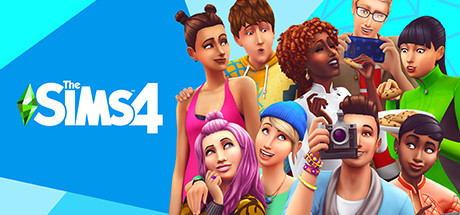
Then there’s The Sims™ 4, described as “Play with life and discover the possibilities”, where you “create a world of Sims that’s wholly unique”. That phrase — wholly unique — lands like a key turning in Haruka’s locker. Her secret isn’t just romantic; it’s ontological: who is she when no one’s watching? TS4 lets players sculpt identity through tiny, accumulative choices — a hairstyle, a career path, the way a Sim pauses before kissing — exactly how Haruka Nogizaka's Secret builds intimacy: not through grand confessions, but through curated minutiae. Even the player review’s complaint — “you can barely do a…” — unintentionally echoes the anime’s tension: the fear that without the right context, the real self remains fragmented, inaccessible.
And Amnesia™: Memories, though its description is sparse, shares the same dimensional axis: romance as reconstruction. Haruka’s secret isn’t hidden to deceive — it’s guarded because memory, identity, and affection are all interwoven threads. When she hesitates before speaking, it’s not coyness — it’s the quiet labor of assembling coherence from fragments. That’s the emotional DNA Amnesia taps: love not as discovery, but as reassembly, tender and uncertain.
Who loves this pairing? The person who rewatches the same three-minute scene five times — not for the joke, but to catch how Haruka’s fingers tighten on her notebook when someone says her name. The player who spends hours arranging a Sim’s bedroom not for gameplay efficiency, but to feel the weight of intention in each placed object. The one who saves before every dialogue choice not out of fear of failure — but because they care, viscerally, about the texture of a single, unguarded moment. They don’t want resolution — they want resonance. And in that shared, suspended breath — between locker and laugh, between save file and sigh — everything matters.
🎮7 Games That Match the Vibe



Match Dimensions Explained
❓Frequently Asked Questions
Why does Haruka Nogizaka's Secret match with Prince of Persia when they seem so different?
Great question—it’s all about shared tonal DNA, not surface-level plot. Both lean hard into romantic tension wrapped in playful, slightly absurd comedy (think Haruka’s secret-keeping vs. the Prince’s flustered banter with Zahra), and both nail that shoujo-adjacent 'will-they-won’t-they' charm amid high-stakes personal stakes. Critics even noted Prince of Persia’s reboot leans into 'Romance & Shoujo' and 'Comedy & Parody'—same dimensions as Haruka—and fans praised its lighthearted chemistry, just like Haruka’s dynamic with the protagonist.
Is there an anime or manga adaptation of Haruka Nogizaka's Secret?
No official anime or manga adaptation exists—Haruka Nogizaka's Secret remains a standalone visual novel. That said, its vibe strongly echoes Amnesia™: Memories (79 score, same Romance & Shoujo + Comedy & Parody dimensions), which *did* get a full anime series and multiple manga adaptations—so if you’re craving that Haruka-style blend of gentle romance, comedic misunderstandings, and emotionally grounded character moments, Amnesia is your closest canonical sibling with expanded media.
How does Haruka Nogizaka's Secret compare to Undertale in terms of romance options?
They’re surprisingly aligned! Both weave romance organically into quirky, fourth-wall-bending narratives—Haruka’s secret-keeping parallels Undertale’s meta-flirting (like Undyne’s 'I’m not flirting... I’m *training*!' energy), and both reward kindness with heartfelt payoff. Undertale scores 76 with identical Romance & Shoujo + Comedy & Parody dimensions, and players consistently highlight how its love routes (especially Alphys or Undyne) balance humor, vulnerability, and genuine emotional weight—just like Haruka’s slow-burn, blush-heavy confession scenes.
What’s the best game like Haruka Nogizaka's Secret if I want something cozy, low-stakes, and full of everyday romantic warmth?
Go straight to The Sims™ 4 (81 score)—especially with the 'Romance' and 'City Living' packs. While it’s sandbox-based, its strength is building those quiet, intimate moments: cooking together, sharing balcony sunsets, or stumbling into accidental confessions after a silly dance-off—exactly the warm, grounded, slice-of-life romance Haruka nails. Player reviews call out how TS4’s unscripted chemistry mirrors Haruka’s charm, and its top-rated dimensions (Romance & Shoujo + Comedy & Parody) confirm the match isn’t just thematic—it’s baked into the design.