
Honey Lemon Soda
In middle school, Uka Ishimori was nicknamed “Stone.”
In order to change herself, she enrolled in Hachimitsu High School, known for its culture of student liberty. Seated in at the desk next to her in the same class is Kai Miura, a coolly freewheeling boy with lemon-colored hair. In truth, Uka met Kai once in middle school, and decided to attend Hachimitsu based on a single word he said to her.To Uka, the popular Kai is a distant presence.
Yet somehow, Kai starts to look after Uka. With Kai encouraging her, Uka gradually begins to fit in with her classmates…
But...Uka’s world is gradually changing with Kai’s presence. —
Now, I am in the center of the endlessly spreading light.
(Source: Crunchyroll)
📺Anime Details
📝Editorial Analysis
The chalk dust hangs in the afternoon light like suspended time—Uka Ishimori’s fingers tremble just slightly as she reaches for her pencil, not to write, but to hold on. She’s sitting at her new desk in Hachimitsu High, spine straight, breath quiet, while Kai Miura leans back in his chair two inches away—lemon hair catching the sun, eyes half-lidded, utterly unbothered. That distance isn’t empty. It’s charged: a single word he once said to her in middle school now hums beneath every silence between them, vibrating like a plucked string no one else can hear.

This isn’t just shoujo romance—it’s rehabilitation as atmosphere. You don’t watch Honey Lemon Soda to see sparks fly; you feel the slow, tender recalibration of a nervous system learning to trust again. The urban school setting isn’t backdrop—it’s breathing space, wide corridors and sunlit stairwells where Uka practices existing without armor. Her kuudere stillness isn’t coldness—it’s the quiet aftermath of bullying, the way a person folds inward until they forget how to unfold. What makes it ache so deeply is how lightly it carries that weight: no grand monologues, no trauma exposition—just Uka noticing, for the first time, that her heartbeat doesn’t spike when Kai says her name. That kind of healing isn’t loud. It’s fragile, warm, unhurried.
That same emotional DNA pulses through Persona 5 Royal—not in its heists or masks, but in the seamless transition between daily life and inner transformation. Like Uka relearning how to sit beside someone without flinching, Joker rebuilds himself hour by hour: attending class, cooking curry, walking home under Tokyo streetlights, choosing who to open up to—not as plot points, but as rituals of softening. The player review nails it: “The seamless transition between daily life…” That’s the rhythm of Honey Lemon Soda too—no cutscene tells you Uka is changing; you feel it in the extra half-second she holds Kai’s gaze before looking down. Both works treat time as sacred scaffolding for growth.
Then there’s Dragon Age: Origins, where legacy isn’t carved in stone but in who you let hold your hand before battle. Its description asks: What will be said about the hero who turned the tide? But the real question—the one that echoes Uka’s arc—is what will be said about the person who finally chose to stay in the room, even when their knees shook? The player review mentions the “pause attack mechanic” helping “strategist your tactic”—and that’s precisely Uka’s journey: learning to pause, to assess safety, to choose response over reflex. Romance here isn’t conquest—it’s consent layered over years of self-erasure, just as Alistair or Morrigan become possible only after the Warden has stopped treating their own heart like hostile territory.
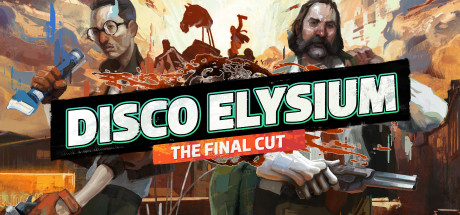
Even Disco Elysium - The Final Cut, with its fractured detective and crumbling city, shares that core vibration: identity as ongoing repair. The review quotes philosophy—but what lands isn’t the theory, it’s the cruel irony of trying to heal while surrounded by systems that profit from your brokenness. Uka’s rehabilitation isn’t against bullies alone—it’s against the quiet internalization that says you are stone because you deserve to be. Like Harry Du Bois parsing his own mind in layers of failed coping mechanisms, Uka’s quietest moments—adjusting her collar, tracing the edge of her notebook—are acts of radical self-reclamation.
This pairing isn’t for people who want catharsis in explosions or declarations. It’s for the ones who recognize healing in the weight of a shared umbrella, the hesitation before a text reply, the way sunlight pools on a classroom floor just long enough to make staying feel safe. It’s for readers who reread the same page three times because the character finally smiled without thinking, and players who pause mid-combat—not to plan damage, but to listen to a companion’s voice crack just once, and know that’s where the story truly begins.
🎮11 Games That Match the Vibe










Match Dimensions Explained
❓Frequently Asked Questions
Why is Persona 5 Royal always recommended for Honey Lemon Soda fans?
Because both nail that warm, character-driven shoujo vibe—think heartfelt confessions under cherry blossoms and slow-burn romance built through daily hangouts. In Persona 5 Royal, you bond with Ann Takamaki over coffee at Leblanc or help Ryuji navigate his insecurities, mirroring Honey Lemon Soda’s tender, emotionally grounded relationships—and its 80-score in Romance & Shoujo confirms that alignment.
Is there a Honey Lemon Soda anime or visual novel adaptation?
No official adaptation exists—but if you're craving that same heartfelt, relationship-first storytelling, Dragon Age: Origins delivers it hard: flirt with Morrigan in the Dalish camp, choose how (or whether) to comfort Alistair after his origin story scene, and shape romances that feel earned, not scripted. Its 80-score in Romance & Shoujo and player praise for emotional weight make it the closest spiritual sibling.
How does Jade Empire compare to Honey Lemon Soda in terms of romance and tone?
Jade Empire leans more into wuxia gravitas and moral duality—choosing 'Open Palm' means healing villagers and building trust with characters like Dawn Star, while 'Closed Fist' brings sharper consequences—but its 80-score in Romance & Shoujo and quiet, intimate moments (like sharing tea with Master Li) echo Honey Lemon Soda’s sincerity. It’s less pastel-sweet, more poetic and grounded, but just as emotionally resonant.
What’s the best game like Honey Lemon Soda if I want something cozy and low-stakes but still full of meaningful connections?
Disco Elysium — The Final Cut might surprise you: yes, it’s set in a rain-soaked noir city, but its romance options (like the gentle, healing arc with Kim Kitsuragi) and deeply human writing—where even your inner thoughts debate kindness vs. cynicism—hit that same emotional authenticity. With a 73-score in Romance & Shoujo and players calling its narrative 'unforgettable,' it’s the coziest existential crisis you’ll ever fall for.