
Kakuriyo -Bed & Breakfast for Spirits-
The series centers on a female college student named Aoi, who inherited the ability to see spirits from her late grandfather. Aoi prides herself on her cooking, and one day she's feeding some agricultural spirits when suddenly a god and the master of the "Tenshinya" (Heavenly Inn) appears and takes Aoi away. He says that due to her grandfather's debts, she must become his bride. Aoi hates this idea and instead declares that she will pay back her grandfather's debt by working at the Tenshinya.
(Source: Anime News Network)
📺Anime Details
📝Editorial Analysis
The steam rises from Aoi’s pot—thick, fragrant, curling like a sigh—as she stirs miso soup for a cluster of shy kamaitachi spirits huddled near the hearth. Their blades gleam faintly, but their postures are soft, expectant. She doesn’t flinch. Her hands move with quiet certainty: chop, simmer, season, serve. No grand spell, no battle cry—just heat, salt, time, and the unspoken covenant that food offered with attention is its own kind of magic. That moment isn’t about saving the world. It’s about holding space—warm, safe, human—in a realm where gods bargain and debts run deeper than blood.
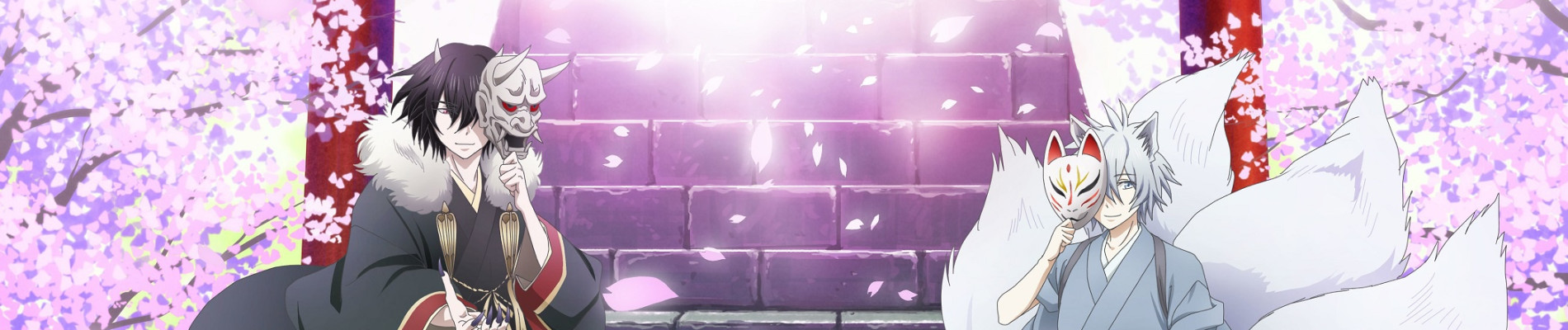
What makes Kakuriyo -Bed & Breakfast for Spirits- breathe is its refusal to rush meaning. It’s not fast, not loud, not even romantic in the way we’re trained to expect—there’s no confession under cherry blossoms, no dramatic kiss in the rain. Instead, it’s the weight of a teacup placed just so for an elderly tengu, the careful mending of a torn yokai kimono, the way Aoi learns to read silence as fluently as speech. It makes you feel tended to. Not fixed, not rescued—but seen, then gently held. You start thinking about how care is labor, how hospitality is architecture, how love grows not in climaxes but in the daily, deliberate act of showing up—present, patient, precise. This isn’t healing as erasure; it’s healing as continuity. As returning, again and again, to the stove.
That same quiet gravity lives in The Sims™ 4, not despite its flaws, but through them—the player review admitting it’s “no fun without DLC” and “full of bugs” accidentally reveals why it resonates: its core loop mirrors Aoi’s. You build a home not for spectacle, but for function—a kitchen where meals are cooked, a bedroom where relationships deepen over shared coffee, a garden where seasons turn without fanfare. Like Aoi balancing ledgers and lentil stew, Sims players “play with life” by choosing what to tend to, day after slow, imperfect day. The frustration in the review isn’t alien to Kakuriyo—it’s the same exhaustion Aoi feels hauling rice sacks at dawn, the same stubborn insistence that this matters anyway.
Then there’s Stardew Valley, where you “inherit your grandfather’s old farm plot” and begin “learning to live off the land.” The player review confesses years spent “constantly running around trying to find the town…”—that frantic early scramble echoes Aoi’s first disoriented days at Tenshinya: overwhelmed, under-resourced, trying to map invisible social rules while chopping daikon. But both settle into rhythm: watering crops becomes ritual; serving a nurarihyon his favorite mochi becomes devotion. Neither story rewards speed—it rewards returning. The 83-scored “Healing & Slow Life” dimension isn’t passive; it’s the courage to choose slowness when the world screams urgency.
Even Prince of Persia, described as “an all-new epic journey” with “new lands and a brand new story,” shares this DNA—not in spectacle, but in its reboot logic. Like Aoi stepping into her grandfather’s debt-laden legacy and refusing the arranged marriage script, the Prince abandons past lore to forge intimacy through grounded choices: who to trust, what memory to honor, which wound to carry forward rather than erase. The review notes it’s “completely separate”—yet that separation is itself an act of care, a refusal to recycle trauma as plot. Both Aoi and the Prince rebuild belonging not by conquering, but by listening: to soil, to spirits, to the quiet hum beneath the myth.
This pairing is for the person who cries when their Sim finally bakes a perfect cake after three failed attempts. For the player who replants the same lavender patch every spring in Stardew because it smells like childhood. For the one who watches Aoi knead dough at 2 a.m., exhausted but smiling, and thinks: Yes—that’s how you hold a world together. Not with power. With presence. With patience. With the fierce, tender belief that every small thing—soup, soil, stitch, sip—matters enough.
🎮9 Games That Match the Vibe







Match Dimensions Explained
❓Frequently Asked Questions
Why is The Sims 4 listed as similar to Kakuriyo when it’s so different?
Great question—it’s not about the fantasy spirits or Japanese inn setting, but the *healing, slow-life rhythm* and deep relationship-building with distinct characters (like Tsukasa or Aoi) that both games nail. In TS4, you can recreate Kakuriyo’s cozy vibe by designing a spirit-themed B&B lot, romancing NPCs with shoujo-style emotional arcs, and focusing on low-stakes daily rituals—exactly what reviewers mean when they call it ‘Healing & Slow Life’.
Is there an anime or game adaptation of Kakuriyo -Bed & Breakfast for Spirits-?
There’s no official game adaptation—but Stardew Valley is the closest *spirit-adjacent* experience fans actually reach for: you befriend townies like Sebastian (brooding, artistic) or Maru (brilliant, kind), unlock their backstories through gifts and dialogue, and even host seasonal festivals that echo Kakuriyo’s warm, communal energy. One player put it perfectly: ‘Spent the first 2 years trying to do everything… days upon days running around’—just like managing guests, meals, and spirit requests at the inn.
Stardew Valley vs. Prince of Persia—which is more like Kakuriyo for someone who loves quiet character moments over action?
Stardew Valley, hands down. While Prince of Persia has gorgeous scenery and a new prince with emotional depth, its core is platforming and combat—not the gentle pacing, cooking mechanics, or spirit-guest interactions that define Kakuriyo. Stardew lets you nurture relationships slowly (like with Robin building your farmhouse or Linus sharing stories in the desert), mirroring how Tsukasa bonds with spirits over tea and trust—not swordplay.
What’s the best game like Kakuriyo if I just want to unwind and feel cozy after a long day?
Stardew Valley is your go-to—it scores 83 in Healing & Slow Life and 83 in Romance & Shoujo, matching Kakuriyo’s soothing cadence. You’ll wake up to soft rain, water crops at dawn, chat with grumpy-but-sweet Lewis at the town hall, and slowly restore the community center—just like restoring the inn’s charm one spirit guest at a time. No timers, no penalties—just warmth, small victories, and that ‘ahh’ feeling after tucking in a tired ghost under a handmade quilt.