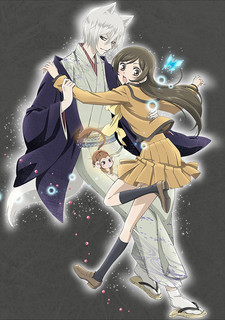
Kamisama Kiss◎ OVA
Four OVA episodes bundled with the 22nd, 23rd, 24th, and 25th volumes of the manga.
The OAD project will adapt the "past arc," which spans from mid-volume 14 to volume 17 in the manga.
📺Anime Details
📝Editorial Analysis
The scent of rain on old tatami, the hush before a shrine bell tolls—not with resonance, but with weight, as if time itself leans in to listen. That’s the first breath of Kamisama Kiss◎ OVA: Nanami, barefoot on sun-warmed wood, watching Tomoe’s tail flick once—slow, deliberate—while the air thickens with something unspoken, not romantic tension alone, but the quiet dread of memory slipping backwards, of love caught between what was and what must be undone.
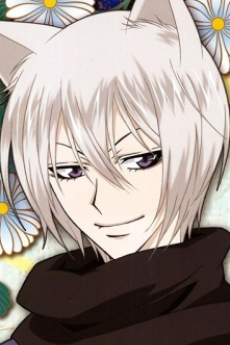



This isn’t just shoujo fantasy—it’s palpable nostalgia with teeth. The OVA adapts the “past arc,” where time manipulation isn’t spectacle but sorrow, and memory manipulation isn’t plot device but wound. You feel it in the way Nanami’s hands tremble not from fear, but from holding two versions of the same man—one who remembers her, one who doesn’t—and how the past isn’t revisited; it’s re-inhabited, with all its unhealed fractures. There’s no grand battle cry, only the ache of a kemonomimi god kneeling in silence, his ears flattened, his voice gone soft as ash. It makes you think about devotion that outlives recognition, about love as continuity—not continuity of feeling, but of choice, repeated across fractured hours.
That emotional DNA pulses strongest in BioShock Infinite. Its description names Booker DeWitt’s debt, Elizabeth’s rescue, and the myst—but the player review cuts deeper: “I know that some people are still bitter about the Bioshock Infinite we could have gotten.” That wistfulness mirrors Nanami’s arc exactly—the grief for a timeline where things could have been simpler, gentler, untethered from divine consequence. Both works treat time not as a river but as a hall of mirrors, each reflection carrying the sting of what love costs when gods and constants collide. The “Time & Memory” dimension isn’t abstract—it’s Elizabeth’s fingers brushing a tear she shouldn’t remember shedding, just as Nanami touches Tomoe’s cheek knowing he’ll forget the warmth of her skin by dawn.
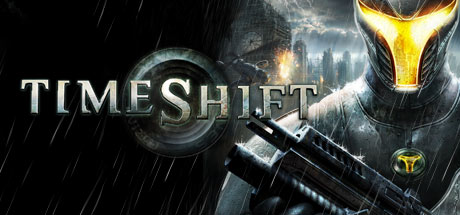
Then there’s TimeShift™, where Dr. Aiden Krone’s reckless Time Jump births a disturbing alternate reality. The anime’s past arc does the same—not with explosions or dystopias, but with subtler dissonance: a shrine gate slightly askew, a familiar streetlamp casting the wrong shadow, Tomoe’s eyes holding a century of loneliness Nanami hasn’t lived yet. The player review calls it “a blast, but it takes a little work to get it into a playable state.” That friction—between desire to engage and the effort required to stabilize perception—is identical to Nanami’s struggle: piecing together fragmented recollections, reconciling mythic scale with intimate vulnerability, making sense of a world where every heartbeat risks erasure. Both demand attention not to mechanics, but to emotional calibration—how much truth can the heart hold before it fractures?
And Prince of Persia: Warrior Within, hunted by Dahaka—an immortal incarnation of Fate itself. The description doesn’t say “love,” but the player review does: “this is my childhood… dahaka chase is still as goated as it was before.” That raw, enduring attachment—to pursuit, to consequence, to the inevitability of return—is Kamisama Kiss◎’s core rhythm. Nanami doesn’t flee Dahaka; she walks toward the echo of Tomoe’s past self, knowing the chase is sacred, not punitive. Her resolve isn’t defiance—it’s recognition. Like the Prince, she learns that escaping time only deepens its grip; healing comes not from outrunning memory, but from standing still long enough to let it speak.
This pairing sings for the viewer who cries at temple bells, who replays a single dialogue exchange three times to catch the tremor in a voice, who keeps a screenshot of a character’s hand resting on a windowsill—not because it’s pretty, but because it holds the exact shade of longing they recognize in themselves. Not fans of romance-as-plot, but lovers of romance-as-continuum: quiet, stubborn, stitched together with threads of memory, time, and the unbearable tenderness of choosing someone—even when the universe has already decided otherwise.
🎮4 Games That Match the Vibe
Match Dimensions Explained
❓Frequently Asked Questions
Why does Prince of Persia: Warrior Within keep coming up in Kamisama Kiss◎ OVA game recommendations?
Because both lean hard into time-manipulation as emotional stakes—not just mechanics. In Warrior Within, the Dahaka’s relentless chases across crumbling timelines mirror how Kamisama Kiss◎ OVA uses fragmented memories and cursed reincarnations to drive its romance and tragedy (like Nanami’s past-life flashbacks during the shrine’s collapse scene). The body horror—Dahaka’s decaying form, the Prince’s own temporal corruption—echoes the OVA’s eerie shrine spirits and visceral possession sequences.
Is there a visual novel or dating sim adaptation of Kamisama Kiss◎ OVA?
No—there’s never been an official visual novel or dating sim based on the Kamisama Kiss◎ OVA specifically. But if you love its slow-burn shrine romance and spirit-world politics, BioShock Infinite’s Elizabeth dynamic hits similar notes: her locked-away power, guarded vulnerability, and the way Booker’s choices reshape their bond across shifting realities (like that heartbreaking lighthouse reveal) feel spiritually aligned with Nanami and Tomoe’s evolving trust.
How does TimeShift™ compare to Prince of Persia: Warrior Within for time-based tension?
TimeShift™ is all about tactical, moment-to-moment time control—freezing enemies mid-swing or rewinding your own death in tight corridors—while Warrior Within turns time into psychological dread: the Dahaka hunts you *because* you messed with fate, and every sandstorm cutscene or bleeding timeline distortion makes you feel hunted by consequence itself. Both score 84 and share ‘Time & Memory’ + ‘Body Horror & Occult’, but Warrior Within leans gothic and personal; TimeShift™ is sleek, sci-fi, and claustrophobic.
What’s the best game like Kamisama Kiss◎ OVA if I want that melancholy, rain-soaked shrine atmosphere with quiet magical intimacy?
BioShock Infinite nails that vibe—even though it’s set in Columbia, its quieter moments (like Elizabeth humming while repairing tears in the sky, or the gentle piano motif during private balcony scenes) channel the same hushed, emotionally charged stillness as Nanami tending the Mikage Shrine at dusk. The ‘Body Horror & Occult’ dimension shows up in Songbird’s twisted angels and the Siphon’s grotesque energy drains—echoing the OVA’s elegant but unsettling spirit manifestations.