
Kemono Friends
The anime's story takes place in Japari Park, a "gigantic integrated zoo." In the zoo, due to the mysterious "sand star" substance, the animals start turning into human-shaped creatures called Animal Girls. Japari Park is a place where many people visit and have fun at, but one day a lost child wanders into the park. The lost child starts a journey to return, but because so many Animal Girls join in on the quest it becomes an unexpected grand adventure.
(Source: Anime News Network)
📺Anime Details
📝Editorial Analysis
The first time Kemono Friends’ protagonist stumbles into the mist-shrouded bamboo grove of Japari Park—her small hand brushing damp ferns, Serval’s voice bubbling up behind her with a question about why fireflies glow only at dusk—the world doesn’t just slow. It softens. Light filters through canopy gaps like warm honey. The wind carries the scent of wet earth and distant plum blossoms. No threat looms. No timer ticks. Just presence: two friends, one park, and the quiet, unspoken weight of being found, not fixed.
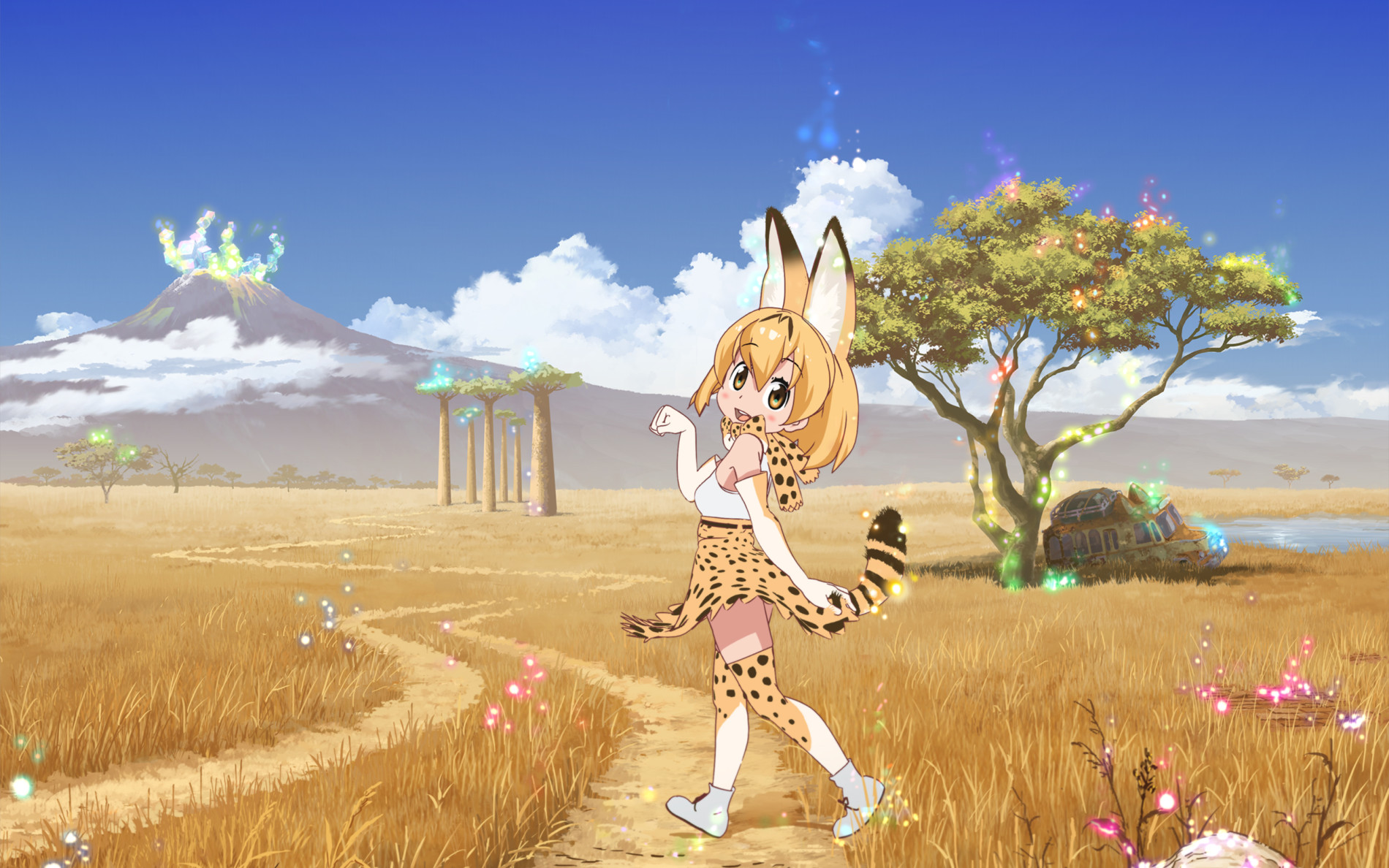
That’s the feeling Kemono Friends holds like breath—tenderness, not tension; wonder, not worry. It’s post-apocalyptic only in backdrop: rusted train cars half-swallowed by vines, silent observation decks draped in ivy—but never decay as despair. The sand star didn’t erase humanity; it folded memory into moss and mist, letting kindness grow wilder than logic. This isn’t iyashikei as passive balm—it’s active reclamation: of space, of safety, of self, one shared berry-picking trip, one clumsy campfire story, one quiet moment watching the sunset from a crumbling watchtower at a time. The all-female cast isn’t a demographic choice—it’s an ecosystem where care circulates freely, without hierarchy or performance. You don’t watch to solve the mystery of the park’s silence—you stay because the silence itself feels held, like a hand resting gently on your shoulder.
Which is why Chains, that deceptively simple match-3 arcade game, hums with the same frequency. Its description calls it “relaxing,” its physics-driven bubbles rolling and settling with unhurried weight—no frantic combos, no punishing speed. A player writes it’s “basically link 3 or more… and clear enough till you can proceed.” That “till you can proceed” is key—not as fast as possible, but when ready. Like Kemono Friends’ journey, progress isn’t measured in milestones but in accumulated calm: the satisfying pop of aligned colors mirroring the soft click of Serval snapping a twig to mark their path, the gentle accumulation of cleared space echoing the way each Animal Girl joins the group—not to advance a plot, but to widen the circle of belonging.
Then there’s Stardew Valley, where you inherit “your grandfather’s old farm plot” and begin “learning to live off the land.” The player review confesses spending “the first 2 years trying to do everything and never having enough time”—a line that lands like a stone in still water. Because that frantic early energy? It’s the exact emotional counterpoint Kemono Friends dissolves. In Stardew, time feels scarce until you stop chasing yield and start noticing how the rain smells different on spring soil, how Leah’s bookstore glows amber at twilight, how the mine’s flickering torchlight makes shadows dance like old friends. That shift—from survival metric to sensory anchor—is the anime’s heartbeat made playable. Both invite you to trade urgency for attunement: to the rhythm of seasons, to the warmth of shared meals, to the quiet pride of watering a single stubborn turnip until it swells, golden and real.
Even The Sims™ 4, flawed and fragmented as players describe—with “packs insanely expensive” and core loops “barely doable without DLC”—still pulses with the same irreducible truth: it’s about creating conditions for small, sustained joy. The description says “Play with life and discover the possibilities. Unleash your imagination…” Not “win,” not “conquer,” but play with life. Like when Kemono Friends’ characters rebuild a broken slide with scavenged pipes and laughter, or when they sit shoulder-to-shoulder on a sun-warmed rock, watching clouds reshape themselves—no objective, no reward, just the profound luxury of being allowed to be. That permission, fragile and fiercely guarded, is what binds them all.
This is for the person who replays the scene where Kaban and Raccoon fold origami cranes under a paper lantern’s glow—not for lore, but because the paper’s crinkle, the shared silence, the way Raccoon’s ears twitch at a passing moth feels like coming home to a place they didn’t know they’d lost. It’s for the player who pauses Stardew’s clock to watch their Sim nap in the orchard, or who spends twenty minutes arranging a single bookshelf in The Sims, or who resets Chains just to watch the bubbles cascade again, slower this time. They don’t seek escape. They seek resonance: the deep, wordless comfort of worlds where care is the compass, slowness is sacred, and every small act of tending—whether to a garden, a friend, or a single glowing bubble—is quietly, powerfully enough.
🎮7 Games That Match the Vibe




Match Dimensions Explained
❓Frequently Asked Questions
Why does Chains keep coming up in Kemono Friends fan forums?
Because both lean hard into soothing, tactile rhythm—Chains’ bubble-linking physics feels like petting a kemono’s fur: gentle, satisfying, and just unpredictable enough to hold your attention. Fans especially love how its slow escalation mirrors the anime’s low-stakes, character-driven pacing—like watching Serval fumble with her phone while you calmly chain three blues to clear a stage.
Is there a Kemono Friends mobile game adaptation?
No official Kemono Friends mobile game exists anymore—the original JP app shut down in 2017, and no global remake has launched. But fans often reach for Chains instead: its bright colors, bite-sized stages, and zero-pressure progression (no timers or energy systems) scratch that same ‘cute animal girls + chill puzzle’ itch without needing lore or voice acting.
How is Stardew Valley different from The Sims 4 for Kemono Friends vibes?
Stardew gives you *community-first* warmth—like befriending Raccoon at the Saloon or gifting Fennec her favorite pepper during Spring — with seasons, festivals, and farm chores that echo the anime’s grounded, seasonal rhythm. The Sims 4, meanwhile, offers wilder customization (you *could* make all your Sims look like Kemono Friends characters), but its broken base game and paywalled social interactions feel less authentically ‘healing’ unless you’ve bought half a dozen packs.
What’s the best Kemono Friends-like game if I just want to relax and not stress about time or failure?
Chains is your best bet—it’s literally designed to be fail-safe: no lives, no timers, no penalties for mistakes, just soft chimes and smooth bubble physics as you link colors. Unlike Stardew’s relentless daily clock or The Sims 4’s buggy autonomy, Chains lets you pause mid-chain, sip tea, and restart a level without guilt—exactly like watching an episode where everyone naps under the cherry blossoms.