
Management of a Novice Alchemist
📺Anime Details
📝Editorial Analysis
The steam rises in slow, quiet spirals from the copper alembic—just enough to catch the late afternoon light slanting through the herb-dusted window. You watch it coil, unspool, settle—not as a sign of transformation, but as proof that something is happening. Not grand magic, not world-shaking revelation—just heat, time, and attention held steady. That’s where Management of a Novice Alchemist lives: in the hush between measurements, the weight of a mortar full of dried lavender, the soft tap-tap-tap of pestle on stone as the protagonist grinds something small, necessary, and entirely hers.
This isn’t fantasy as spectacle—it’s fantasy as maintenance. The emotional core isn’t wonder or awe, but tenderness: for craft, for routine, for the quiet dignity of work done well with care. It makes you feel grounded, not elevated; capable, not chosen; seen, not saved. You think about how much love fits inside a ledger entry, how intimacy blooms not in declarations but in shared inventory checks, in passing a clean cloth without looking up, in noticing when someone’s hands are chapped from handling saltpeter—and quietly leaving a jar of comfrey balm beside their stool. The rural setting isn’t backdrop; it’s breathing rhythm. The economics aren’t abstractions—they’re the cost of rare iron filings, the markup on distilled moonpetal water, the careful arithmetic of turning scarcity into sustainability. And the yuri warmth isn’t coded or deferred—it’s woven into the fabric of daily collaboration, as natural and unremarkable as sunlight on drying herbs.
That same tenderness hums in Stardew Valley, where player reviews confess exhaustion—not from danger, but from caring too much: “Spent the first 2 years trying to do everything and never having enough time.” Exactly. The game mirrors the anime’s gentle pressure—the ache of wanting to nurture every crop, befriend every villager, restore every corner of the valley, all while knowing your energy is finite and your time, precious. Both ask you to reconcile devotion with limitation, to find meaning not in completion, but in continuance. And like the alchemist measuring tinctures at dawn, Stardew’s player runs across fields at 5 a.m., not for glory, but because someone’s waiting for that gift, because that crop needs watering, because the rhythm matters.
The Sims™ 4, despite its fractured player reception (“TS4 has become awful, the packs are insanely expensive and often broken”), still pulses with the same emotional DNA in its base design: “Play with life and discover the possibilities.” It’s not about winning—it’s about arranging, attending, sustaining. A Sim arranging flowers on a windowsill, brewing coffee while humming, holding hands on a park bench at sunset—these aren’t scripted scenes. They’re emergent, fragile, chosen. Like the anime’s all-female apothecary, TS4 invites you to build worlds where care is infrastructure, where romance grows in shared chores and quiet mornings, where “healing & slow life” isn’t a genre tag—it’s the operating system. The frustration in the review isn’t with the vision, but with its erosion—proof of how deeply players crave that space, even when it’s compromised.
Even Prince of Persia, with its “all-new epic journey,” lands here—not in swordplay, but in its listed dimension: Healing & Slow Life. Its return isn’t just spectacle—it’s reclamation of pace, of breath between leaps, of moments where the prince pauses not to strategize, but to feel the wind, to trace a carving on an ancient wall, to choose gentleness over force. That dimension aligns with the anime’s refusal to rush transformation—to let alchemy unfold like yeast in dough, invisible until it lifts.
You’d love this pairing if you’ve ever cried over a perfectly balanced budget sheet, if you keep a notebook of plant care tips, if your idea of romance is two people folding laundry in comfortable silence, if you measure joy in small accumulations: a full shelf of labeled jars, a thriving garden patch, a Sim’s happiness meter climbing one pixel at a time. If your heart swells not at conquest—but at continuity.
🎮7 Games That Match the Vibe





Match Dimensions Explained
❓Frequently Asked Questions
Why is Prince of Persia listed as similar to Management of a Novice Alchemist when it’s an action-adventure game?
Great question—it’s not about combat or platforming! Both lean hard into the 'Healing & Slow Life' and 'Romance & Shoujo' vibes: Prince of Persia’s quiet moments—like tending to Elika’s injuries, sharing whispered lore under starlit ruins, or healing blighted lands with gentle light—mirror the alchemist’s slow, caring rhythm of brewing potions for townsfolk and nurturing relationships. It’s that same tender, emotionally grounded pacing and romantic intimacy (especially in Elika’s bond with the Prince) that fans of Novice Alchemist recognize.
Is there a mobile or anime adaptation of Management of a Novice Alchemist?
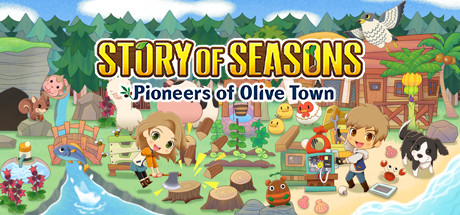
No official mobile game or anime exists yet—but if you’re craving that same cozy, story-driven alchemy vibe on the go, Stardew Valley’s mobile port nails the 'Healing & Slow Life' feel: think watering crops at dawn, gifting honey jam to Sebastian in his basement, or slowly rebuilding the Community Center alongside villagers like Robin and Leah. And STORY OF SEASONS: Pioneers of Olive Town offers even more direct parallels—crafting elixirs, befriending bakers and blacksmiths, and choosing who to court over shared meals and seasonal festivals.
Stardew Valley vs. The Sims 4—which is better for someone who loves the quiet, nurturing alchemy life in Management of a Novice Alchemist?
Stardew Valley wins hands-down for that specific vibe: its daily rhythm—harvesting herbs, upgrading your keg to age elderberry wine, courting Emily while helping her sew dresses—is pure Novice Alchemist energy. The Sims 4 *can* replicate some of it (e.g., brewing potions via mods or using the 'Get to Work' pack), but its base game feels fragmented without expensive DLC—and player reviews confirm it’s 'no fun without dlc, you can barely do a...' anything meaningful. Stardew’s self-contained, intentional slowness is just what your alchemist heart needs.
What’s the best game like Management of a Novice Alchemist if I want something soothing but with deeper romance options?
Go straight to STORY OF SEASONS: Pioneers of Olive Town—it’s built for exactly that: crafting love potions (well, herbal tonics and baked goods), unlocking heartfelt confessions from characters like the shy librarian Marnie or the stoic rancher Tobias, and watching your relationship bloom through seasonal gifts and shared chores. Unlike Baldur’s Gate 3—which leans into 'Dark Fantasy' and high-stakes romance—Olive Town keeps things warm, grounded, and gently magical, matching Novice Alchemist’s healing pace and shoujo-style emotional intimacy.