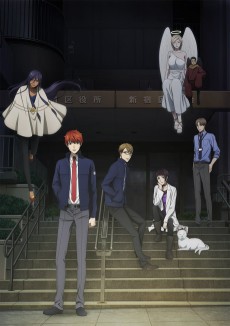
Midnight Occult Civil Servants
📺Anime Details
📝Editorial Analysis
Rain slicks the Tokyo pavement at 2:17 a.m., neon bleeding into oily puddles as Tanaka adjusts his glasses—not to see better, but to breathe—while a minor deity, half-dissolved in bureaucratic paperwork and damp wool, sighs beside him about overtime pay. No grand battle. No dramatic reveal. Just two men standing under a flickering streetlamp, one human, one not-quite-human, both exhausted, both present, both quietly holding space for something ancient inside something utterly mundane.
That’s the heart of Midnight Occult Civil Servants: not spectacle, but weight. The feeling isn’t awe—it’s resonance. Not dread—but recognition. It makes you feel the quiet hum of myth lodged in subway tunnels, the soft ache of gods filing expense reports, the profound loneliness of beings who remember mountains before cities—and yet show up, on time, with receipts. It’s urban fantasy not as escape, but as translation: mythology rendered in commuter rail schedules, divine hierarchy mapped onto civil service ranks, spiritual exhaustion worn like a slightly-too-tight suit jacket. You don’t enter its world—you commute through it. And that commute is tender, weary, stubbornly kind.
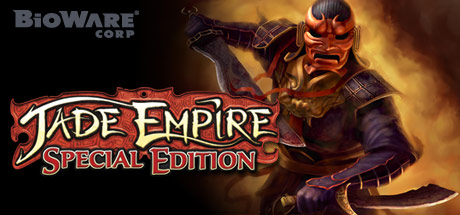
Jade Empire™: Special Edition shares that same grounded reverence. Its description asks you to “step into the role of an aspiring martial-arts master and follow the path of the open palm or the closed fist”—not as mythic hero, but as student, apprentice, civil servant of balance. Like Tanaka parsing celestial bylaws, the player navigates philosophy as procedure, ethics as daily practice. And the player review hints at something deeper than mechanics: the need to troubleshoot, to patch, to make the system work—even when it resists. That’s the emotional DNA: devotion to form, even when the form feels fragile, even when you’re copying steam.dll just to keep the sacred machinery running.
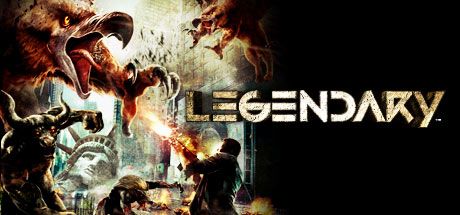
Legendary pulses with matching dissonance. Its description drops you into a world where “all creatures of ancient myth… have been sealed away for thousands of years inside Pandora’s Box, waiting…”—but then immediately anchors them in a heist. A thief named Deckard. A job. A fee. The myth isn’t distant—it’s contracted. Just like the minor deities in Midnight Occult Civil Servants, these beings aren’t looming threats; they’re liabilities, assets, logistical headaches. And the player review nails the texture: “The animations in this game are incredible… Better than most games of the more modern era. It definitely has some ‘jank’…” That jank—the glitch, the friction, the imperfect interface between divine power and human tools—isn’t a flaw. It’s the point. It’s the rain-slicked pavement. It’s the god squinting at Excel.
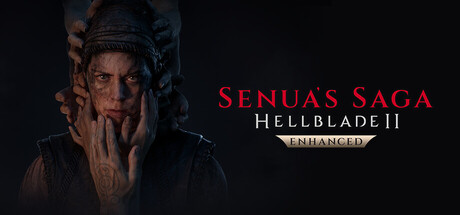
Hellblade II: Senua’s Saga doesn’t share setting or tone—but it shares interiority. Its dimension tag pairs “Mythology & Folklore” with “Body Horror & Occult,” which sounds violent, but the resonance lies in how both works treat belief as physiology. In Midnight Occult Civil Servants, faith isn’t abstract—it’s what keeps a shrine’s wards from fraying, what lets a bureaucrat negotiate with a hungry kami over lunch breaks. In Hellblade II, myth isn’t metaphor—it’s neural pathway, sensory reality, the very architecture of perception. Both refuse to separate the sacred from the somatic. Both understand that when gods walk among us, they don’t just appear—they settle in your joints, hum in your molars, rearrange your breath. That’s not spectacle. That’s presence.
This pairing isn’t for fans of “cool monsters” or “epic quests.” It’s for the person who pauses mid-walk when a crow lands too still on a power line—not because it’s ominous, but because it feels like a footnote. For the reader who highlights bureaucratic dialogue in fantasy novels, not battle scenes. For the player who replays the inventory screen in Assassin’s Creed® Odyssey, not for loot, but for the way the Greek god’s name glows faintly beside a broken amphora—melancholic exploration, yes, but also tender archaeology. These works speak to those who know that the most profound magic isn’t in summoning storms—but in remembering, precisely, how many stamps go on a spirit’s relocation form. Who find holiness in the click of a pen signing off on a minor exorcism. Who feel relief, not thrill, when the lights come back on—and the god beside you nods, satisfied, and reaches for his thermos.
🎮7 Games That Match the Vibe
Match Dimensions Explained
❓Frequently Asked Questions
Why does Jade Empire feel like Midnight Occult Civil Servants despite being set in ancient China?
Both lean hard into mythic bureaucracy—Jade Empire’s Celestial Bureaucracy mirrors MOCS’s Ministry of Occult Affairs, with quests involving spirit petitions, karmic audits, and morally grey choices between ‘Open Palm’ (compassion) and ‘Closed Fist’ (order), just like choosing between bureaucratic pragmatism and occult idealism in MOCS. Plus, the romance options in Jade Empire—like the enigmatic Master Li—carry that same shoujo-tinged emotional weight as MOCS’s character-driven bonds.
Is there an anime or manga adaptation of Midnight Occult Civil Servants that’s worth watching?
No official anime or manga adaptation exists yet—but if you love MOCS’s vibe, Legendary nails the *spirit* of it: Deckard’s morally ambiguous heist into Pandora’s Box feels like a gritty, body-horror-infused cousin to MOCS’s Ministry raids, especially during the visceral ‘Seal Breaker’ sequences where ancient entities warp flesh mid-conversation—very much like MOCS’s cursed artifact containment scenes.
How does Hellblade II compare to Assassin’s Creed Odyssey for MOCS fans who want mythology without open-world bloat?
Hellblade II is way tighter: Senua’s hallucinatory journey through Norse myth—complete with whispering spirits, ritualistic combat, and gut-punch moments like the ‘Sacrifice at Yggdrasil’s Root’—mirrors MOCS’s intimate, psychological dread far better than Odyssey’s sprawling Greek sandbox. Odyssey gives you 100+ hours of mythic tourism; Hellblade II gives you 12 intense, folklore-drenched hours where every frame feels like a MOCS episode storyboarded by a traumatized civil servant.
What’s the best game like Midnight Occult Civil Servants if I want that melancholic, rain-soaked Tokyo vibe with quiet supernatural dread?
Assassin’s Creed Odyssey’s ‘Melancholic Exploration’ dimension hits surprisingly close—especially the mist-shrouded ruins of Delphi or the abandoned temple of Asclepius, where you’re alone with crumbling statues and whispered prophecies, echoing MOCS’s late-night Ministry hallways and quiet train-platform exorcisms. It’s not Tokyo, but the mood? That same heavy, beautiful sadness—like staring at rain on glass while your spirit guide sighs in your ear.