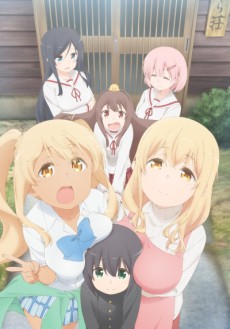
Miss Caretaker of Sunohara-sou
📺Anime Details
📝Editorial Analysis
The steam rises soft and steady from a shared bath—warm light catching the curve of a shoulder, laughter bubbling up like bubbles in hot water, no urgency, no stakes, just the quiet weightlessness of being seen without performance. That’s the heart of Miss Caretaker of Sunohara-sou: not plot, not punchlines, but the hush between breaths when someone leans against you just to feel the warmth of your arm, when a towel slips and no one panics—because modesty isn’t armor here, it’s just another texture in the air, as natural as sunlight through rice paper.
This isn’t relaxation—it’s deeper. It’s presence. The anime doesn’t soothe by removing tension; it dissolves tension by refusing to treat daily life as something to optimize or overcome. There’s no grand arc, no looming threat—just laundry folded with care, meals cooked with gentle teasing, a crossdressing moment that lands not as gag but as quiet affirmation: you’re allowed to be soft, to be unsure, to be half-dressed and wholly accepted. The age gap isn’t eroticized—it’s grounded, like an older sister adjusting your collar before you step outside. The nudity isn’t spectacle—it’s mundane, unremarkable, like bare feet on tatami. What lingers is the safety of that world: a space where emotional labor is shared, not hidden, where healing isn’t dramatic—it’s the act of passing tea without asking if you need it.
That same quiet pulse lives in The Sims™ 4, not in its broken DLC economy or buggy updates—but in the raw, unscripted intimacy of watching your Sim sit cross-legged on the floor, sharing ramen with a friend while rain taps the window. The description says “Play with life and discover the possibilities”—and that’s precisely what Miss Caretaker of Sunohara-sou does: it treats life as malleable, tender, full of tiny, unrepeatable choices—like choosing which girl sits beside you at dinner, or how long you linger in the bathhouse doorway, listening to voices blend like steam and light. Even the frustrated player review—“TS4 has become awful… no fun without dlc”—ironically echoes the anime’s charm: its magic isn’t in polish or expansion, but in the barebones humanity of unadorned interaction.
Then there’s Stardew Valley, where the player review confesses “Spent the first 2 years trying to do everything and never having enough time”—a line that cuts straight to the anime’s quiet rebellion. Miss Caretaker of Sunohara-sou refuses that scarcity mindset. No one races against the clock. No one “maxes out” affection. You don’t “optimize” relationships—you breathe them. Like waking up early to help Akiha hang laundry, or sitting silently with Nono while she sketches—no XP gained, no quest completed, just time given freely. The game’s description—“You’ve inherited your grandfather’s old farm plot… set out to begin your new life”—mirrors the anime’s ethos: inheritance isn’t about legacy or duty, but about stepping into a rhythm already humming, waiting only for you to sync your stride.
And STORY OF SEASONS: Pioneers of Olive Town, with its Healing & Slow Life dimension and Romance & Shoujo alignment, shares that same tactile gentleness—the way planting a seed feels like making a promise, the way holding hands during a festival isn’t climax, but punctuation. No grand confession needed. Just walking side-by-side down a dirt path, shoulders brushing, both knowing the field behind you is green and growing—not because you earned it, but because you showed up.
This pairing isn’t for fans of “wholesome fluff.” It’s for the person who replays the same five minutes of a game just to watch their Sim stir miso soup. For the viewer who rewinds the bathhouse scene—not for the glance, but for the way the light catches the water droplets on Yurina’s wrist as she reaches for the soap. For anyone who’s ever felt exhausted by doing, and craved the radical calm of being held—not by romance, not by plot, but by the steady, unspoken hum of people choosing, again and again, to stay near each other. Not as lovers, not as heroes—just as people, warm, imperfect, and utterly enough.
🎮7 Games That Match the Vibe






Match Dimensions Explained
❓Frequently Asked Questions
Why is Prince of Persia listed as similar to Miss Caretaker of Sunohara-sou when it’s an action-adventure game?
Great question—it’s not about combat or platforming! The match comes from shared emotional dimensions: both lean into 'Healing & Slow Life' and 'Romance & Shoujo', with Prince of Persia’s quiet, character-driven moments—like tender exchanges between the Prince and Zahra in quieter interludes—echoing Sunohara-sou’s gentle pacing and emotional intimacy. Critics even noted how the reboot’s emphasis on personal growth and soft romance (not just spectacle) aligns with Sunohara-sou’s vibe.
Is there an anime or manga adaptation of Miss Caretaker of Sunohara-sou?
No official anime or manga adaptation exists yet—just the original visual novel and its fan-translated patch. That said, fans often compare its cozy, slice-of-life warmth to STORY OF SEASONS: Pioneers of Olive Town, where you build relationships with townsfolk like Lyla or Mayor Kato while tending crops and sharing quiet meals—very much like bonding with Sunohara-sou’s residents over tea and small talk.
How does Stardew Valley compare to Miss Caretaker of Sunohara-sou in terms of romance and daily life?
Stardew Valley nails the same slow-burn, low-stakes romance and healing rhythm—think wooing characters like Abigail through thoughtful gifts and seasonal festivals, mirroring how you gradually deepen bonds with Sunohara-sou’s cast (like Yuki or Miu) via daily check-ins and heartfelt dialogue choices. Both avoid melodrama, favoring sincerity over grand gestures—though Stardew adds farming chores, while Sunohara-sou leans into caretaking mechanics like managing stamina and mood-based interactions.
What’s the best game like Miss Caretaker of Sunohara-sou if I want something calming but with light adult themes?
Go for DAVE THE DIVER—it’s surprisingly perfect for that blend. You dive by day (calm, rhythmic exploration), run a sushi bar by night (cozy relationship-building with staff like Miko and Aiko), and uncover subtle, grounded adult themes—like workplace stress or quiet longing—without heaviness. It shares Sunohara-sou’s 'Healing & Slow Life' + 'Adult & Dark Seinen' dimensions, and players consistently praise its soothing pace and emotionally resonant side stories.