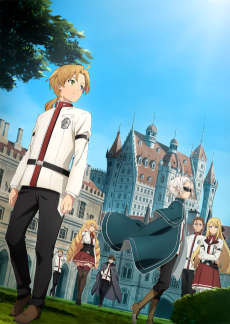
Mushoku Tensei: Jobless Reincarnation Season 2
After his relationship with Eris Boreas Greyrat reaches new heights, Rudeus Greyrat is ecstatic. Unfortunately, his joy is short-lived, as Eris suddenly abandons him to embark on her own journey. Believing that Eris has lost all interest in him, a heartbroken and depressed Rudeus sets forth to the Northern Territories. With his sole goal being to locate his mother on the vast continent, Rudeus wonders if persisting through daily life is worth the pain, falling into a robotic routine as he endlessly ruminates on his lost love.
However, the dangers of the North soon prove that one cannot survive with a dulled mind. While on a quest with the party Counter Arrow, with whom he recently became acquainted, Rudeus has a brush with death—an experience that forces him to finally snap out of his despair. With his newfound teammates, Rudeus rediscovers the pleasure of daily adventuring and moves forward with his original goal of living his second lease on life to the fullest.
(Source: MAL Rewrite)
Note: Includes episode 0, Shugo Jutsushi Fitz.
📺Anime Details
📝Editorial Analysis
The silence after Eris leaves. Not the dramatic slam of a door or the sting of a shouted goodbye—just the hollow echo of footsteps fading down the stone path, then nothing. Rudeus stands frozen, fingers still curled around the edge of the gatepost, the morning light too bright, too indifferent. His breath hitches—not in sobs, but in that quiet, suffocating stop where your chest forgets how to rise. That moment isn’t about betrayal. It’s about the sudden, brutal weight of continuing—when every step forward feels like dragging yourself across broken glass just to prove you haven’t fully unraveled.
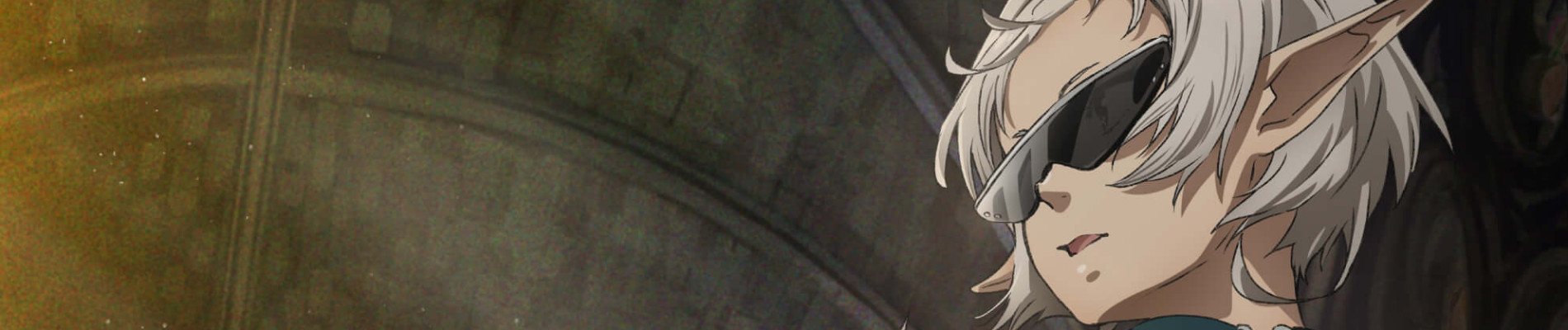
What makes Mushoku Tensei: Jobless Reincarnation Season 2 ache so deeply isn’t its isekai premise or its magic system—it’s how it treats time as both wound and witness. The Northern Territories aren’t just a setting; they’re a slow, grinding immersion into absence. Rudeus doesn’t rage. He doesn’t plot revenge or chase glory. He walks. He eats. He casts spells on autopilot. His grief isn’t theatrical—it’s textural: the stiffness in his shoulders during training, the way he blinks too slowly when someone mentions her name, the way his journal entries shrink from paragraphs to single lines: “Saw three gryphons. One had a broken wing.” This isn’t despair as spectacle. It’s despair as routine—and that’s what makes it real. You don’t just watch him heal. You feel the exhaustion of holding space for someone who’s gone, while the world insists on turning.
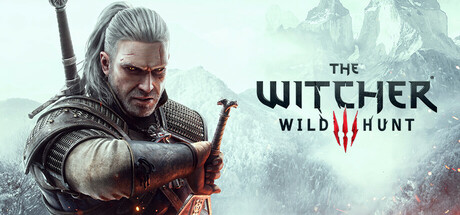
That same emotional gravity lives in The Witcher 3: Wild Hunt, where Geralt’s entire journey is stitched together by loss—Ciri slipping through his fingers, Yennefer vanishing into mist, Vesemir’s final stand echoing long after the cutscene ends. The description calls it a “war-torn, monster-infested continent you can explore at will”—but what lingers isn’t the monsters. It’s the quiet campfires where Geralt stares into the flames, not speaking, just holding the weight of what he’s failed to protect. A player review nails it: “DLC announced 11 years after release, my favourite game keeps getting better…”—because the longing doesn’t fade. It deepens. Like Rudeus walking north, Geralt walks toward Ciri not just to find her, but to keep believing she’s worth finding—even when every road bends toward tragedy.
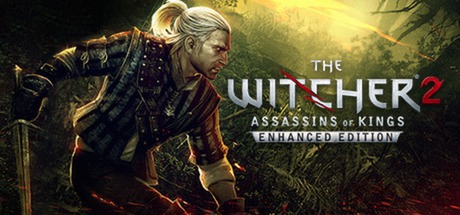
Then there’s The Witcher 2: Assassins of Kings Enhanced Edition, where the description says: “A time of untold chaos has come. Mighty forces clash behind the scenes… armies on the march are not enough to stop a b—” (the sentence cuts off, raw and unresolved). That fragmentation mirrors Rudeus’s own narrative rupture—how one decision (Eris leaving) fractures everything that came before. The player review calls it “more thoughtfully designed than the next entry”, and it’s true: The Witcher 2 refuses catharsis. Choices lock doors forever. Allies die mid-sentence. There’s no reset button, no second chance to say the right thing—just the echo of consequences, heavy and irreversible. Rudeus doesn’t get a montage of growth. He gets snow, silence, and the slow, stubborn return of his own voice—first in whispers, then in spells, then, finally, in questions he dares to ask aloud again.
Even Dragon Age: Origins, with its description framing the Fifth Blight as history waiting to be written, shares this DNA. It’s not about being a hero—it’s about being haunted by the cost of survival. The player review mentions “pause attack mechanic… help a lot to strategist your tactic…”, but what sticks is the exhaustion behind those pauses: the breath held before choosing who lives, who dies, who you’ll have to bury alone. Like Rudeus staring at his mother’s old locket, unsure if finding her will mend anything—or just open a deeper wound.
These pairings belong to people who don’t flinch at quiet sorrow—who’ve ever walked home in rain without an umbrella, just to feel something real; who replay a dialogue tree not for the optimal outcome, but to hear that one line again, soft and unguarded; who understand that healing isn’t a destination, but the fragile, daily choice to keep breathing in a world that keeps asking you to carry more than you thought you could. They’re for those who know the most devastating moments aren’t loud—they’re the ones where the world stays perfectly, mercifully silent… and you realize you’re still here.
🎮7 Games That Match the Vibe

Match Dimensions Explained
❓Frequently Asked Questions
Why does The Witcher 3 keep coming up when I search for games like Mushoku Tensei Season 2?
Because both dive deep into emotional growth through reincarnation-adjacent arcs — Geralt’s quest to find Ciri mirrors Rudeus’ journey of redemption and found family, especially in emotionally raw scenes like the Bloody Baron’s tragedy or the Skellige burial grounds. Its dark fantasy world, layered moral choices, and slow-burn character intimacy (like Yennefer’s complex arc) hit the same narrative weight as Season 2’s quieter, more introspective moments.
Is there a Mushoku Tensei game adaptation I can play right now?
No — there’s no official Mushoku Tensei video game adaptation yet (not even a mobile RPG or visual novel). But fans looking for that same blend of emotional narrative and dark fantasy often land on The Witcher series: all three main entries (Witcher 1 EE, Witcher 2 EE, and Witcher 3) share Mushoku Tensei’s focus on flawed, evolving protagonists navigating morally grey worlds — think Geralt’s paternal devotion to Ciri echoing Rudeus’ protectiveness toward Norn.
Dragon Age: Origins vs. The Witcher 2 — which feels more like Mushoku Tensei Season 2’s tone?
The Witcher 2 edges it out — its tightly wound political intrigue, grounded consequences (like the pivotal Chapter II assassination choice), and emphasis on Geralt’s personal stakes (family, identity, loyalty) mirror Season 2’s mature pacing and emotional restraint. Dragon Age: Origins has great worldbuilding and pause-tactic depth, but its broader heroic fantasy scope and party-driven structure lacks Witcher 2’s intimate, cause-and-effect gravity — like how Rudeus’ quiet decisions in Laplace’s lab reverberate across seasons.
What’s the best game like Mushoku Tensei Season 2 if I want that melancholy, reflective vibe after the big battles?
The Witcher 3 is your top pick — especially during quiet moments like Geralt sitting by the fire with Ciri at the end of Chapter III, or wandering the fog-draped coast of Skellige while reflecting on loss and legacy. Its score (74), emotional narrative depth, and dark fantasy atmosphere match Season 2’s balance of action and stillness — plus player reviews praise how it keeps evolving, just like Mushoku Tensei’s layered character arcs.