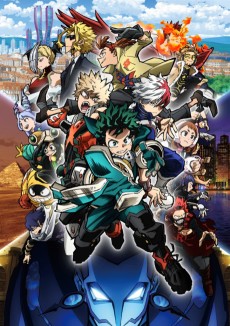
My Hero Academia: World Heroes' Mission
The third installment in the Boku no Hero Academia movie franchise.
When a sinister organization threatens to wipe out all superhuman powers, the fate of the world is on the line. With two hours until the collapse of civilization, Deku, Bakugo, and Todoroki manage to work as a team, but there’s still one problem. Deku’s on the run for murder.
(Source: Funimation)
📺Anime Details
📝Editorial Analysis
Rain slicks the neon-drenched streets of a nameless European city—cold, electric, urgent. Deku’s breath hitches as he ducks into a crumbling subway tunnel, blood smearing his knuckles, Bakugo’s voice crackling over a stolen comm unit: “They framed you. But we’re still here.” Todoroki’s ice seals the tunnel mouth behind them—not as a barrier, but as a vow. Two hours until global annihilation. One murder charge pinned on the boy who’s spent his life trying not to break anything. That’s not just stakes—it’s weight: the kind that settles in your molars, tightens your shoulders, makes every alleyway feel like both sanctuary and trap.
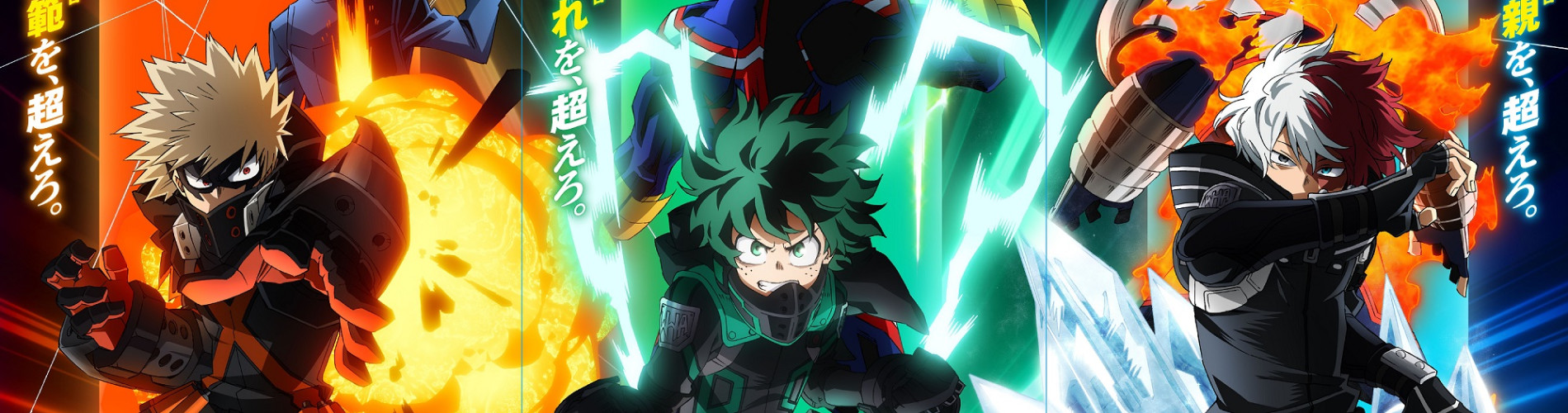
This isn’t just superhero action—it’s claustrophobic idealism. The film doesn’t breathe wide; it pulses in tight corridors, flickering surveillance feeds, whispered alliances between fugitives who’ve never fully trusted each other. There’s no triumphant skyline shot—just rain-streaked glass reflecting fractured faces, the hum of a dying power grid, the low thrum of a conspiracy too vast for any one hero to name. It makes you feel cornered, yes—but also awake, hyper-aware of how fragile trust is when institutions collapse and your own identity becomes evidence. It asks: What do you protect when the law stops protecting you? Not power. Not glory. Each other.
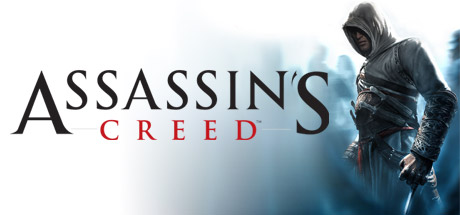
Assassin's Creed™: Director's Cut Edition shares that same bone-deep tension—the political thriller dimension isn’t about speeches or treaties, but about running across rooftops while hunted by faceless enforcers who quote doctrine like scripture. The player review admits the models are dated, but no issues with me—because what sticks isn’t fidelity, it’s the feeling of being perpetually watched, of decoding lies buried in architecture and scripture. Like Deku parsing encrypted broadcast signals in a bombed-out radio station, Altaïr deciphers ideology through stone carvings and intercepted letters. Both demand you read the world as text, not scenery.
Vampire: The Masquerade - Bloodlines, with its neon noir and dark fantasy dimensions, mirrors the film’s moral bleed. Here, you don’t just fight cultists—you inhabit their rhetoric, hear their sermons echo in club basements and abandoned cathedrals. The player review insists on buying it on GOG because stability matters—just like Deku stabilizing his Quirk mid-fall, mid-truth, mid-betrayal. The game’s RPG core isn’t about leveling up—it’s about choosing which lie to uphold tonight so tomorrow’s sunrise doesn’t burn you alive. That’s the same exhaustion in Todoroki’s silence when he shields Deku from gunfire—not out of certainty, but commitment.
And Act of War: Direct Action, with its tactical warfare and political thriller DNA, lands where the anime’s espionage hits hardest: in the command center’s fluorescent glare, where maps blink red and voices cut in and out. The player review calls the dialogue dumb and a bit cringe—but then adds it’s like C&C 3, meaning it trades subtlety for visceral, grounded urgency. Same with the film’s underground bunker scenes: no monologues, just clipped radio chatter, blinking countdowns, and Bakugo slamming his fist on a console—not for show, but because waiting feels like surrender. The war isn’t futuristic. It’s logistical. It’s human. It’s now.
This pairing sings for the viewer who rewatches Deku’s quiet moment in the rain—not because he wins, but because he chooses the next step anyway. For the player who boots up Thief: Deadly Shadows not for loot, but for the way Garrett’s footsteps echo differently on wet cobblestone versus dry marble—because texture is truth. For the one who edits config files to keep Alice: Madness Returns running, not for polish, but because that grim Victorian London matters—not as setting, but as psychological weather. These aren’t stories about saving the world. They’re about holding onto your voice when every system tells you to be silent—and finding, in the cracks between panic and purpose, something unbreakable.
🎮6 Games That Match the Vibe

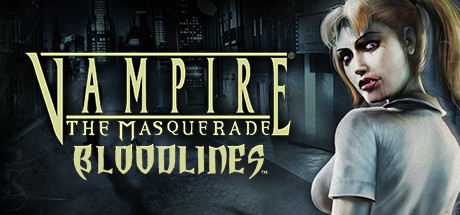
Match Dimensions Explained
❓Frequently Asked Questions
Why does Assassin's Creed feel like a My Hero Academia political thriller despite being set in ancient times?
Because both lean hard into morally gray conspiracies, public heroism vs. hidden agendas, and high-stakes ideological clashes—like when Altair dismantles the Hashashin order’s hypocrisy, mirroring how UA students grapple with systemic corruption in the Hero Commission. The neon-noir lighting in Damascus bazaars and dark-fantasy undertones of the Animus glitches also echo the show’s stylized tension between idealism and decay.
Is there a My Hero Academia game adaptation that actually captures the World Heroes' Mission movie's global scale and team-up energy?
No official MHA game adapts *World Heroes' Mission* directly—but *Act of War: Direct Action* nails that exact vibe: real-time tactical squad coordination across international hotspots (like Jakarta and Geneva), cutscenes dripping with geopolitical urgency, and voice acting that leans into the same earnest, slightly over-the-top intensity as the film’s ensemble scenes with Izuku, Rody, and Melissa.
How does Vampire: The Masquerade – Bloodlines compare to Alice: Madness Returns for someone who loves My Hero Academia’s psychological depth and surreal action?
Both dive deep into fractured psyches and warped realities—but *Bloodlines* gives you gritty, dialogue-driven moral choices as a fledgling vampire navigating L.A.’s neon-noir underworld (think Midnight’s manipulative charisma meets All Might’s legacy pressure), while *Alice* swaps social stealth for hallucinatory platforming in Wonderland’s decaying logic—closer to Eri’s time-rewind trauma made visual. Neither has quirks, but both weaponize tone like MHA does with its heroics.
What’s the best game like My Hero Academia: World Heroes’ Mission if I want that urgent, globe-trotting ‘save-the-world-before-sunrise’ adrenaline rush?
Go straight to *Act of War: Direct Action*—it’s built on that exact ticking-clock pulse: rapid-response squads, intel drops mid-mission, and cinematic set pieces like storming a hijacked cargo plane over the Mediterranean. The political-thriller dimension mirrors the film’s stakes (terrorist bioweapon → villainous conspiracy), and the ‘real-time strategy + FPS hybrid’ combat keeps your heart racing like Izuku sprinting through the collapsing stadium in the third act.