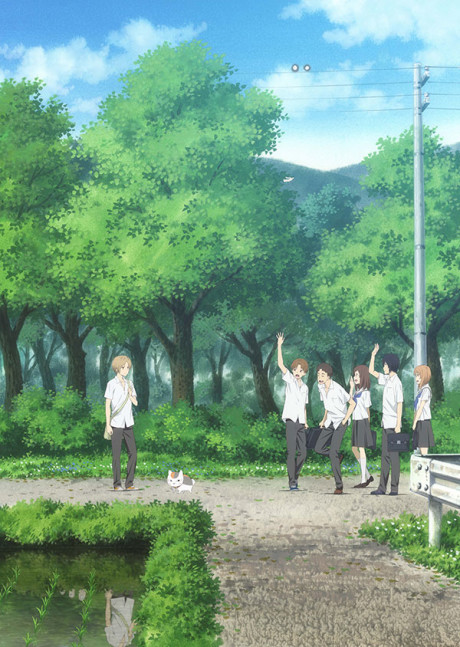
Natsume's Book of Friends Season 6
The sixth season of Natsume Yuujinchou.
📺Anime Details
📝Editorial Analysis
A late afternoon in the countryside, sunlight thin and golden as honey poured over warm rice paper. Natsume sits on the porch steps, bare feet brushing cool earth, holding the Book of Friends open—not to read a name, but just to feel its weight, its quiet hum. A stray youkai, small and translucent as breath on glass, lingers at the garden gate, watching him without speaking. Neither moves. Neither needs to. The wind stirs the maple leaves. Time doesn’t pause—it settles, like dust in sunbeams.
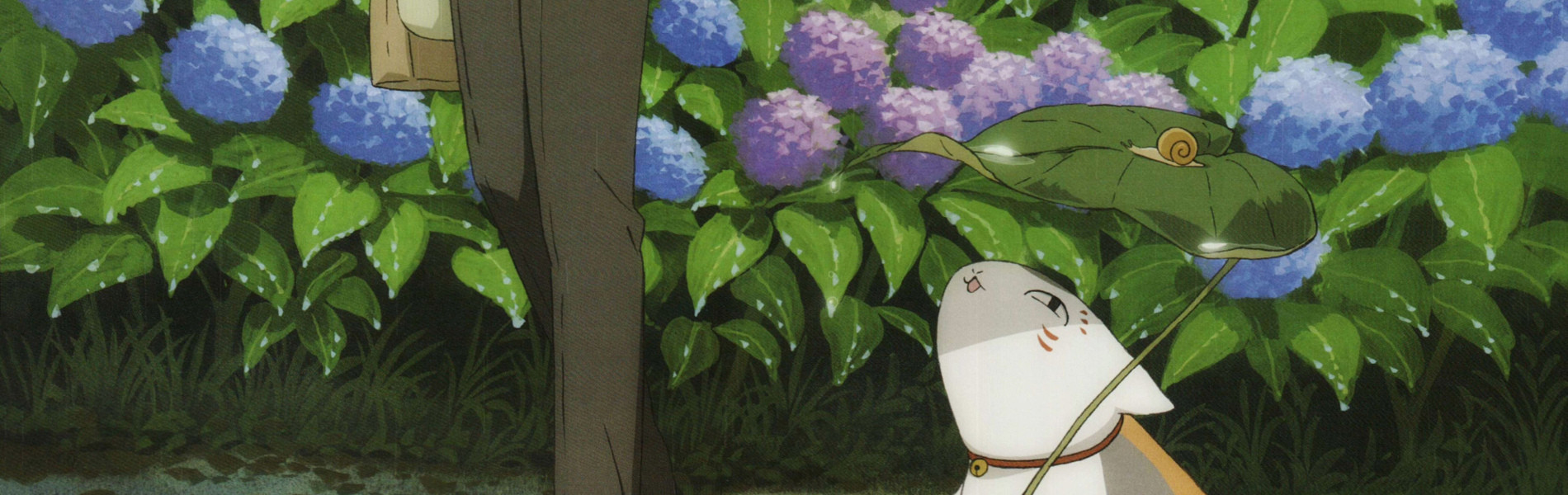
That’s the feeling: not peace as absence, but presence—of memory, of quiet consequence, of bonds too tender to name and too deep to sever. Natsume's Book of Friends Season 6 doesn’t chase catharsis; it tends to it, like watering a bonsai. Its fantasy isn’t about power or conquest, but recognition: seeing a youkai not as monster or myth, but as someone who once stood where you stand—lonely, longing, half-forgotten. The rural setting isn’t backdrop—it’s breath. The episodic structure isn’t fragmentation; it’s the rhythm of real healing: one small return, one withheld apology, one shared cup of tea with someone who remembers your childhood voice. This is iyashikei not as balm, but as witness—soft, unwavering, unhurried.
Which is why Prince of Persia lands with such uncanny resonance. Its description names Healing & Slow Life, Romance & Shoujo, Melancholic Exploration—not action or spectacle. And the player review confirms it’s less about acrobatics than atmosphere: “a new prince, new lands and a brand new story completely separate from the sands…” That separation matters. Like Natsume stepping away from Tokyo’s noise into the hush of his grandmother’s village, this Prince of Persia trades legacy for intimacy, velocity for stillness. Both ask you to move through space—not to conquer it, but to let it change you. When Natsume walks the forest path at dusk, or the Prince traces crumbling frescoes in a forgotten temple, it’s the same ache: beauty worn thin by time, yet holding its shape.
Then there’s The Sims™ 4, scored high on Healing & Slow Life and Romance & Shoujo. Yes—the player review complains bitterly about DLC costs and bugs, calling it “no fun without dlc.” But beneath that frustration lies something true: the core loop is domestic ritual. Planting tomatoes. Reading on the couch. Sitting with a friend while rain taps the roof. That’s the emotional architecture Natsume lives inside—ordinary acts made sacred by attention. When Natsume helps Tanuma fix a leaky faucet, or when he carefully folds laundry for Takashi-sensei, it’s the same quiet dignity TS4 tries (however imperfectly) to honor: life as accumulation of tiny, chosen affections. The game’s broken edges don’t break the feeling—they mirror it. Healing isn’t seamless. It’s patched, delayed, sometimes glitchy—but still chosen, still tended.
And Disco Elysium - The Final Cut, though lower-scoring, shares the Melancholic Exploration and Romance & Shoujo dimensions. Its description calls it “a groundbreaking role playing game” where you “carve your path across” a city—but the player review quotes philosophy, not plot: “Capital has the ability to subsume all critiques into itself…” That’s the tone Natsume lives in too—not cynicism, but a weary, clear-eyed tenderness toward systems that forget people. Both works hold sorrow lightly, without romanticizing it. Natsume doesn’t rage at the Book’s curse; he learns its grammar. Harry Du Bois doesn’t reject his fractured mind—he interviews it, negotiates with it. In both, melancholy isn’t a wall—it’s the light through which you finally see what matters.
This pairing isn’t for fans of grand battles or narrative fireworks. It’s for the person who re-watches the scene where Natsume leaves a single manjuu on a shrine step—not for a god, but for the youkai who always watches from the willow—and feels their throat tighten. It’s for the player who spends hours arranging a Sim’s bookshelf by color, then sits back, sipping tea, just looking at it. It’s for the one who pauses mid-dialogue in Disco Elysium not to pick the “right” answer, but to sit with the weight of the question—What does it mean to belong, when no one taught you how? These are stories for those who understand that the deepest magic isn’t in shapeshifting or resurrection, but in the courage to stay soft in a world that keeps asking you to harden. To hold space—not just for others, but for your own quiet, unremarkable, essential becoming.
🎮25 Games That Match the Vibe















Match Dimensions Explained
❓Frequently Asked Questions
Why does Prince of Persia keep coming up when I search for games like Natsume's Book of Friends Season 6?
Because both lean hard into melancholic exploration and quiet healing moments—like wandering misty ruins in Prince of Persia’s new desert kingdoms, mirroring Natsume’s solitary walks through autumn forests searching for spirits. The game’s slow-burn storytelling, focus on gentle romance (e.g., the Prince’s evolving bond with Elika), and emphasis on emotional weight over action make it a tonal twin, not just a visual one.
Is there a Natsume's Book of Friends video game adaptation?
No—there’s never been an official Natsume’s Book of Friends game, despite multiple anime seasons and manga volumes. Fans often land on titles like The Sims 4 instead, where custom content lets you recreate Tanuma’s shrine or build a cozy countryside home for Natsume and Nyanko, leaning into that same healing & slow life vibe the series embodies.
How is Disco Elysium different from The Sims 4 for capturing Natsume’s mood?
Disco Elysium trades warmth for raw, rain-soaked introspection—it’s Natsume’s inner monologue dialed to eleven, full of existential dread and fragmented memories (think: his panic attacks after spirit encounters), while The Sims 4 offers soft, controllable healing—like baking mochi with Shigeru or tending a garden with Taki. Both hit Romance & Shoujo and Melancholic Exploration, but one hugs you; the other sits beside you in silence, sipping cold tea.
What’s the best game like Natsume’s Book of Friends if I want something soothing but with subtle supernatural depth?
Go with Prince of Persia (2024)—its healing & slow life dimension shines in quiet moments like restoring ancient shrines or sharing silent glances with Elika at dusk, and its spirit-adjacent lore (the Dahaka, the Zerzuris) echoes the delicate balance between human and yōkai worlds. It’s not flashy occult horror like Arx Fatalis, but a grounded, graceful echo of Natsume’s gentle mysticism.