
New Saga
After a brutal war, magic swordsman Kyle defeats the Demon King but is left dying. A crimson crystal sends him four years into the past to his once-destroyed hometown where he finds his lost loved ones alive. Armed with future knowledge, Kyle vows to prevent the coming tragedy and rewrite fate.
(Source: Crunchyroll)
Note: Initially scheduled for July 2023, the anime saw several delays and a complete change in Director (previously Norikazu Ishigooka) and Studio (previously Yokohama Anime Lab x Makaria)
📺Anime Details
📝Editorial Analysis
The first time Kyle stumbles into the ruins of his hometown—not as ash and memory, but as rain-slicked cobblestones, smoke curling from a baker’s chimney, the distant chime of a bell he hasn’t heard in four years—he doesn’t draw his sword. He stops. His breath hitches—not from exertion, but from the sheer, vertiginous weight of recognition. That bell. That scent of burnt sugar and wet stone. That child’s laugh echoing from an alley where, in his future, only silence and splintered bone remained. It’s not triumph. It’s grief wearing hope’s clothes.





What makes New Saga ache like this isn’t its fantasy scaffolding—it’s the way time here isn’t a tool or a puzzle, but a wound that keeps bleeding backward. Every spell cast, every sword parry, every glance at a loved one still breathing feels charged with dreadful tenderness. You don’t just watch Kyle fight demons—you feel the tremor in his hand when he sheathes his blade after sparing a minor foe, because he knows that same face will later wear armor stitched with black sigils. The magic isn’t flashy; it’s frayed at the edges—crimson crystals humming with unstable energy, elven runes flickering like dying embers. This is fantasy steeped in memory’s gravity: the heavier the past, the harder it is to lift your feet toward the future.
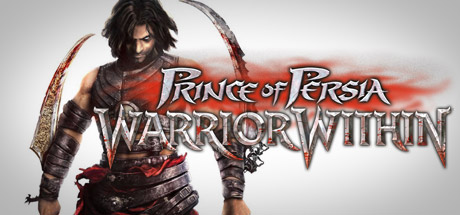
That emotional resonance—time as both weapon and wound, action as desperate ritual against inevitable loss—lands with uncanny precision in the Prince of Persia trilogy. Take Prince of Persia: Warrior Within: its description names Dahaka as “an immortal incarnation of Fate,” hunting the Prince across shifting sands and crumbling architecture. Player reviews call the chase “goated”—not for spectacle alone, but because Dahaka isn’t just a boss; he’s consequence given claws and breath. Like Kyle, the Prince carries knowledge that curdles into paranoia. Every ledge he vaults, every sand-powered rewind he triggers, is less about victory and more about buying seconds from a clock that’s already struck midnight. The tension isn’t “Can he win?” but “How much of himself must he erase to survive?”
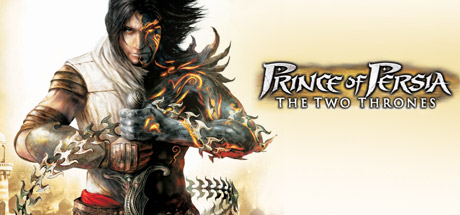
Then there’s Prince of Persia: The Two Thrones, where the Prince returns to Babylon “ravaged by war” after escaping the Island of Time—only to find his homeland already broken, his love Kaileena entangled in forces beyond control. The description mirrors Kyle’s return: a warrior stepping into a past that should be safe, only to realize the rot began long before the final battle. Player reviews call it “one of my best childhood games… still plays great”—a testament to how deeply its emotional architecture sticks: the exhaustion in the Prince’s voice, the way his dual forms (light and darkness) aren’t just gameplay gimmicks but embodied regret. Kyle’s age regression isn’t whimsy—it’s the same visceral dissonance: a man’s mind trapped in a younger body, forced to relearn trust while knowing exactly how trust gets shattered.
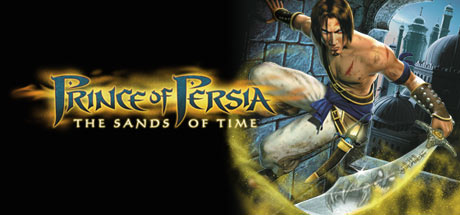
And Prince of Persia®: The Sands of Time, the origin point, grounds it all in tactile, almost painful precision. Its description centers on a young prince drawn to “dark powers of a magic dagger,” while player reviews praise “tactical platforming that is satisfying due to the locked directions… yet still challenging.” That phrase—locked directions—is key. Like Kyle navigating his rebuilt hometown, every movement here feels deliberate, constrained, weighted. You don’t glide; you commit. A misstep isn’t just failure—it’s falling into the very timeline you’re trying to outrun. The dagger’s rewind isn’t infinite. It’s fragile. Just like Kyle’s crystal. Just like memory itself.
This pairing isn’t for fans of time travel as plot convenience. It’s for the ones who pause mid-battle to watch dust motes hang in a sunbeam—and remember that same light falling across a grave they haven’t dug yet. It’s for players who replay Warrior Within not for mastery, but to feel that Dahaka’s footsteps again—the cold certainty that some things follow you no matter how far you run. It’s for viewers who hold their breath when Kyle kneels to tie a child’s shoelace, knowing that hand will soon grip a bloodied hilt. They don’t want escapism. They want resonance: the shiver when fantasy stops being spectacle and starts sounding like your own heartbeat, counting down—not to adventure, but to what you’ll have to unlearn in order to love again.
🎮4 Games That Match the Vibe
Match Dimensions Explained
❓Frequently Asked Questions
Why does the Dahaka chase in Prince of Persia: Warrior Within feel so intense compared to other boss pursuits?
It’s all about that relentless, scripted escalation—the Dahaka hunts you through crumbling palace corridors and flooded catacombs, forcing split-second wall-runs and dagger parries while your health drains over time. Unlike static arena fights in The Sands of Time or The Two Thrones, Warrior Within’s chase sequences lean hard into claustrophobic tension and environmental storytelling—just like New Saga’s signature ‘memory bleed’ mechanics where past and present collide mid-combat.
Is there a Prince of Persia anime or live-action adaptation that captures the vibe of New Saga’s time-memory themes?
No official anime or live-action adaptation nails New Saga’s tone—but The Sands of Time (2003) comes closest in spirit: its dagger-based time-rewind mechanic, Kaileena’s tragic arc, and those haunting sand-infused flashbacks mirror New Saga’s layered memory design. Fans who loved how The Two Thrones wove the Dark Prince’s inner conflict into combat and dialogue will recognize the same psychological weight in New Saga’s dual-timeline choices.
How does Prince of Persia: The Two Thrones compare to New Saga in terms of balancing action and emotional storytelling?
Both hinge on identity crises with visceral consequences—The Two Thrones’ Dark Prince transformation isn’t just cosmetic; it changes combat flow (faster but riskier), alters dialogue with Kaileena, and reshapes Babylon’s ruined streets in real time, much like New Saga’s ‘fractured chronology’ system. That moment when you’re forced to choose between saving the city or reclaiming your past? It hits with the same gut-punch as The Two Thrones’ final confrontation in the throne room—where every sword swing feels morally charged.
What’s the best Prince of Persia game for someone who loves New Saga’s melancholic, time-loop atmosphere and tactical platforming?
Go straight to The Sands of Time—it’s the blueprint. That iconic dagger lets you rewind mistakes mid-leap across collapsing pillars, and the way memories surface in whispers during quiet moments (like the library scene where the Prince reflects on his father’s betrayal) mirrors New Saga’s reflective pacing. Plus, its locked-direction platforming creates that same satisfying precision—no floaty jumps, just deliberate, consequence-aware movement.