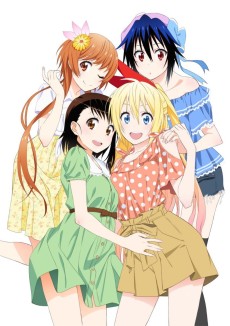
Nisekoi
As a child, Raku Ichijo made a secret promise with his childhood sweetheart, keeping a pendant as a memento while his love took the key. He dreams of one day meeting his past love, but years later, reality smashes his hopes when Chitoge Kirisaki accidentally knees him in the face...
Though Raku's a normal high schooler, his family heads the notorious yakuza gang the Shuei-Gumi faction! And he's dragged into family affairs when he's forced into a relationship with Chitoge, the daughter of a rival gang's boss!
Despite their constant spats, the two somehow fool everyone with their false relationship. Raku then discovers that Chitoge has a mysterious key from her past, which she can't remember... Plus, two other girls appear with keys as well—Kosaki Onodera and Marika Tachibana!
Caught in the midst of this love maelstrom, even more complications arise for Raku when his class decides on Romeo and Juliet as the class's play for the school festival. Can the two false lovebirds pull off the impossible and make the play a success?
(Source: VIZ Media)
📺Anime Details
📝Editorial Analysis
The thwack of Chitoge’s knee connecting with Raku’s nose—sharp, absurd, immediate—isn’t just slapstick. It’s the first domino in a cascade of misfired intentions, half-truths, and flustered silences that never quite settle into resolution. That moment isn’t about pain—it’s about disorientation: the world tilting sideways because a yakuza heir just got knocked flat by a girl whose hair flips like a challenge and whose glare could curdle milk, all while his childhood pendant swings wildly against his chest like a tiny, ticking heart.

What makes Nisekoi’s atmosphere so distinct isn’t its harem or its gangs—it’s the weightlessness it sustains despite constant emotional gravity. You feel the ache of unspoken promises, the warmth of shared lunches under cherry blossoms, the sting of a tsundere’s slap—but none of it ever hardens into tragedy or certainty. It breathes in hesitation, exhales awkwardness, and lingers in the space between “I hate you” and “I need you here.” It’s not about finding love—it’s about learning how to hold space for love while pretending not to. That gentle, persistent uncertainty is what makes it feel like walking barefoot on sun-warmed pavement: safe, familiar, yet always aware of the small, shifting textures beneath your feet.
Prince of Persia shares that same suspended quality—not in its desert vistas or acrobatics, but in its romance-as-ritual structure. The description calls it “an all-new epic journey… completely separate from the sands,” echoing how Nisekoi constantly resets emotional stakes without erasing history: Raku keeps the pendant; Chitoge keeps her temper; the fake relationship keeps reshaping itself, again and again. A player review notes it’s “the 3rd reboot… introducing us to a new prince, new lands and a brand new story”—exactly how Nisekoi treats each confession, each near-kiss, each misunderstanding: not as climax, but as reboot, a fresh chance to miscommunicate with tenderness. Both refuse linear payoff, trusting the rhythm of repetition—the leap, the stumble, the soft landing—to carry emotional truth.
The Sims™ 4 mirrors this even more intimately—not through plot, but through possibility-space. Its description invites you to “Play with life and discover the possibilities,” to “create a world of Sims that’s wholly unique.” That’s Nisekoi’s DNA: no fixed ending, no canonical pairing, just endless permutations of proximity, timing, and misread signals. Even the player review’s frustration—“you can barely do a…”—feels weirdly resonant: the game’s charm lies in its unfinishedness, its reliance on player-driven micro-narratives, much like how Nisekoi thrives in the gaps between scenes—the glance held too long in the hallway, the lunchbox left behind, the way Raku’s hand hovers near Chitoge’s before pulling back. Both reward attention to gesture over grand declaration.
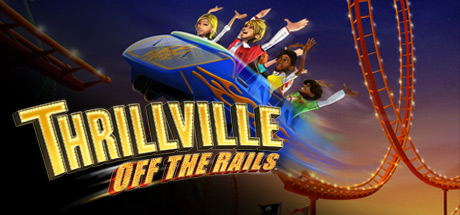
And then there’s Thrillville®: Off the Rails™, a title that sounds like pure chaos—and yet its description celebrates “20 death-defying rides” where you “build incredible coasters to leap from one track to another, launch through the air like cannonballs.” That’s Nisekoi’s emotional architecture: looping, kinetic, deliberately unstable. A player review says it “has aged really well!”—not because it’s perfect, but because its joyful, slightly rickety mechanics still deliver thrill, not realism. Like Nisekoi, it doesn’t ask you to believe in permanence—it asks you to savor the rush of the drop, the wind in your hair, the shared laughter as everything momentarily defies gravity.
This is for the person who replays the same five minutes of an anime just to watch a character blink at the right moment. For the player who builds a Sim family, names their cat “Pendant,” and spends three hours arranging furniture so two Sims almost make eye contact across a kitchen counter. For anyone who finds comfort in emotional limbo—not as failure, but as fertile ground. Not the ones waiting for the kiss, but the ones who love the breath before it.
🎮7 Games That Match the Vibe

Match Dimensions Explained
❓Frequently Asked Questions
Why does Prince of Persia show up in 'Games Like Nisekoi' lists when it's an action-adventure game?
Great question — it’s all about the shared 'Romance & Shoujo' + 'Comedy & Parody' dimensions. Like Nisekoi, Prince of Persia (2023) leans hard into playful, flirtatious banter between the Prince and Zaydan — think rooftop teasing, mistaken-identity gags, and that cheeky 'fake engagement' subplot in Chapter 4. The Ubisoft Montreal team even cited shoujo tropes as inspiration for the chemistry-driven storytelling.
Is there a Nisekoi visual novel or dating sim adaptation?
Not officially — but The Sims™ 4 is the closest *functional* match fans use to recreate that vibe. With custom Nisekoi CC (like Ruri’s pink twin-tails or Chitoge’s blonde ponytail), players roleplay love triangles in custom-built Tokyo apartments, trigger jealousy events via 'Flirt' interactions, and even recreate the iconic 'headbutt confession' scene using animation mods. Just be warned: base-game romance feels thin without the $30+ 'Romantic Garden' pack.
How does Thrillville: Off the Rails compare to The Sims 4 for Nisekoi-style dating chaos?
Thrillville wins for pure, over-the-top romantic comedy energy — imagine Chitoge dragging you onto a looping rollercoaster while yelling 'I’m not your girlfriend!' before the ride flips you upside-down. Unlike TS4’s slow-burn relationship meters, Thrillville uses real-time park chaos: impress a date by launching them on a 'Cannonball Loop' ride (100% accuracy required) or accidentally humiliate them with a malfunctioning funhouse mirror. It’s less nuanced, but way more Nisekoi-level absurd.
What’s the best game like Nisekoi if I just want lighthearted, low-stakes romance with zero drama?
Go straight to Thrillville®: Off the Rails™ — it’s basically Nisekoi’s amusement park episode stretched into a full game. No tragic backstories, no secret identities; just building goofy coasters, flirting with park guests (including a flustered 'tsundere' mechanic who slams her wrench when you compliment her designs), and triggering slapstick moments like getting splashed by a rogue water ride mid-confession. Even the player review calls it 'aged really well' for pure, uncomplicated fun.