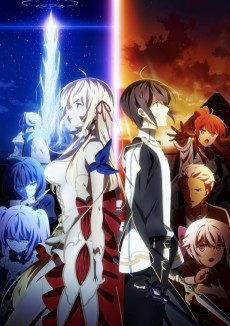
Our Last Crusade or the Rise of a New World
Embroiled in a hundred-year war, young Iska is sent to assassinate the Ice Calamity Witch, Aliceliese. Meant to murder each other, their initial encounter on the battleground creates doubt in their missions, but finding common ground together would make them traitors to their own countries. Though circumstances previously made them enemies, their now conflicted hearts may just make them lovers!
(Source: Funimation)
📺Anime Details
📝Editorial Analysis
The wind cuts sharp across the frozen battlefield—Iska’s breath plumes white as he raises his sword, Aliceliese’s ice magic shimmering just beyond his reach—not as a weapon yet, but as a hesitation. Neither strikes. Neither retreats. Just two figures suspended in the brittle silence between duty and doubt, snow falling like static on a paused film reel. That single, unbroken second—where the blade is drawn but not swung, where the spell is cast but not released—is the entire soul of Our Last Crusade or the Rise of a New World.
This isn’t war as spectacle. It’s war as weight: the weight of a uniform that fits too tightly, the weight of a name—Ice Calamity Witch—that flattens a person into a doctrine, the weight of a kiss shared under ceasefire flags that feels less like romance and more like quiet mutiny. The atmosphere hums with tension, yes—but deeper than that, it thrums with recognition. Not just “I see you,” but “I see the version of me reflected in your exhaustion, your restraint, your refusal to become the monster your nation needs you to be.” It makes you think about how ideology calcifies into instinct—and how fragile that instinct becomes when someone looks you in the eye and chooses pause over pierce.
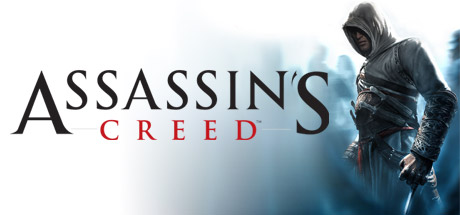
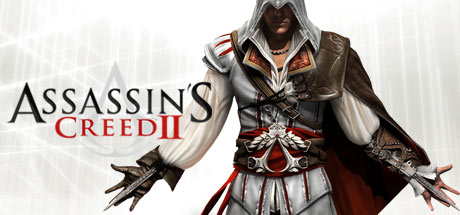
That same emotional resonance flickers in Assassin's Creed™: Director's Cut Edition, where the player moves through Jerusalem not just as a killer, but as a man whose loyalty is fraying at the edges—“political thriller” and “tactical warfare” aren’t just tags; they’re the architecture of moral suspension. A player notes the dated textures don’t break immersion because what holds them is the doubt—the way Altaïr questions orders mid-mission, the way every rooftop perch doubles as a vantage point and a ledge of conscience. Like Iska lowering his sword, Altaïr often lingers before striking—not out of mercy alone, but because the target has a face, a story, a contradiction. That hesitation? It’s the same heartbeat.
Then there’s STAR WARS™ Jedi Knight - Jedi Academy™, where the player “build[s] out a Padawan” only to be “thrust into a Galaxy-spanning adventure” that forces constant alignment choices—not light vs. dark, but obedience vs. intuition. The description calls it “action spectacle,” but the real spectacle is internal: watching your character’s stance shift, their lightsaber color deepen or fade, as they weigh command against conviction. A reviewer admits the game drops you into stakes so vast you almost forget the smallness of one choice—until you do choose, and suddenly the galaxy narrows to the tremor in your hand as you decide whether to spare a fallen enemy who reminds you of yourself. That narrowing? That’s Iska and Aliceliese sharing tea in a ruined watchtower—no armies, no banners, just two people measuring each other’s silence.
Even Act of War: Direct Action™, with its “frightening tale of suspense, international intrigue and geopolitical military conflict,” echoes the anime’s pulse—not in scale, but in structure. Its real-time strategy demands you manage supply lines while intercepting radio chatter about betrayals buried in diplomatic memos. One player calls the campaign dialogue “dumb and a bit cringe,” yet still praises it “like C&C 3”—because the thrill isn’t in perfect writing, but in the pressure of consequence: one misallocated tank unit could collapse an alliance, just as one misread glance could reignite the hundred-year war. The emotional DNA isn’t in the explosions—it’s in the silence before the order is given, the same silence that hangs between Iska and Aliceliese when they realize their countries have already lost them.
This pairing sings for the viewer who watches battle scenes and doesn’t track kill counts—but tracks eye contact. For the player who reloads not to win, but to hear that one line again: “You don’t have to follow this order.” For anyone who’s ever loved something so fiercely it felt like treason—and found, in that quiet act of defiance, the first true peace they’d ever known.
🎮8 Games That Match the Vibe


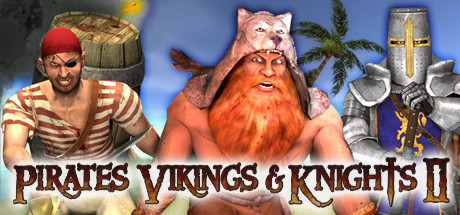
Match Dimensions Explained
❓Frequently Asked Questions
Why does Assassin's Creed: Director's Cut Edition match 'Our Last Crusade' despite being set in the Middle Ages?
Great question—it’s all about that Political Thriller + Tactical Warfare combo. Like 'Our Last Crusade’s' tense faction diplomacy and battlefield strategy between Liscia and the Empire, Assassin’s Creed drops you into the gritty power struggles of the Third Crusade—Al Mualim’s hidden agendas, Saladin’s political maneuvering, and Altaïr’s precision strikes mirror the series’ blend of espionage, moral ambiguity, and calculated combat. Even the dated textures (per that player review) add to the grounded, historically textured tension fans love.
Is there an anime or light novel adaptation of Assassin's Creed or Jedi Academy that’s similar to 'Our Last Crusade'?
No official anime or LN adaptations exist for either—but here’s the fun part: Jedi Academy’s vibe *feels* like a spiritual cousin to 'Our Last Crusade' in execution. Think Juri’s disciplined swordplay meeting Luke’s lightsaber training—you build your Padawan from scratch, choose your Force path (light/dark/neutral), and face galaxy-spanning stakes with mentor-student friction just like Kaito and Liscia. That ‘JK: Jedi Academy’ review even calls it a ‘Galaxy-spanning adventure to help restore balance’—very much in that earnest, growth-focused shonen-fantasy lane.
How does Act of War: Direct Action compare to Pirates Vikings & Knights II for tactical depth?
Totally different flavors of ‘tactical’! Act of War is a real-time strategy deep dive—think briefing-room intel, covert ops against rogue states, and geopolitical chess (‘ripped from today’s headlines’, per its description), which mirrors 'Our Last Crusade’s' war-room tension and consequence-driven decisions. PVKII? Pure chaotic, class-based melee mayhem—Vikings grappling Knights mid-bridge while Pirates snipe from rigging. As one player put it: ‘u gotta join the discord and connect to actual servers to get a good round’—so it’s tactical in the moment-to-moment, not the grand strategy sense.
What’s the best game like 'Our Last Crusade' if I want that serious political intrigue + sword-and-sorcery weight, not just flashy action?
Go straight to Assassin’s Creed: Director's Cut Edition—it nails the ‘Political Thriller + Tactical Warfare’ dimension with surgical precision. You’re not just swinging a blade; you’re navigating Templar conspiracies, negotiating alliances in Acre’s markets, and making assassination choices that shift faction trust—exactly like Kaito weighing loyalty to the Empire vs. protecting Liscia. That 79 score reflects how well it balances weighty themes with visceral, consequence-laden gameplay (even if the models are ‘quite dated’—but hey, so are some of the scrolls in the Royal Library).