
Reincarnated as a Dragon Hatchling
📺Anime Details
📝Editorial Analysis
The first thing you feel is warmth—not the searing kind, but the slow, drowsy press of sun through thick moss on a forest floor, your scaled chest rising and falling in time with a breeze that carries the scent of wet earth and crushed mint. You’re small. Not weak—aware. Every rustle in the underbrush is a question. Every shift of light across your iridescent wing membranes feels like memory trying to surface, just out of reach. No grand battle. No throne room. Just breathing, grounded, alive in a body that isn’t human—and yet, deeply, quietly known.
That’s the quiet magic of Reincarnated as a Dragon Hatchling: it trades spectacle for presence. Not the adrenaline rush of conquest, but the hush before a dewdrop falls from a fern frond—tense, tender, full of unspoken weight. It’s amnesia not as plot device, but as sensory recalibration: the world feels newly textured, because the protagonist experiences it through non-human senses—heat signatures flickering at the edge of vision, vibrations humming up talons from the soil, the grammar of wind shifting before rain. Rural life here isn’t backdrop—it’s rhythm. Magic isn’t incantation; it’s instinctive, woven into nest-building, shared warmth with a fox companion, the careful tending of glowing mushrooms that pulse like slow heartbeats. You don’t master this world—you settle into its cadence. And that settling? It’s healing. Not because it fixes anything, but because it lets you breathe inside your own skin—even when that skin is scaled and shimmering.
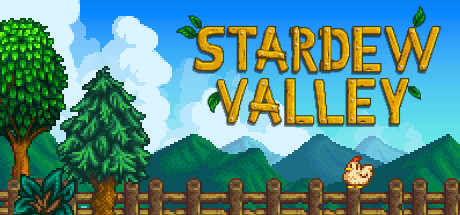
Which is why Stardew Valley lands with such uncanny resonance. Its description promises inheriting “your grandfather’s old farm plot” and learning to “live off the land”—exactly the same quiet inheritance of place and pace that defines the anime’s rural heartbeat. The player review confesses exhaustion: “Spent the first 2 years trying to do everything and never having enough time… Days upon days of constantly running around…” That frantic early-game scramble mirrors the hatchling’s first weeks—overstimulated, disoriented, too much sensation, too little frame of reference. But both evolve toward the same revelation: time isn’t currency to hoard or spend—it’s texture to inhabit. Watering crops becomes ritual. Tending animals becomes dialogue. The farm, like the forest glade, becomes a living archive of small, repeated acts—grounding, soothing, true.
Then there’s Chains, whose description frames it as “a relaxing arcade match 3 casual game” built on linking bubbles “into chains” with “increasingly difficult physics-driven” challenges. At first glance, abstract. But read the player review: “Reminds me of connect 4 in nutshell… link 3 or more of the same color and clear enough till you can proceed…” That linking, that pattern recognition within gentle constraint, echoes the anime’s core emotional labor: piecing together identity not through grand revelations, but through tiny, tactile repetitions—recognizing the same birdcall at dawn, tracing the same crack in a sun-warmed stone, feeling the same tremor in your own wings when a particular wind rises. Both ask you to find order not in domination, but in attunement. The physics aren’t obstacles—they’re the world’s quiet logic, just as the hatchling learns flight not by force, but by reading air currents like sentences.
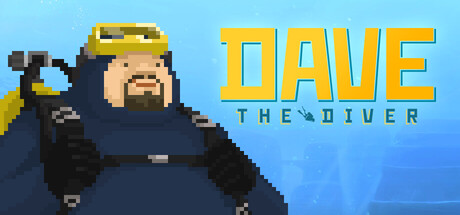
And DAVE THE DIVER, with its score anchored in Healing & Slow Life, lands with startling precision. Its description doesn’t name dragons or reincarnation—but it does name diving, crafting, survival, and the rhythm of daily descent into blue quiet. The player doesn’t fight monsters; they observe bioluminescent jellyfish, trade fish for tools, nap in a cozy submersible. Like the hatchling, Dave moves between two worlds—the surface’s gentle chaos and the deep’s suspended calm—each demanding different kinds of attention, different kinds of care. The anime’s amnesia isn’t erased; it’s held gently, like Dave holding a rare coral specimen—valuable not for what it means, but for how it feels in the palm.
This pairing isn’t for the seeker of escalation. It’s for the person who’s spent hours watching rain slide down a windowpane and felt more present than during any cutscene. For the player who saves their game not to win, but to return to the same porch swing at dusk, same cup of tea steaming beside them, same dragon hatchling curled, warm and breathing, against their side—safe, still, enough.
🎮8 Games That Match the Vibe



Match Dimensions Explained
❓Frequently Asked Questions
Why does Chains keep showing up in 'Games Like Reincarnated as a Dragon Hatchling' lists when it’s just a bubble-popping game?
Because both Chains and Dragon Hatchling lean hard into that cozy, low-stakes ‘healing & slow life’ vibe—think quiet mornings spent carefully linking bubbles instead of frantic combat. Players who loved the hatchling’s gentle pacing and tactile satisfaction of small wins (like watching your tiny dragon grow wings after a calm day of gathering) report similar zen flow in Chains’ physics-driven chain-building—especially when clearing a tight cluster to unlock a new ‘nesting zone’.
Is there a mobile or anime adaptation of Reincarnated as a Dragon Hatchling that’s actually good?
No official mobile or anime adaptation exists yet—just fan art and doujin circles. But if you’re craving that same soft fantasy energy on mobile, Bandle Tale nails it: playing as a tiny Yordle tending a mushroom garden, chatting with shy Fiddlesticks in his attic, and brewing potions while rain patters on the roof feels *exactly* like being a sleepy, curious dragon hatchling in a world that moves at your pace.
How does Stardew Valley compare to Reincarnated as a Dragon Hatchling in terms of ‘dragon-like’ freedom and growth?
Stardew gives you way more mechanical freedom—you can be a farmer, miner, fisher, or even a secret wizard—but the *vibe* matches perfectly: imagine your dragon hatchling’s first spring morning translated into planting parsnips at 6am, feeding chickens named ‘Ember’ and ‘Scale’, then napping under the maple tree while your farm slowly transforms from overgrown ruin to lush, personal sanctuary—just like your hatchling’s lair evolves from a mossy cave to a sun-dappled grove.
What’s the best game like Reincarnated as a Dragon Hatchling if I just want to feel safe, small, and quietly powerful?
Dave the Diver is your answer—especially the post-10pm dive shifts where you’re not fighting monsters, but gently coaxing bioluminescent jellyfish into your net, naming each one ‘Lumina’ or ‘Glowpuff’, then returning to your cozy submarine kitchen to cook squid ink pasta while listening to the muffled ocean hum. That exact blend of vulnerability, wonder, and quiet mastery? Pure hatchling energy.