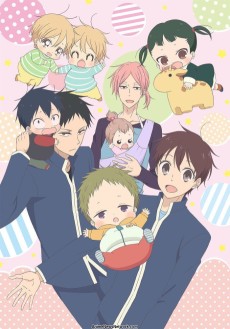
School Babysitters
The manga centers on the brothers Ryuuichi and Kotarou Kashima. Ryuuichi is in high school and Kotarou is still a toddler. After their parents are killed in a plane crash, the two brothers find themselves living with the chairwoman of the Morinomiya Academy, who herself lost her son and daughter-in-law in the same accident. The chairwoman, however, has one stipulation for the brothers in order to live with her: Ryuuichi has to work at the academy's daycare center as a babysitter.
(Source: Anime News Network)
📺Anime Details
📝Editorial Analysis
The steam rising from a mug of cocoa held carefully in Ryuuichi’s hands—slightly too big for his fingers, warm but not scalding—as he kneels beside Kotarou’s tiny cot, humming off-key while the toddler blinks sleepily under a quilt stitched with tiny rabbits. No dialogue. Just the clock’s soft tick, the distant chime of the Morinomiya Academy bell tower, and the weight of two small bodies leaning into each other: one trying to be steady, the other trusting that steadiness without question.

That quiet gravity—tenderness without fanfare, care as ritual, grief folded gently into daily motion—is what makes School Babysitters breathe. It doesn’t shout healing; it practices it. Every diaper change, every lullaby hummed over spilled juice, every time Ryuuichi pauses mid-sentence to adjust a child’s sock or smooth a frown from a classmate’s brow—it’s all anchored in the same truth: love isn’t grand gestures. It’s showing up, again and again, with your hands full and your heart quietly open. There’s no trauma porn, no melodramatic breakdowns—just the slow, unglamorous work of rebuilding safety, one shared snack, one storytime, one held hand at a time. You don’t watch it—you settle into it, like sinking into a well-worn sofa after a long day.
Which is why The Sims™ 4, despite its fractured DLC economy and player frustrations (“TS4 has become awful, the packs are insanely expensive and often broken… you can barely do a...”), still pulses with the same emotional DNA. Its core loop—choosing how a Sim makes tea, tucks in a child, or sits on a porch swing watching sunset—isn’t about winning. It’s about choosing care, over and over, in infinitesimal ways. The game’s “Healing & Slow Life” dimension isn’t a menu option—it’s baked into the rhythm of clicking “hug toddler” or “read bedtime story.” Like Ryuuichi learning to braid hair while listening to a preschooler’s rambling tale about cloud dragons, TS4 rewards attention to the small, unscripted, human moments—even when the engine stutters.
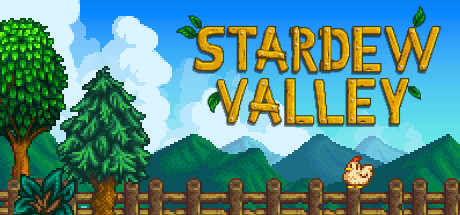
Then there’s Stardew Valley, where players confess: “Spent the first 2 years trying to do everything and never having enough time… Days upon days of constantly running around trying to find the town...” That exhaustion isn’t failure—it’s recognition. Kotarou doesn’t understand time management, but Ryuuichi does—and he’s perpetually recalibrating: homework before naptime, laundry between snack prep and playground duty, grief tucked behind a smile just long enough to tie a shoelace. Stardew’s gentle tyranny of seasons, crops, and relationships mirrors the anime’s quiet insistence that meaning accumulates in repetition: watering the same patch of soil, rocking the same baby, saying “I’m here” in a hundred different tones until it becomes true. Both ask you to measure life not in milestones, but in consistency—in showing up, even when your arms ache and your eyes are tired.
Even Prince of Persia, rebooted and reimagined (“a new prince, new lands and a brand new story completely separate from the sands...”), carries an echo—not in acrobatics or sand magic, but in its dimensional alignment: “Healing & Slow Life, Romance & Shoujo.” That pairing feels unexpected until you remember how School Babysitters frames intimacy—not as romance in the conventional sense, but as devotion made visible: Ryuuichi’s hand resting lightly on Kotarou’s back as they walk home, the chairwoman’s silent gaze lingering on the brothers’ sleeping forms, the way a shy older boy slowly learns to hold a baby not because he’s told to, but because he wants to feel useful, wanted, needed. Prince of Persia’s new iteration trades vengeance for vulnerability, isolation for interdependence—the same pivot School Babysitters makes when Ryuuichi stops surviving and starts tending, not just Kotarou, but the whole fragile, breathing ecosystem of the daycare.
This is for the person who cries when their Sim finally adopts a stray cat after three in-game winters. For the player who replants the same turnip patch just to watch the sunrise over Pelican Town one more time. For the viewer who rewatches episode 7—not for the plot, but for the five seconds where Ryuuichi lets Kotarou wipe his own face with a cloth, messy and proud, and doesn’t rush to fix it. They don’t need fireworks. They need warmth that holds. They need stories—and games—that believe care is never beneath you. That trust is earned in teaspoons. That healing isn’t a destination—it’s the quiet, steady, unbroken act of holding a mug, a hand, a moment—just long enough for someone else to feel safe enough to breathe.
🎮5 Games That Match the Vibe


Match Dimensions Explained
❓Frequently Asked Questions
Why does Stardew Valley keep coming up as a match for School Babysitters?
Because both center on gentle daily rhythms, nurturing relationships with a found family (like the Kaga brothers and their charges in School Babysitters vs. the townsfolk of Pelican Town), and quiet emotional growth—Stardew even lets you raise kids yourself later on. Its 'Healing & Slow Life' and 'Romance & Shoujo' dimensions align tightly with School Babysitters’ warm, character-driven pacing and heartfelt caregiving moments.
Is there a School Babysitters visual novel or dating sim adaptation?
No official visual novel or dating sim exists yet—but The Sims 4 is the closest functional stand-in: you can create the Kaga brothers, design a cozy apartment above the daycare, assign childcare routines, and build romantic storylines with characters like Aoba or Miu using custom content and storytelling tools. Players love it for that sandbox freedom, even if the base game feels bare without DLC.
Stardew Valley vs. Prince of Persia—which is better for School Babysitters fans who want calm, not combat?
Stardew Valley, hands down—it’s all about tending crops, befriending villagers, and raising a family at your own pace, mirroring the show’s soothing domesticity. Prince of Persia, while scoring equally high in 'Healing & Slow Life' and 'Romance & Shoujo', leans into acrobatic set-pieces and mythic stakes; its 'slow life' comes from lush world-building and tender character moments (like the Prince’s bond with Elika), not daily caregiving or slice-of-life warmth.
What’s the best game like School Babysitters if I just want to feel cozy and emotionally safe?
Stardew Valley is your top pick—its soft pixel art, seasonal rituals (like cooking together or attending festivals), and deep relationship arcs with characters like Sebastian or Leah mirror the show’s comforting rhythm and emotional sincerity. Even the player review admits how immersive the slow burn of connection feels: 'Days upon days of constantly running around trying to find the town...' shows how deeply players sink into its gentle, purposeful world.