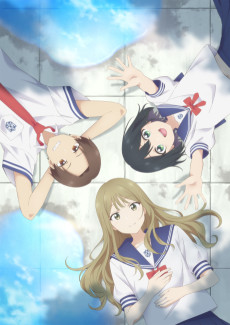
Senpai is an Otokonoko
📺Anime Details
📝Editorial Analysis
The fluorescent hum of the school hallway at 3:17 p.m., just after club activities end — that’s where it lives. Not in grand declarations or tearful confessions, but in the quiet weight of a shared glance between two teens leaning against lockers: one adjusting the cuff of a borrowed sweater, the other holding a half-unzipped backpack like a shield. No dialogue. Just the rustle of fabric, the distant chime of a bicycle bell, and the way time thickens — not with tension, but with recognition. That suspended breath is Senpai is an Otokonoko’s heartbeat.
What makes it ache so tenderly isn’t its crossdressing premise or love triangle structure — it’s how deeply it trusts stillness. This anime doesn’t dramatize identity as crisis; it treats selfhood as something worn lightly, then carefully, then unapologetically — like choosing which blouse to wear on a Tuesday, or how long to hold eye contact before looking away. The estranged family isn’t a plot device; it’s a low hum beneath every conversation, felt in the way the female protagonist folds laundry alone in her apartment, or how the otokonoko senpai pauses mid-sentence when his mother’s name appears on his phone screen. It’s quiet resilience, not rebellion — a coming-of-age steeped in the soft, stubborn courage of showing up, day after day, in a body and truth that don’t always fit the frame the world handed you.
That same emotional DNA pulses through Baldur’s Gate 3, where romance isn’t about winning affection points but witnessing — watching Shadowheart’s guarded silence crack open only after weeks of shared campfires and quiet choices, or hearing Astarion’s voice drop to a near-whisper when he admits, “I’ve never let anyone see me like this.” Its 81-score resonance comes from how deeply it embeds emotional narrative within action: you don’t just choose dialogue options — you choose how much space to give someone’s vulnerability, just like the anime’s protagonist does when she sits beside senpai on the roof without asking questions. And Amnesia™: Memories, scoring 79, mirrors that same hushed intimacy — its emotional narrative lives in the tremor of a hand reaching out across a table, in the way memory fragments return not as exposition, but as sensory echoes: the smell of rain on cotton, the warmth of a shared umbrella. Like the anime, it trusts the viewer to feel meaning in what’s not said, in the space between heartbeats.
Then there’s Persona 5 Royal, with its 69-score alignment — not because of its stylish combat or Tokyo exploration, but because of the seamless transition between daily life and inner reckoning. The player review nails it: “The seamless transition between daily life…” That’s the anime’s rhythm too — cram school, part-time job, awkward lunch breaks, all threaded with the slow, real-time unfolding of identity. When Ann Takamaki’s arc deepens not in a boss fight, but in a quiet confession over convenience-store melon soda, it lands with the same emotional precision as the anime’s scene where senpai tries on earrings for the first time — no fanfare, just sunlight catching the silver, and the protagonist biting her lip to keep from smiling too wide. Even Jade Empire™: Special Edition, with its 65-score emotional resonance, echoes this: its path of the open palm isn’t about victory, but presence — choosing compassion over force, listening over speaking, holding space instead of filling it. That’s the anime’s core: identity isn’t forged in confrontation, but in the thousand small acts of being seen, and choosing to stay.
This pairing sings to the reader who underlines sentences in novels not for plot, but for the way a character breathes — to the player who saves before a dialogue choice not to optimize, but to sit with the weight of it. It’s for the teen folding laundry alone, the adult relearning their own name, the friend who waits three beats before asking, “You okay?” — not because they need answers, but because they know recognition is the first, truest kind of love.
🎮11 Games That Match the Vibe











Match Dimensions Explained
❓Frequently Asked Questions
Why does Senpai is an Otokonoko match with Baldur's Gate 3 when they’re so different?
It’s all about the emotional narrative weight and romance depth—not combat or setting. Like in Senpai, BG3 makes you *feel* every romantic choice (e.g., Astarion’s vulnerable confessions in the Underdark, or Shadowheart’s quiet grief over her curse), and both hinge on identity, acceptance, and slow-burn intimacy. The match score of 81 reflects how strongly both prioritize character-driven emotional arcs over genre conventions.
Is there an anime or manga adaptation of Senpai is an Otokonoko?
No official anime or manga exists—but if you love that tender, slice-of-life shoujo vibe with gender-exploration themes, Amnesia™: Memories (79 score) delivers similarly heartfelt moments, like the protagonist’s soft, grounded conversations with Toma during rainy-day café scenes or his hesitant confession while fixing a broken lantern. It’s the closest official adaptation *in spirit*, even if it’s not a direct adaptation.
How does Persona 5 Royal compare to Senpai is an Otokonoko for romance-focused storytelling?
Both center on identity and emotional honesty—but P5R wraps it in stylish, high-stakes rebellion (e.g., Ann’s arc confronting societal expectations about femininity, or Futaba’s journey from isolation to self-acceptance), while Senpai leans into gentle, everyday vulnerability. Still, P5R’s 69-score match comes from shared DNA: deep relationship-building via daily interactions, meaningful choices that reshape bonds, and romance that feels earned—not tacked on.
What’s the best game like Senpai is an Otokonoko if I want something melancholic but warm, with quiet character moments?
Go straight to Persona 3 Reload (69 score)—its midnight train rides with Yukari, silent rooftop talks during snowfall, and the bittersweet weight of the Dark Hour create exactly that hushed, emotionally resonant atmosphere. Like Senpai, it treats tenderness as strength, and its romance routes (especially Mitsuru’s guarded sincerity or Fuuka’s quiet devotion) unfold with the same patient, heartfelt pacing.