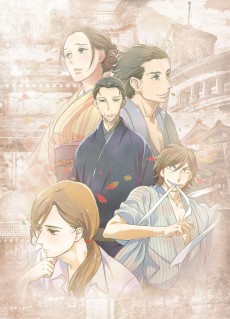
Showa Genroku Rakugo Shinju
The story revolves around a mature prisoner who was released on good behavior during Japan's Shouwa Genroku era (1960s to early 1970s). He is called Yotarou by others, a term that means an "anti-hero" or a "dim-witted man." When he returns to society, he starts a new life in rakugo (comic storytelling). Touched by Yakumo's role as the "grim reaper," he asks the master to take him in as an apprentice. Most of the season delves into Yakumo's own past during World War II and the years afterward.
(Source: Anime News Network)
Note: The first episode aired with a runtime of 48 minutes as opposed to the standard 24 minute long episode.
📺Anime Details
📝Editorial Analysis
The smell of old tatami, damp with decades of sweat and incense, hits before the first line is spoken — Yotarou kneeling on the floor of the Suzumoto theater, forehead pressed low, hands trembling not from fear but from the sheer weight of silence after Yakumo finishes a rakugo piece about a man who forgets his own name. That silence isn’t empty. It’s thick, humid, charged — like the pause between lightning and thunder when you already know the storm will break someone’s roof.
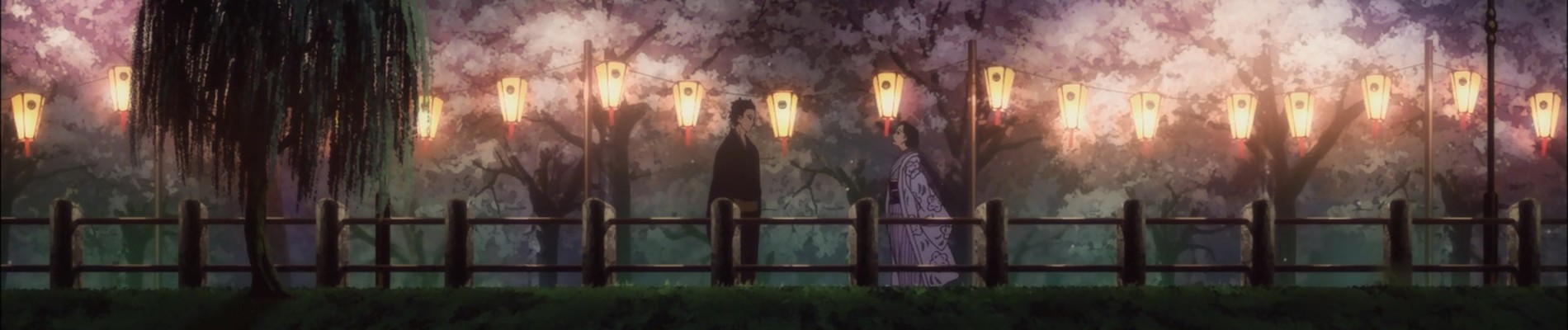
This isn’t nostalgia. It’s resonance. Showa Genroku Rakugo Shinju doesn’t trade in escapism — it trades in accumulation: of years, of unspoken words, of love that curdles into duty, of talent that becomes a cage. The Shouwa Genroku era isn’t backdrop; it’s pressure applied slowly, like thumb on throat — economic shifts, postwar shame, the quiet violence of expectation. You feel time not as progression but as sediment: Yakumo’s wartime past settles under his present like silt in river water, visible only when the light hits just right. His disability isn’t framed as tragedy or triumph — it’s fact, as ordinary and inescapable as the wooden stage he stands on. And the love triangle? It’s never about choosing. It’s about how love, once spoken, becomes architecture — walls you build around yourself and others, brick by quiet brick.
That same emotional gravity pulses through Persona 5 Royal — not in its flash or jazz-fueled swagger, but in how deeply it treats time as moral consequence. The “seamless transition between daily life” the player review praises? That’s the anime’s heartbeat: Yakumo teaching Yotarou rakugo while the clock ticks toward an inevitable, quiet collapse; Joker studying for exams while carrying the weight of a friend’s betrayal. Both demand you live inside routines until those routines reveal character — not through grand speeches, but through what you do at 7:13 p.m. on a Tuesday. And the “stunning soundtrack”? Like Yakumo’s voice cracking on the final syllable of a story — music that doesn’t underscore emotion but holds space for it, letting grief or tenderness breathe without resolution.
Then there’s Dragon Age: Origins, where the player review calls out the “pause attack mechanic” as vital to strategy — a detail that mirrors Showa Genroku Rakugo Shinju’s narrative pacing. Every rakugo performance is a tactical suspension: Yakumo halts mid-sentence, lets the audience lean in, then drops the punchline like a blade sheathed too long. In Origins, pausing mid-battle to adjust your party’s stance isn’t just gameplay — it’s ethical breathing room. You choose who lives, who speaks, whose trauma gets witnessed — just as Yakumo chooses, again and again, which memory to perform, which wound to reopen for the sake of art. Both understand that dignity lives in the interval: between lines, between attacks, between what’s said and what’s swallowed.
And Disco Elysium - The Final Cut, with its review quoting capital’s cruel irony — “Even those who would critique capital end up reinforcing it instead.” That’s Yakumo’s entire arc. He critiques tradition, yet inherits it. He rejects hierarchy, yet becomes its most revered vessel. His rakugo isn’t rebellion — it’s translation: turning pain into pattern, history into rhythm, so the audience feels recognized, not fixed. Disco Elysium does the same with ideology: every skill check, every internal monologue, forces you to confront how systems live inside your bones — not as abstractions, but as muscle memory. Both refuse catharsis. They offer recognition — raw, uncomfortable, and utterly necessary.
This pairing isn’t for people who want heroes. It’s for those who’ve ever stayed late cleaning a café kitchen after closing, listening to a coworker talk about their dead father, and felt the air thicken with something unsayable. For readers who underline sentences in novels not because they’re beautiful, but because they hurt true. For players who replay dialogue trees not to optimize romance points, but to hear one more variation of “I’m sorry” — softer, slower, heavier — because sometimes the most devastating thing isn’t what’s lost, but how carefully, how quietly, it’s carried forward.
🎮12 Games That Match the Vibe

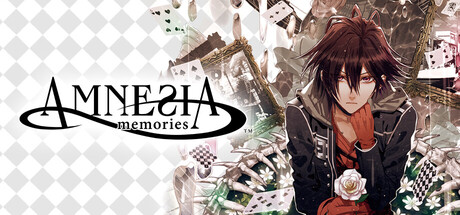
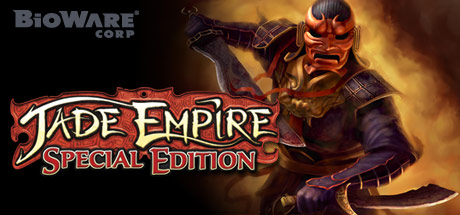

Match Dimensions Explained
❓Frequently Asked Questions
Why does Persona 5 Royal keep coming up when I search for games like Showa Genroku Rakugo Shinju?
Because both hinge on deeply personal, emotionally layered character arcs set against richly realized cultural backdrops—like Joker’s rebellion mirroring Yakumo’s quiet defiance in the rakugo world. The game’s Social Links (especially with characters like Ann or Futaba) echo the mentor-student and generational tension dynamics seen in Sukeroku and Yotaro’s relationships, all wrapped in a stylized, rhythm-driven narrative flow.
Is there a video game adaptation of Showa Genroku Rakugo Shinju?
No—there’s no official game adaptation. But fans who love its melancholic beauty and character-driven storytelling often land on Dragon Age: Origins, where Alistair’s bittersweet arc and Morrigan’s morally complex choices channel the same emotional weight as Konatsu’s resilience or Kikuhiko’s quiet suffering. Its pause-and-plan combat even mirrors the deliberate pacing of rakugo performances.
How does Jade Empire compare to Persona 5 Royal for someone who loves Showa Genroku’s themes?
Jade Empire nails the master-apprentice legacy and honor-bound tradition you love in Showa Genroku—think Master Li’s stern guidance echoing Sukeroku’s influence on Yotaro—but trades Tokyo’s modern urban texture for a mythic wuxia world. Both use relationship-building (Romance & Shoujo dimension) and moral choice systems to deepen emotional stakes, though Jade Empire leans more into martial philosophy than social simulation.
What’s the best game like Showa Genroku Rakugo Shinju if I want something deeply atmospheric and quietly heartbreaking?
Disco Elysium — The Final Cut. Its rain-soaked, decaying city of Revachol and detective Harry DuBois’ fractured psyche evoke the same sense of faded grandeur and unspoken grief as the rakugo theater in postwar Tokyo. Like Yakumo’s internal monologues during a performance, Disco Elysium’s skill checks (e.g., ‘Logic’ or ‘Empathy’) force you to sit with silence, memory, and consequence—no flashy combat, just raw, resonant humanity.