
Spice and Wolf II
Kraft Lawrence, an experienced traveling merchant, and his sharp tongued wolf goddess companion, Holo, continue on their journey to return to Holo's home in the north called Yoitsu. A tender relationship blossoms between the two as they make deals and travel between cities.
📺Anime Details
📝Editorial Analysis
The clink of copper coins on a wooden tavern table. The scent of warm rye bread and dried apples hanging in the air as Holo leans forward, ears twitching—not at danger, but at the subtle shift in Lawrence’s voice when he misquotes a grain price. Not a battle cry or a spell incantation, but the quiet weight of a corrected ledger entry, the shared silence after a deal closes just shy of perfect—and the way her tail curls, almost imperceptibly, against his thigh beneath the bench.
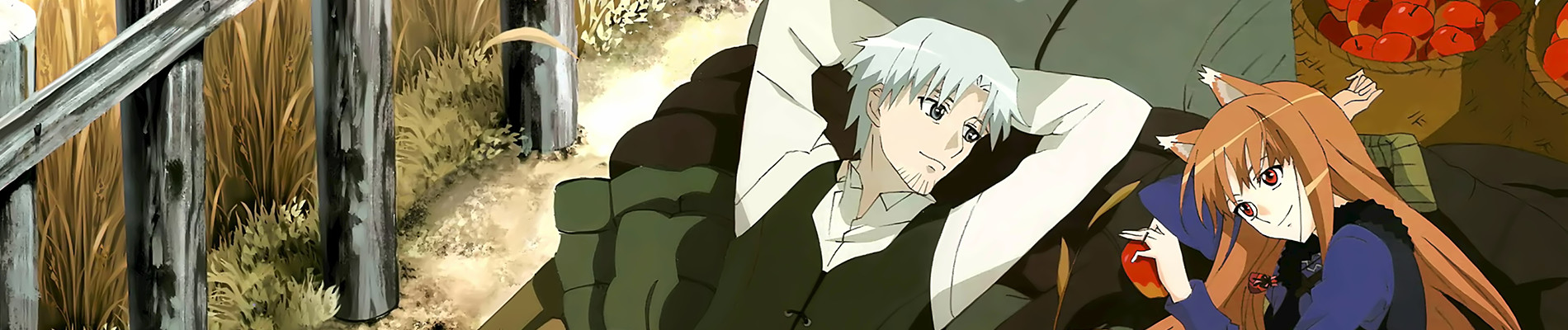
That’s the heartbeat of Spice and Wolf II: not grand spectacle, but the tenderness of mutual calibration. It’s the feeling of two people learning how to hold space for each other’s contradictions—Holo’s ancient wisdom and sharp pride, Lawrence’s pragmatic caution and quiet yearning—while navigating economies that breathe like living things: volatile, regional, deeply human. This isn’t economics as abstraction. It’s economics as intimacy: reading a merchant’s hesitation like a weather front, tracing inflation through the thinning wool of a shepherd’s coat, measuring trust in the length of a handshake before a contract is inked. The world feels rural not because it’s quaint, but because it’s rooted—every town gate creaks with local custom, every tax collector has a name and a grudge, every coin bears the thumbprint of someone who earned it by hand. You don’t conquer this world. You negotiate your way through it—slowly, respectfully, often awkwardly—and in doing so, you learn how love, too, must be bartered, tested, and tenderly revised.
Prince of Persia lands with that same melancholic exploration. Its description calls it “an all-new epic journey” built on “next-generation platforms”—but the player review cuts deeper: it’s about “a new prince, new lands and a brand new story completely separate from the sands…” That separation matters. Like Lawrence and Holo, this Prince isn’t inheriting myth—he’s walking raw, unscripted terrain, learning its rhythms as he goes. There’s no inherited legend to lean on, only the slow, deliberate act of moving through ruins and sun-baked villages, healing wounds that aren’t always physical. The healing dimension isn’t medical—it’s emotional recalibration. Just as Lawrence relearns risk after betrayal, and Holo relearns vulnerability after centuries of solitude, the Prince moves with a weight that feels earned, not imposed. Every ledge scaled, every sandstorm weathered, echoes the quiet resilience in Holo’s gaze when she watches Lawrence haggle—not for victory, but for understanding.
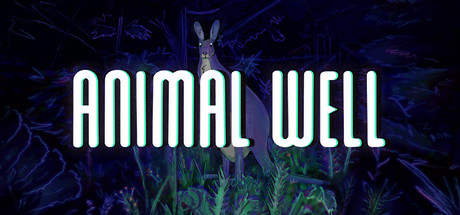
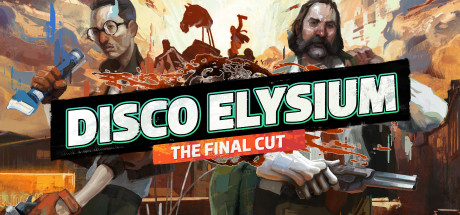
Disco Elysium - The Final Cut shares the political thriller and melancholic exploration dimensions—but here, politics isn’t court intrigue. It’s the grinding, soul-wearing reality of capital’s quiet violence. The player review nails it: “Capital has the ability to subsume all critiques into itself. Even those who would critique capital end up reinforcing it instead.” That line could be Lawrence’s internal monologue after a “successful” deal leaves a farmer poorer, or Holo’s weary observation of how even holy groves get priced per acre. Both Spice and Wolf II and Disco Elysium treat systems not as backdrops, but as characters—with moods, loopholes, and moral gravity. Lawrence doesn’t fight feudal lords; he navigates their tariffs. Harry Du Bois doesn’t storm a palace; he interviews witnesses whose rent just doubled. The tension lives in the gap between intention and outcome, in the exhaustion of caring deeply in a world that commodifies care.
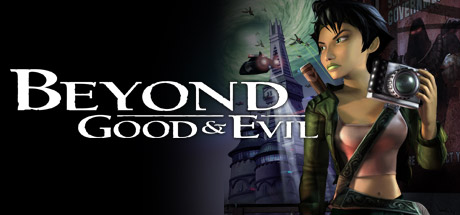
Beyond Good and Evil™ mirrors the political thriller and melancholic exploration through Jade’s lens—a reporter, not a warrior, whose weapon is attention. Her mission isn’t to smash conspiracies, but to document them: the flicker of fear in a vendor’s eyes, the way propaganda posters peel at the edges near the docks. Like Lawrence noting how wheat prices spike before the harvest fails—or Holo sensing the old god’s absence in a river’s changed current—Jade reads power through texture, not decree. The player review calls it “crazyyy,” but what’s truly electric is its grounded urgency: saving a planet isn’t about lasers—it’s about protecting the daily, the domestic, the small economies of trust between neighbors. Pey’j isn’t comic relief; he’s the steady presence who reminds Jade—and us—that resistance begins with showing up, day after day, in the same sun-dappled alley, asking one more question.
This pairing sings for the person who cries at ledgers, who pauses mid-game to watch NPCs trade gossip in a market square, who feels the ache of distance not in miles, but in the space between two hands that almost touch across a table stacked with contracts. For the one who knows love isn’t declared—it’s calculated, revised, and quietly, fiercely, chosen—again and again—in the soft light of a candle burning low over shared bread.
🎮10 Games That Match the Vibe




Match Dimensions Explained
❓Frequently Asked Questions
Why does Prince of Persia keep showing up in 'Games Like Spice and Wolf II' lists?
Because both lean hard into melancholic exploration—like wandering the quiet, sun-drenched ruins of Prince of Persia’s new kingdom while reflecting on loss, much like Lawrence and Holo’s slow-burn journey across pastoral landscapes. The game’s Healing & Slow Life dimension mirrors how Spice and Wolf II lingers on small moments: shared meals, haggling over grain prices, or watching the wind move through wheat fields—not just action.
Is there a Spice and Wolf II anime or visual novel adaptation I should play instead?
No—Spice and Wolf II isn’t an official title; it’s a fan shorthand for the *spirit* of the original series (trading, folklore, quiet intimacy), which is why recommendations focus on tonal matches like Disco Elysium. That game gives you Holo-level depth in dialogue—think your partner’s voice echoing in your head during a rain-soaked alley interrogation in Martinaise, or debating ethics with a union organizer while your own memories fray.
How does Beyond Good and Evil compare to Disco Elysium for Spice and Wolf fans?
Both are Political Thriller + Melancholic Exploration matches, but BG&E leans into Jade and Pey’j’s warm, grounded rapport—like Lawrence and Holo’s banter while investigating the DomZ conspiracy—whereas Disco Elysium drowns you in internal monologue and systemic decay. If you loved the ‘cozy resistance’ vibe of Spice and Wolf’s merchant guilds pushing back against corrupt nobles, BG&E’s 20th Anniversary edition delivers that same hopeful grit.
What’s the best game like Spice and Wolf II if I want that ‘quiet, thoughtful, slightly sad but warm’ feeling?
Prince of Persia is your strongest match—it’s built around healing, not combat, with long stretches of silent traversal across crumbling palaces and orchards, just like walking beside Holo at dusk. Critics called it ‘a meditation in motion,’ and player reviews highlight how its new prince reflects on legacy and memory the same way Lawrence does when weighing risk versus trust in a barley futures contract.