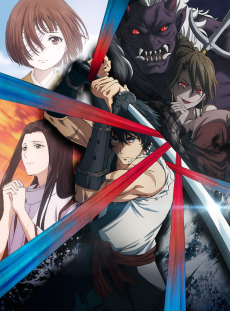
Sword of the Demon Hunter: Kijin Gentosho
In the Edo period, there was a shrine maiden called "Itsukihime" in the mountain village of Kadono. Jinta, a young man who acts as the shrine maiden's guardian despite being a stranger, encounters a mysterious demon who speaks of the far future in the forest where he went to defeat it. From Edo to the Heisei era, this huge Japanese fantasy series follows a demon man who travels through time while continuously questioning the meaning of wielding a sword.
(Source: Crunchyroll News, edited)
Notes:
• The first episode has a runtime of ~1 hour.
📺Anime Details
📝Editorial Analysis
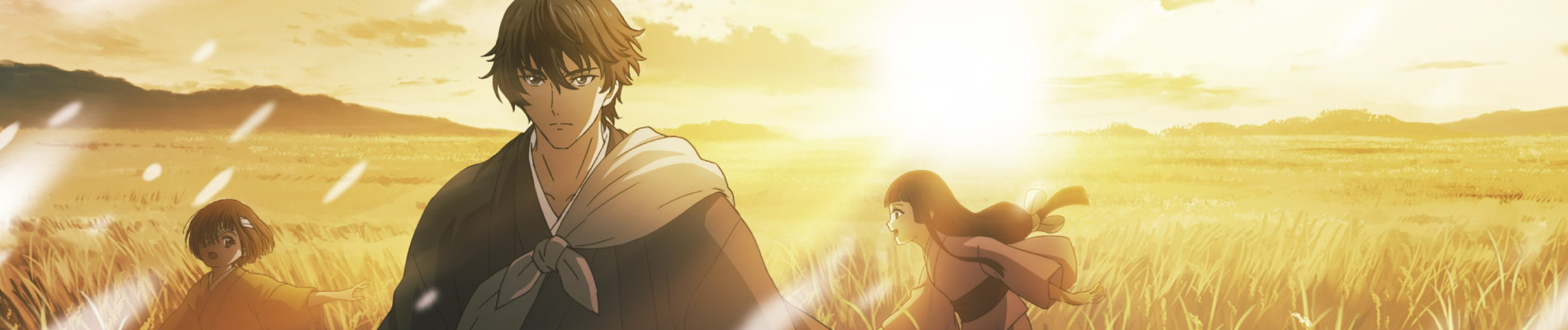
The forest breathes—cold, damp, ancient—and Jinta’s sword trembles in his grip not from fear, but from the wrongness of time folding around him. A demon stands before him, not snarling, not lunging, but speaking—calmly, sorrowfully—of Heisei-era neon and crumbling concrete, of a future he cannot name but somehow remembers. Itsukihime waits back at the shrine, silent beneath her white hakui, bound by duty and an arranged marriage neither chose. Jinta doesn’t swing yet. He listens. And in that suspended breath—between Edo moss and Heisei asphalt—the weight settles: every strike he makes is already haunted.
This isn’t fantasy as escape. It’s fantasy as palpable inheritance. Sword of the Demon Hunter: Kijin Gentosho wraps its historical setting not in pageantry but in quiet erosion—the way a shrine’s wooden steps wear smooth under generations of bare feet, the way a man’s silence after trauma becomes its own language. The episodic structure isn’t convenience; it’s accumulation. Each arc lands like a stone dropped into still water—ripples widening across decades, carrying grief, duty, violation, and the slow, stubborn persistence of care. You don’t just watch Jinta grow older—you feel the years settle in his shoulders, the way his swordplay tightens with exhaustion, not just skill. There’s no triumphant fanfare when he defeats a demon. There’s only the wind through pines, the distant chime of a bell, and the unspoken question hanging heavier than any blade: What does it mean to keep holding this thing—to keep choosing to cut—when time itself refuses to stay still?
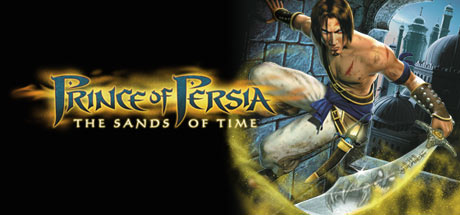
That same ache lives in Prince of Persia: The Sands of Time, where the Prince scrambles across crumbling archways, rewinding seconds not for spectacle, but to undo a single fatal misstep—a betrayal born of trust, a kingdom shattered by one careless hand. The player review calls it “tactical platforming… satisfying due to the locked directions,” but what really lingers is how the rewind feels like prayer: desperate, imperfect, human. Like Jinta returning to the same forest path year after year, hoping this time the demon won’t speak of futures he can’t change. Both works treat time not as a mechanic, but as memory made physical—a wound you carry in your joints, in your reflexes, in the way you flinch before danger arrives.
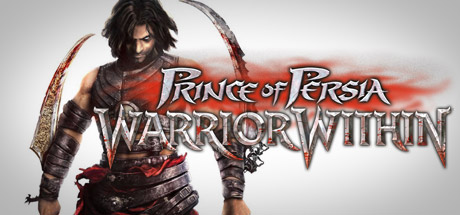
Then there’s Prince of Persia: Warrior Within, where Dahaka hunts the Prince—not as villain, but as consequence. The description calls him “an immortal incarnation of Fate,” and the player review says, “Dahaka chase is still as goated as it was before.” That chase isn’t just adrenaline—it’s dread made kinetic. Every corridor you sprint down echoes Jinta’s walk back to the shrine after confronting something he wasn’t meant to understand, something that knew his name before he did. The tragedy isn’t that Dahaka catches you—it’s that you recognize him. Just as Jinta recognizes the hollow in his own chest when he sees Itsukihime bow to tradition, or when he watches another time-skip blur the faces of people he once swore to protect.
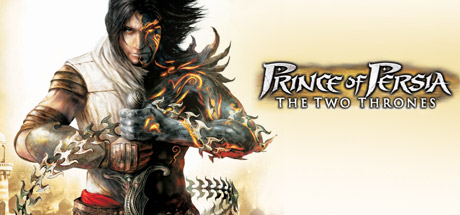
Even Prince of Persia: The Two Thrones, with its fractured self and war-torn Babylon, resonates—not in scale, but in texture. The Prince returns home “not for peace, but to find his homeland ravaged,” and the review notes how “it still plays great” when run right—like a memory preserved, slightly warped by time. That’s the emotional core of Kijin Gentosho: the horror and tenderness of returning to a place that should be familiar, only to find your own reflection cracked across eras, your vows echoing in different dialects, your sword both weapon and relic.
This pairing isn’t for fans of “cool fights” or “epic lore dumps.” It’s for the person who replays Warrior Within after ten years because they need to feel that chase again—not for the thrill, but for the exhaustion in their own breath when the music swells. It’s for the viewer who watches Jinta kneel beside Itsukihime during a rainstorm—not to confess, not to comfort, but simply to share the weight of silence—and thinks, Yes. That’s how grief sits. It’s for those who understand that the most devastating tragedies aren’t loud. They’re the ones folded into shrine rituals, into sword maintenance, into the way a man adjusts his sleeve before walking into a room where he knows he’ll have to lie. They love stories where time doesn’t heal—it layers. Where every slash of steel carries the ghost of every other slash before it. Where the greatest act of courage isn’t victory—but showing up, again and again, with a sword you’re not sure you should still be holding.
🎮7 Games That Match the Vibe

Match Dimensions Explained
❓Frequently Asked Questions
Why is Prince of Persia: Warrior Within always recommended for Sword of the Demon Hunter fans?
Because both lean hard into relentless, momentum-based sword combat with visceral parry-dodge rhythms—like dodging Dahaka’s axe swings while chaining slashes feels just like evading Kijin Gentosho’s demon hordes. The grim underworld aesthetic, time-bent urgency, and that signature ‘one wrong move = instant death’ tension? Totally shared DNA.
Is there a Sword of the Demon Hunter anime or manga adaptation?
No—there isn’t any official anime, manga, or live-action adaptation of Sword of the Demon Hunter: Kijin Gentosho. It’s a standalone game with no licensed spin-offs, unlike some other action titles in the match list (e.g., Prince of Persia has multiple film and comic adaptations). So if you’re hoping for more lore beyond the game’s cutscenes and boss fights—like Kaileena’s tragic arc in Two Thrones or the Sands of Time dagger’s origin—you’ll want to lean into those instead.
How does Dark Messiah of Might & Magic compare to Prince of Persia: The Sands of Time for Kijin Gentosho fans?
Sands of Time gives you precise, acrobatic platforming and rewind-powered puzzle combat—think flipping over traps then rewinding to bait guards—while Dark Messiah trades that for brutal, physics-driven melee where kicking enemies down stairs or stabbing through doors feels raw and unpredictable. If you love Kijin Gentosho’s fast-paced demon-slaying but crave grittier, more improvisational brawling (à la Arx Fatalis fans), Dark Messiah delivers—but it lacks Sands’ elegant time manipulation and fluid traversal.
What’s the best game like Sword of the Demon Hunter if I want that brooding, hunted-by-fate vibe?
Prince of Persia: Warrior Within is your top pick—it nails that ‘doomed warrior racing against inevitability’ mood, especially during the Dahaka chase sequences where the environment collapses behind you and every corridor feels like a narrowing noose. The player review even calls it ‘goated’ after replaying years later, and the score (84) matches Sands of Time and Two Thrones—proving its emotional weight and action spectacle hold up as strongly as Kijin Gentosho’s own tragic, high-stakes tone.