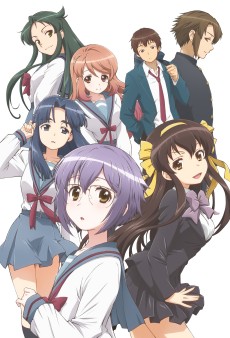
The Disappearance of Nagato Yuki-chan
📺Anime Details
📝Editorial Analysis
The quiet hum of the literature club room after school—sunlight slanting through dusty windows, pages turning slowly, the soft shush of a pencil erasing and rewriting a single line of poetry. Yuki sits perfectly still, eyes downcast, fingers curled just so around her pen—not cold, not distant, but present, in a way that feels like holding your breath underwater and remembering how to surface. There’s no grand confession, no dramatic twist—just the weight of a glance held a second too long, the warmth of shared silence between girls who know each other’s rhythms better than their own heartbeats.
What makes The Disappearance of Nagato Yuki-chan breathe is its refusal to rush feeling. It doesn’t dramatize emotion—it cultivates it. The air itself feels thick with unspoken care: the careful folding of a lunchbox napkin, the way someone lingers at the classroom door just to watch another walk away, the quiet pride in finishing a poem no one else will read aloud. This isn’t about trauma-as-plot-device or identity-as-mystery—it’s about how tenderness accumulates in small, repeated acts: showing up, listening, remembering how someone takes their tea. It’s soft, yes—but also resolute, like a hand held steady under trembling fingers. You don’t watch it to escape life—you watch it to remember how deeply ordinary moments can anchor you.
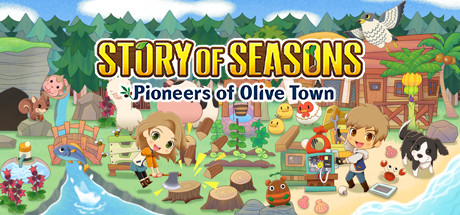
That same emotional gravity lives in STORY OF SEASONS: Pioneers of Olive Town, where healing isn’t a cutscene—it’s planting turnips at dawn, watching rain soften the soil, trading homemade jam with a neighbor who remembers your dog’s name. Its Healing & Slow Life dimension mirrors the anime’s rhythm: time isn’t measured in stakes, but in seasons, in growth, in the quiet accumulation of trust. Like Yuki learning to voice a wish instead of folding it into silence, Olive Town asks you to build something gentle—not for spectacle, but because it matters, because someone will sit beside you on the porch swing and say, “You did good today.”
Then there’s DAVE THE DIVER, which shares that same layered calm beneath surface busyness—the dive, the restaurant shift, the fish tank needing cleaning—all threaded with Healing & Slow Life intention. You’re not saving the world; you’re keeping the lights on, feeding people, remembering which regular likes extra wasabi. Just like Yuki’s classmates don’t “fix” her—they show up, adjust their pace, learn her language of pauses and half-smiles. Player reviews don’t praise combat systems or lore dumps—they talk about “the way time slows when you’re prepping octopus sashimi at 2 a.m., and suddenly realize you’ve smiled without thinking.” That’s the DNA: presence, not performance.
Even Prince of Persia, though seemingly worlds away in tone and setting, carries an unexpected resonance—not in its desert vistas or acrobatic leaps, but in how its Healing & Slow Life dimension quietly reshapes what heroism means. The player review notes it’s “a new prince, new lands, a brand new story completely separate”—and yet, beneath the sandstorms and swordplay, there’s a deliberate, almost meditative pacing: climbing ruins not to conquer, but to understand; choosing mercy not as plot point, but as breath. Like Yuki choosing to write her own poem instead of reciting someone else’s lines, it’s about reclaiming agency through slowness, through intentional return—to self, to place, to feeling safe enough to be soft.
This pairing speaks to the person who keeps a notebook full of overheard conversations, who replays a friend’s laugh in their head like a favorite song, who finds relief not in noise but in the exact weight of a well-worn book in their lap. It’s for the one who knows that healing isn’t always loud—and sometimes, the bravest thing is letting someone see you blink slowly, twice, before saying, “Yes. I’m here.”
🎮32 Games That Match the Vibe






















Match Dimensions Explained
❓Frequently Asked Questions
Why does Prince of Persia show up in 'Games Like The Disappearance of Nagato Yuki-chan' when it’s an action-adventure game?
Great question—it’s not about genre overlap, but shared emotional dimensions: both tap into that quiet, melancholic ‘Healing & Slow Life’ vibe amid ‘Adult & Dark Seinen’ themes. Think of how Nagato’s shy, introspective moments mirror the Prince’s solitary, reflective journeys through ruined palaces—less about combat, more about atmosphere, memory, and gentle emotional weight.
Is there a visual novel or anime adaptation of Dave the Diver?
No official visual novel or anime adaptation exists—but Dave the Diver *feels* like one in spirit. Its slice-of-life rhythm (running the Blue Hole café between dives), character-driven side stories (like Mina’s quiet confidence or Kuku’s earnest curiosity), and soft, sun-dappled art style hit that same tender, grounded sincerity as Nagato’s school-life scenes—just with more octopus sushi.
How does STORY OF SEASONS: Pioneers of Olive Town compare to FINAL FANTASY XIV Online for Nagato Yuki-chan fans?
Olive Town leans hard into ‘Healing & Slow Life’—planting crops, rebuilding town, bonding with villagers like shy, kind-hearted Lyla—while FFXIV leans into ‘JRPG Narrative’ with epic lore, cutscenes, and party banter (think Alisaie’s dry wit or G’raha’s earnestness). If you loved Nagato’s quiet growth and cozy classroom moments, Olive Town is your match; if you preferred the emotional heft of group dynamics and story arcs, FFXIV delivers that depth—just with way more dragons.
What’s the best game like Nagato Yuki-chan if I just want that warm, low-stakes, emotionally safe vibe?
STORY OF SEASONS: Pioneers of Olive Town is your perfect fit—especially early days in Olive Town where you’re quietly befriending townsfolk, tending your garden, and watching relationships bloom at their own pace (no deadlines, no combat stress). It mirrors Nagato’s gentle pacing and emotional safety—like sharing bento boxes or walking home under cherry blossoms, but with chickens and carpentry instead of club meetings.