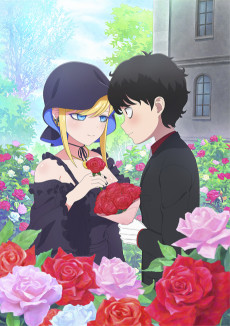
The Duke of Death and His Maid Season 3
📺Anime Details
📝Editorial Analysis
The candlelight flickers—not from wind, but because he exhales, and the air itself shudders. The Duke of Death and His Maid Season 3 opens not with a spell or a kiss, but with silence thick enough to taste: Bocchan standing barefoot in the moon-drenched hallway, his black gloves off, fingers trembling as he traces the cold brass doorknob of the sealed West Wing—where she once vanished into mist and memory. His breath hitches—not from fear, but from the unbearable weight of knowing: every time he reaches for her, time folds like parchment, magic bleeds at the seams, and love becomes an act of defiance against entropy itself.
This isn’t just supernatural romance—it’s grief rendered tactile. The full CGI doesn’t smooth over emotion; it amplifies its uncanny texture—the way light catches on a witch’s tear mid-fall, how a maid’s starched collar stiffens when she swallows hard before lying to protect him, the subtle warping of shadows during crossdressing scenes that aren’t comedic relief but quiet acts of self-erasure and reclamation. You don’t watch this season—you hold your breath beside characters who’ve learned love means memorizing the exact cadence of someone’s heartbeat before it stops… then learning how to listen for it again in silence. It makes you think about time not as linearity, but as residue: the scent of lavender soap clinging to a coat long after she’s gone, the way a wedding ring glints under lamplight like a covenant written in fading ink.
That same haunting resonance lives in BioShock Infinite, where Booker DeWitt’s debt isn’t monetary—it’s chronological. His mission to rescue Elizabeth isn’t just physical; it’s an excavation of fractured selves across collapsing realities. The player review admits the bitterness some feel—but what lingers is the ache of recognition: “I know that some people are still bitter about the Bioshock Infinite we could have gotten.” That phrase echoes Bocchan’s quiet torment—the Duke of Death and His Maid Season 3 doesn’t offer the story fans thought they’d get; it offers the one that had to be told, steeped in body horror (his cursed touch, her dissolving form), occult logic (witchcraft as inherited trauma), and time-as-wound. Both refuse catharsis without cost—and make you feel the weight of memory as something you carry in your bones.
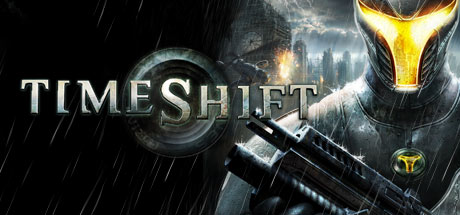
Then there’s TimeShift™, where Dr. Aiden Krone’s reckless Time Jump births a “disturbing alternate reality.” Not dystopia—dissonance. The description doesn’t say “ruined world”; it says frightening consequences. That’s the emotional architecture of Season 3: every magical choice fractures perception. When Bocchan wears her dress—not for mockery, but to step into her absence—the CGI doesn’t flatten it into gag; it renders the fabric’s unnatural drape, the way his shoulders slump under borrowed identity, the uncanny valley of almost-her. Like Krone, he isn’t mastering time—he’s haunted by its elasticity. And the player review nails the shared spirit: “this little 4 hour game is a blast, but it takes a little work to get it into a playable state.” Season 3 demands the same labor—not of installation, but of attentiveness: rewinding frames to catch the micro-tremor in a smile, reading between spells for what’s unsaid in the silence after “I’ll wait.”
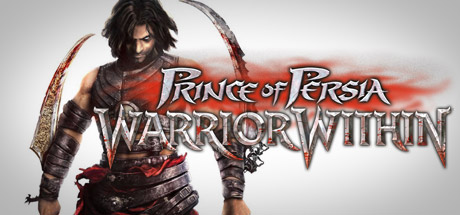
Even Prince of Persia: Warrior Within pulses with that same raw nerve. Hunted by Dahaka—an “immortal incarnation of Fate”—the Prince doesn’t fight monsters. He fights consequence made flesh. The player review calls the Dahaka chase “goated,” yes—but what gives it teeth is how inescapable it feels: no save point resets the dread, no cutscene absolves the guilt. In Season 3, the curse isn’t externalized as a beast—it’s in the way Bocchan flinches when a butterfly lands on his hand, or how the maid’s laugh catches, just once, like a record skipping over trauma. Both works weaponize body horror not through gore, but through presence: the wrongness of a loved one’s hand lingering too long on your arm, the chill when a spell’s echo sounds almost like her voice.
This pairing isn’t for casual fans of “magic + romance.” It’s for the ones who reread letters folded inside old books, who pause games mid-battle to stare at rain on a windowpane, who understand that love, memory, and time are verbs—not nouns—and that the most devastating magic isn’t in incantations, but in the quiet, stubborn act of choosing to remember her name—even when the world tries to unwrite it.
🎮4 Games That Match the Vibe

Match Dimensions Explained
❓Frequently Asked Questions
Why does BioShock Infinite keep showing up in 'Games Like The Duke of Death and His Maid Season 3' lists?
It’s not about the romance—it’s the shared obsession with time, memory, and identity collapse. Like when Yuuhi confronts fragmented versions of himself across timelines, Booker DeWitt unravels reality alongside Elizabeth in Columbia, especially during the lighthouse reveals and the baptism sequences where past choices physically warp the world. Both hinge on emotional weight distorting time itself—not just as a plot device, but as a visceral, body-horror-tinged experience.
Is there a game adaptation of The Duke of Death and His Maid Season 3?
No—there’s no official game adaptation, and none of the titles matched (like TimeShift™ or Prince of Persia: Warrior Within™) are based on the anime. Instead, they’re paired for their *thematic resonance*: TimeShift™ mirrors the show’s recursive guilt loops through Dr. Krone’s fractured timeline jumps, while Warrior Within’s Dahaka chase echoes Yuuhi’s relentless confrontation with his own cursed mortality.
How do Prince of Persia: Warrior Within and Last Epoch compare for fans of The Duke of Death’s gothic melancholy?
Warrior Within leans into oppressive, rain-slicked ruins and that haunting Dahaka pursuit—think Yuuhi’s quiet dread in the cemetery scenes—but it’s linear and story-driven. Last Epoch, meanwhile, lets you *build* that sorrow into your character: a Chronomancer class literally warps time to rewind damage or freeze enemies mid-swing, echoing how Yuuhi and Alice navigate fate like fragile, rewound film reels. Both hit the ‘body horror & occult’ dimension hard, but in totally different ways.
What’s the best game like The Duke of Death if I want that bittersweet, time-tinged romance vibe?
BioShock Infinite is your strongest match—not because of romance-as-fluff, but because of how Booker and Elizabeth’s bond reshapes time and memory itself, just like Yuuhi and Alice’s vows across lifetimes. That moment when Elizabeth opens multiple tears to reveal alternate realities? It lands with the same emotional gut-punch as Yuuhi remembering Alice across deaths. The 85-score review even nods to how deeply personal that unraveling feels—‘after replaying, it hits different.’