
The Legend of Hei 2
When an attack shatters the fragile peace between the spirit world and humanity, Hei teams up with Luye, the last disciple of his Shifu Wuxian, to expose a conspiracy that threatens both realms – and the bond they’ve sworn to protect.
(Source: GKIDS)
📺Anime Details
📝Editorial Analysis
The snow doesn’t fall in The Legend of Hei 2—it settles, heavy and hushed, into the cracks between broken pavement and frozen river ice, as Hei stands motionless beneath a fractured neon sign, breath pluming in the subzero air while Luye’s sword hums low against the silence. No music swells. No villain monologues. Just that quiet, aching weight of responsibility pressing down—not just on shoulders, but on bonds. That moment isn’t about power or victory. It’s about the tremor in his hand before he draws, the way his coat flaps like a held breath, the sheer stillness before rupture.

What makes The Legend of Hei 2 vibrate so deeply isn’t its urban fantasy scaffolding—it’s how it treats atmosphere as emotional architecture. This is melancholic exploration: every alleyway feels like a memory you didn’t know you had; every flicker of spirit-light reflects off wet concrete like grief catching the light. The snowscape isn’t backdrop—it’s texture, resistance, a physical manifestation of emotional distance between realms, between people, between past and present duty. You don’t just watch Hei move through the city—you feel the cold seep into your own joints, sense the exhaustion behind his calm, recognize that fragile peace isn’t absence of war, but the trembling pause before it returns. It’s quiet urgency, frozen loyalty, snow-heavy devotion.
That same resonance lives in Sacred Gold, where player reviews call it “full of jank, bugs and is not very stable on modern systems…”—yet its melancholic exploration dimension scores just as high as The Legend of Hei 2’s. Its description places you in a kingdom “fallen” under shadow, not overrun by spectacle, but dimmed, its grandeur eroded—not by spectacle, but by quiet decay. Like Hei walking past shuttered shops where spirit wards once glowed, Sacred Gold’s world feels worn thin at the edges, where heroism isn’t flashy triumph but trudging forward despite instability, despite glitches in the system itself. The emotional DNA isn’t in polish—it’s in perseverance amid fragility.
Prince of Persia (the 2024 reboot) lands with identical dimensions: Action Spectacle, yes—but crucially, Melancholic Exploration. Its description frames it as “an all-new epic journey” built by Ubisoft Montreal, introducing “a new prince, new lands and a brand new story completely separate from the sands…” That separation matters. Like Hei and Luye stepping outside Wuxian’s legacy into uncharted moral terrain, this Prince isn’t inheriting myth—he’s rebuilding meaning in unfamiliar ruins. Player reviews note the deliberate departure—no nostalgia crutches, no inherited gravitas—just presence, gravity, and the weight of choice in empty corridors and wind-scoured cliffs. You feel the solitude in both: Hei’s silent walk across a frozen bridge; the Prince’s solitary descent into a sun-bleached canyon where every footstep echoes alone.
And then there’s STAR WARS™ Jedi Knight - Jedi Academy™, scoring lower (70) but sharing Tactical Warfare—not just combat choreography, but consequence-laden action. Its description positions you as “a new student eager to learn the ways of the Force,” thrust into “a Galaxy-spanning adventure to help restore balance.” That phrasing—restore balance—mirrors Hei and Luye’s vow: not to win, but to protect the bond between realms. Player reviews highlight the Padawan’s agency in building their path—light/dark choices, skill trees, weapon forging—all echoing how Hei’s cultivation isn’t about raw power, but disciplined intention. Every parry, every spell, every silenced gunshot in The Legend of Hei 2 carries the same weight as a lightsaber clash in Jedi Academy: precision as ethics, restraint as strength.
This pairing isn’t for fans of slick escalation or effortless mastery. It’s for the viewer who watches Hei catch snowflakes on his palm mid-chase and feels the ache of what’s unsaid. For the player who lingers in Two Worlds Epic Edition, replaying it across four operating systems—XP, 7, 10, 11—not for nostalgia, but because Kyra’s disappearance hits like Luye’s first unspoken doubt: a mystery that refuses to resolve cleanly, demanding patience, repetition, quiet attention. It’s for those who love worlds where magic has grit, where swords sing with exhaustion, where snow doesn’t sparkle—it insists. Where every fight is also a conversation, every silence louder than gunfire, and every bond worth protecting—even when the ice won’t hold.
🎮11 Games That Match the Vibe


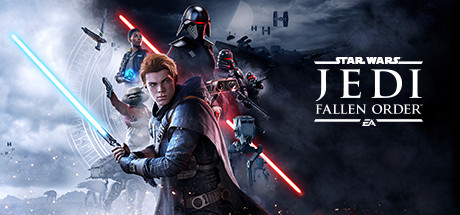

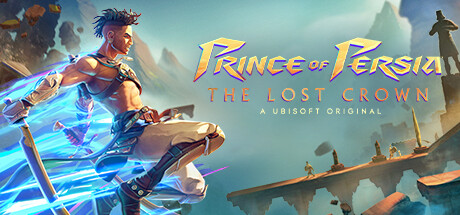
Match Dimensions Explained
❓Frequently Asked Questions
Why does Sacred Gold feel so similar to The Legend of Hei 2’s tone despite being a fantasy RPG?
Because both lean hard into 'Melancholic Exploration' — think quiet, rain-soaked ruins in Sacred Gold where you’re hunting orcs while reflecting on Ancaria’s decay, just like Hei 2’s mist-laden mountain shrines and somber flashbacks to lost spirits. It’s not the lore that matches, but the *pace* and emotional weight: long walks through desolate landscapes, minimal UI, and that same bittersweet stillness before the action explodes.
Is there an anime adaptation of Prince of Persia that’s anything like The Legend of Hei 2?
No — Prince of Persia (2024) is a live-action reboot with zero anime ties, but its *vibe* nails Hei 2’s duality: stunning action spectacle (like the Prince leaping across crumbling ziggurats in slow-mo sandstorms) layered over melancholic exploration (his lonely trek through abandoned desert temples echoing Hei’s silent walks through spirit-haunted bamboo groves). Fans of Hei 2’s emotional restraint will appreciate how little exposition it uses — just atmosphere and movement.
How does Two Worlds Epic Edition compare to Sacred Gold for Hei 2 fans who love world-building over combat?
Two Worlds leans even harder into melancholic exploration than Sacred Gold — imagine Kyra vanishing into fog-choked forests while you piece together fragmented lore from crumbling Orc tablets, versus Sacred Gold’s more frantic orc-slaying in open fields. Both have janky systems (Two Worlds runs on Windows 11 but still feels ‘off’), but if you loved Hei 2’s slow-burn mystery and environmental storytelling, Two Worlds’ 300-year-old grudges and sister-driven sorrow hit closer to home.
What’s the best game like The Legend of Hei 2 if I want that quiet, rainy, spiritually heavy mood after a long day?
Go straight to Prince of Persia (2024) — especially the ‘Hourglass Ruins’ sequence where the Prince walks alone through flooded, candlelit halls as time drips like rain from cracked ceilings. It’s got the same hushed reverence, painterly lighting, and emotional weight as Hei 2’s shrine meditations — no loud HUDs, no chatter, just you, the silence, and the sense that every stone holds a memory. Sacred Gold tries, but its bugs and clunky pacing break the spell.