
The Pet Girl of Sakurasou
The first time he saw her, it was love at first sight. Unfortunately for Sorata Kanda, "she" was a cat named Hikari and his school's rules forbid keeping pets in the regular dorms. As a result, Sorata is banished to the infamous Sakura Hall alongside other troublesome and unusual students like Jin, overzealous playboy, Ryuunosuke, the reclusive hermit, and Mashiro, a brilliant artist who's so unfocused and clueless about the real world that dorm supervisor Ms. Sengoku assigns Sorata the task of taking care of her along with his ever-growing collection of stray cats!
(Source: Sentai Filmworks)
📺Anime Details
📝Editorial Analysis
The smell of pencil shavings and dried ink hangs in the air of Room 201—not sharp, not sterile, but warm, slightly dusty, like old paper left open on a sunlit desk. Sorata’s hand trembles as he erases again, smudging the line he just drew for Mashiro’s character sheet—her expression too stiff, her eyes too blank. He glances sideways: she’s staring out the window, humming off-key, utterly unaware that this sketch is due tomorrow, that her entire future as a professional manga artist hinges on it—and that he’s the only one holding the deadline together with duct tape, caffeine, and quiet, stubborn care.

That’s the heartbeat of The Pet Girl of Sakurasou: not grand gestures or world-ending stakes, but the weight of small promises kept in silence—the kind that accumulate until your chest aches with tenderness. It doesn’t feel like school life; it feels like learning how to hold someone else’s fragility without breaking it. The dorm isn’t a setting—it’s a breathing organism of mismatched rhythms: Jin’s performative charm masking exhaustion, Ryuunosuke’s headphones as armor, Ms. Sengoku’s tired smile hiding years of unseen labor. There’s no villain, only the slow, grinding pressure of becoming—of showing up, day after day, for people who forget how to ask for help.
What makes The Pet Girl of Sakurasou ache so deeply isn’t its romance or comedy—it’s how it treats time like a shared, fragile resource. Every late-night study session, every half-finished sketch pinned to the wall, every awkward confession muffled by rain on the roof—it all lives in the liminal space between failure and grace. You don’t watch it to escape reality. You watch it because it honors reality—the way love shows up in laundry duty, how grief hides in a perfectly drawn eyelash, how ambition stutters when your hands shake holding a brush.
That emotional DNA pulses strongest in Persona 5 Royal, where the seamless transition between daily life mirrors Sakurasou’s rhythm: school days bleed into confessions under train platforms, part-time jobs fold into quiet support for friends spiraling inward. Its stunning soundtrack doesn’t just accompany emotion—it scores the hush before someone finally speaks their truth, just like the pause before Sorata admits he’s not protecting Mashiro—he’s learning how to be seen by her. Both understand that growth isn’t linear; it’s measured in shared meals, missed deadlines, and the courage to say “I’m still figuring it out.”
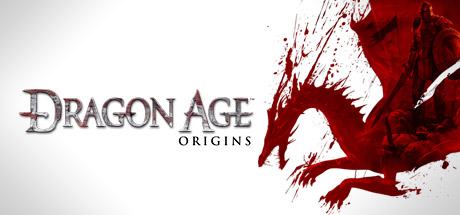
Dragon Age: Origins resonates in its raw, unvarnished emotional narrative: the weight of legacy, the exhaustion of carrying others’ hopes, the quiet devastation when loyalty fractures—not through betrayal, but through misunderstanding. Like Sorata misreading Mashiro’s silence as indifference, or Jin mistaking Ryuunosuke’s withdrawal for apathy, the game’s pause attack mechanic lets you linger in those charged, breath-held moments—where a glance, a hesitation, a withheld word carries more consequence than any battle cry. Player reviews call it “great” not for spectacle, but for how it makes consequence feel intimate, not epic.
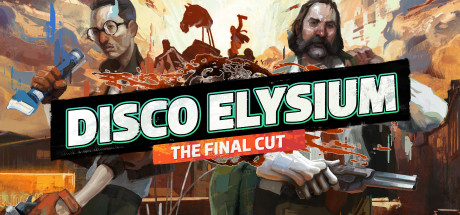
And Disco Elysium - The Final Cut, with its fractured, philosophical voice—“Capital has the ability to subsume all critiques into itself”—echoes Sakurasou’s subtle critique of systems that demand brilliance while denying care. Mashiro isn’t “broken”; she’s unmoored by expectations she never chose. So is Harry Du Bois—both artists drowning in worlds that mistake output for worth. Their healing isn’t in fixing, but in witnessing: the detective’s internal monologues mirror Sorata’s silent calculations—how much can I give? How much can I hold?—without ever naming the fear aloud.
This pairing isn’t for fans of “wholesome fluff” or “deep lore.” It’s for the person who rewatched the scene where Sorata tapes Mashiro’s scattered pages back together—not because it’s cute, but because they knew, in their bones, what it means to reconstruct someone’s dignity from fragments. It’s for the player who paused Mass Effect (2007) mid-dialogue—not to strategize, but to sit with Shepard’s exhaustion, the way his voice cracks just once when saying “I’ll be there,” knowing full well he might not survive the next mission. These are stories for people who recognize love not as fireworks, but as the steady hand holding the eraser, the quiet presence in the room when no one else stays, the unspoken vow to keep showing up—even when you’re running on fumes, even when you’re not sure you’re enough.
🎮22 Games That Match the Vibe

















Match Dimensions Explained
❓Frequently Asked Questions
Why does Persona 5 Royal keep coming up when I search for games like The Pet Girl of Sakurasou?
Because both center on a socially isolated protagonist moving into a shared living space (Joker’s Shibuya apartment ↔ Sorata’s Sakura Dorm), forming deep, emotionally layered bonds with quirky, vulnerable girls—like Ann Takamaki’s quiet insecurity or Rio’s guarded artistic passion. The daily life rhythm, romantic confessions during rainy afternoons, and that bittersweet ‘found family’ crescendo in the third act hit the same emotional beats as Sakurasou’s character arcs.
Is there an anime or visual novel adaptation of Dragon Age: Origins that captures the Sakurasou vibe?
No official anime or VN adaptation exists—but Dragon Age: Origins *itself* delivers the Sakurasou-like emotional intimacy through its romance routes, especially with Morrigan (her sharp wit masking loneliness) or Leliana (a former bard rebuilding her identity). The pause-and-plan combat mirrors Sakurasou’s quiet, reflective pacing, and scenes like the campfire conversations at night feel just as tender and character-driven as Sorata’s late-night talks with Mashiro.
How does Jade Empire compare to Persona 5 Royal for Sakurasou fans who love slow-burn romance and emotional growth?
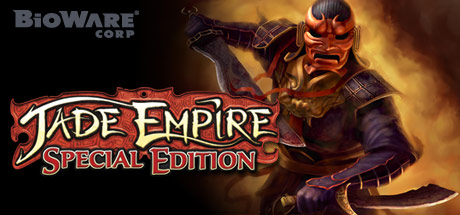
Jade Empire leans more into poetic, almost mythic emotional storytelling—think Master Li’s tragic mentorship mirroring Sorata’s protective arc, or the open-palm path’s emphasis on compassion over force—while P5R offers tighter, modern-day romantic scaffolding (like Futaba’s anxiety-to-confidence arc echoing Mashiro’s journey). Both use martial arts training as metaphor for personal growth, but Jade Empire’s quieter, less dialogue-heavy approach feels like Sakurasou’s gentler, more atmospheric cousin.
What’s the best game like The Pet Girl of Sakurasou if I want that warm, melancholic ‘rainy dorm room’ mood with meaningful character moments?
Disco Elysium — surprisingly! Not for the setting, but for the *mood*: think Harry’s rain-soaked, introspective walks through Martinaise mirroring Sorata’s quiet hallway strolls, or his fragile, hopeful bond with Kim—a grounded, emotionally honest connection like Sorata and Mashiro’s. The game’s melancholic beauty, layered internal monologues, and focus on healing through small human gestures nail that Sakurasou feeling better than most JRPGs.