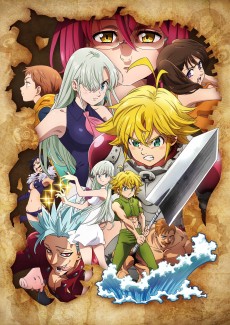
The Seven Deadly Sins: Imperial Wrath of the Gods
📺Anime Details
📝Editorial Analysis
The air tastes like burnt honey and old iron. A single feather—iridescent, impossibly light—drifts down as the ground fractures beneath Meliodor’s feet, not from force, but from memory unspooling: a village he swore he saved, now flickering into ash because someone rewrote it. That moment isn’t spectacle—it’s vertigo. Not just “magic gone wrong,” but the sickening lurch when your own past becomes contested terrain, when loyalty hinges on whether you trust your own recollection more than the person standing beside you.
That’s the atmosphere: unmoored certainty. Not just fantasy spectacle or shounen escalation—but the quiet dread of realizing your identity is stitched together with threads you didn’t choose, and every laugh shared with a fairy or demon might dissolve if the right spell hits the right nerve. It’s warmth undercut by fragility, camaraderie shadowed by the knowledge that memory manipulation isn’t a plot device—it’s a weapon aimed at the soul’s foundation. You don’t just watch battles—you hold your breath waiting for the next time someone blinks and forgets their own name, or worse, remembers too much of what they were told to bury. It makes you question how much of your own history is yours—and how much is just… convenient.
Prince of Persia: The Sands of Time lives in that same breathless tension. Its description anchors us in “a legend spun in an ancient tongue… ruled by deceit,” where a young prince draws power from a dagger that rewrites time itself—not cleanly, not kindly, but with consequences that ripple through identity and consequence. The player review nails it: “tactical platforming… satisfying due to the locked directions.” That constraint mirrors the anime’s emotional architecture—every choice feels bounded, every rewind a gamble with selfhood. When the Prince resets seconds only to watch his own actions repeat with eerie inevitability, it’s the same gut-punch as watching Diane hesitate before striking, unsure if her rage belongs to her, or to the echo of a command buried deep.
Then there’s Prince of Persia: Warrior Within, where the Prince is hunted by Dahaka, “an immortal incarnation of Fate.” The description doesn’t say “fate”—it says “an immortal incarnation of F”—and that truncated word hangs like smoke: Fate? Fear? Failure? The player review calls the Dahaka chase “still as goated as it was before”—because it’s not just pursuit. It’s inescapable consequence, the physical manifestation of time’s debt coming due. Just like Meliodor’s curse isn’t just pain—it’s memory folding in on itself until even victory feels like betrayal. Both demand you move forward while being dragged backward by something older than your will.
And Last Epoch, though its description is sparse, shares the same dimensional weight: Time & Memory, Action Spectacle. Not just flashy combos—but a world where time isn’t linear, where past echoes bleed into present combat, where skill trees branch not just into damage types, but into temporal stances, echoes of choices made centuries ago. Its 83 score isn’t for polish—it’s for density of consequence. Like the anime’s ensemble cast, where each Sin carries wounds rewritten across lifetimes, Last Epoch’s classes don’t just fight—they reclaim. Every parry, every rift opened, feels like resisting erasure.
F1® Manager 2024 stands apart—not in spectacle, but in emotional narrative and tactical warfare. Its description mentions “warfare,” yes—but war waged in boardrooms, pit stops, split-second decisions that rewrite seasons. The player isn’t swinging a sword; they’re weighing a driver’s confidence against tire degradation, knowing one misread memory—of last year’s rain line, of a rival’s pattern—could cost everything. That quiet, grinding pressure? That’s the anime’s quieter moments: Elizabeth signing a treaty while her hand trembles, not from fear, but from remembering which version of peace she’s agreed to this time.
This pairing isn’t for fans of “cool powers” or “epic fights.” It’s for the ones who replay scenes just to catch the micro-expression when a character almost remembers—and then doesn’t. For players who pause mid-sword swing in Prince of Persia not to admire the animation, but to stare at the sand slipping through the hourglass UI and wonder: whose time is this, really? It’s for people who feel nostalgia not as warmth, but as weight—who know that the most devastating magic isn’t fire or ice, but the quiet, surgical removal of a single name from a shared story. They don’t want escape. They want resonance—that shiver when fiction holds up a mirror cracked just enough to show the fault lines in your own remembering.
🎮6 Games That Match the Vibe
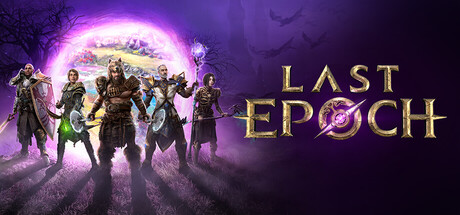
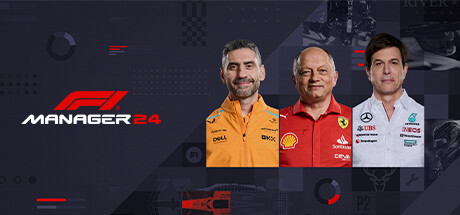
Match Dimensions Explained
❓Frequently Asked Questions
Why does The Seven Deadly Sins: Imperial Wrath of the Gods feel so similar to Prince of Persia: Warrior Within?
Because both lean hard into high-stakes, cinematic action spectacle with relentless pursuit sequences—like Dahaka chasing you through crumbling ruins in Warrior Within, mirroring how Meliodas and Escanor chase enemies across shattered landscapes in Imperial Wrath. The time-manipulation mechanics (rewind, slow-mo) and visceral sword-slash combat feedback are nearly identical in pacing and impact.
Is there a mobile or anime adaptation of The Seven Deadly Sins: Imperial Wrath of the Gods?
No—Imperial Wrath is exclusively a console/PC action RPG based on the manga, not an anime tie-in or mobile spin-off. But if you love its over-the-top battles and mythic tone, Prince of Persia: The Sands of Time delivers that same blend of ancient-world lore, dagger-fueled time powers, and dramatic betrayal scenes—just with Persian instead of Britannian gods.
How does Last Epoch compare to The Seven Deadly Sins: Imperial Wrath of the Gods for build-crafting and skill combos?
Last Epoch wins on sheer depth: its class system lets you mix skills like Chrono Shift (time-warp teleport) and Temporal Rift (area freeze) in ways that mirror how Imperial Wrath lets you chain Meliodas’ Demon Mark with Diane’s Giant Form—but with way more granular customization, 10+ skill trees, and loot-driven synergy loops that reviewers call 'endlessly replayable'.
What’s the best game like The Seven Deadly Sins: Imperial Wrath of the Gods if I want intense, emotionally charged boss fights with heavy memory themes?
Prince of Persia: The Two Thrones is your pick—it’s packed with guilt-ridden flashbacks, Kaileena’s haunting presence, and that unforgettable split-personality combat where you literally fight your darker self mid-battle. Like Imperial Wrath’s Escanor vs. Meliodas showdowns, it ties emotional stakes directly to time-and-memory mechanics, all wrapped in Babylonian ruins and crumbling throne rooms.