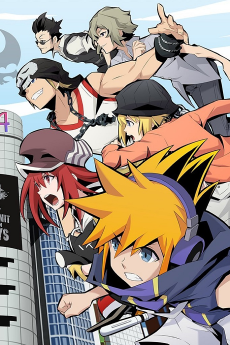
The World Ends with You The Animation
📺Anime Details
📝Editorial Analysis
The static hum of Shibuya Crossing at midnight — not the cheerful chaos of daytime, but the hush right before rain hits the pavement, neon signs flickering like dying synapses, your own breath loud in your ears as you realize no one else is breathing at all. That’s where The World Ends with You The Animation begins: not with a bang, but with the suffocating weight of amnesia, of being dropped into a city you know but can’t name, surrounded by faces you recognize but can’t recall, your pulse syncing to a rhythm you didn’t choose. You’re not just dead — you’re rehabilitating death, learning how to feel again while the world glitches around you like corrupted memory.
This isn’t urban fantasy as spectacle. It’s urban fantasy as interiority. The city isn’t backdrop — it’s nervous system. Every alleyway pulses with unspoken grief; every convenience store receipt holds a fragment of erased identity; every text message from a stranger arrives like a diagnosis. The supernatural isn’t magic — it’s memory manipulation made manifest: rules that rewrite who you were, partners whose trust feels like oxygen, and survival that hinges less on combat than on relearning how to care. You don’t level up stats — you reassemble emotional grammar. The tension isn’t “will he win?” but “will he remember why he should want to?”
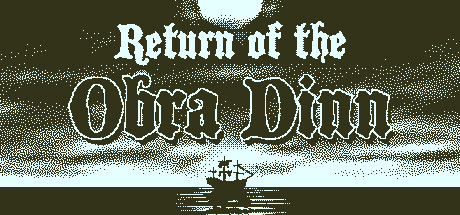
That fragile, rehabilitative ache echoes sharply in Return of the Obra Dinn, where deduction isn’t about solving a puzzle — it’s about reconstructing lives from frozen moments, listening to fragmented voices, watching identities dissolve and reform in the ship’s log like half-remembered dreams. Its 77-scored “Mystery & Detective” dimension isn’t procedural; it’s emotional archaeology. Like Neku piecing together his own erasure, you trace deaths not for closure, but because forgetting feels like complicity. The silence between clues hits the same way Shibuya’s quiet does — not empty, but charged with absence.
Then there’s Disco Elysium - The Final Cut, rated 67 for “Mystery & Detective, Emotional Narrative”, where you play a detective whose mind is a warzone of competing ideologies, each skill voice shouting over the last — “Logic says this. Empathy says that. Capital says nothing matters.” The player review quotes a line about capital subsuming critique — which lands with eerie precision beside The World Ends with You The Animation’s core tension: a system that weaponizes memory, sells identity as currency, and forces you to negotiate your soul in a marketplace disguised as a game. Both refuse catharsis. Both make you sit with dissonance — not as flaw, but as condition.
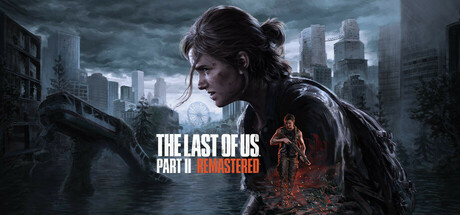
Even The Last of Us™ Part II Remastered, sharing that 72-scored “Emotional Narrative, Survival & Crafting” space, resonates — not through action, but through its relentless physicality of grief. When Ellie’s hands shake while crafting a shiv, or when she stares at a photo she can’t bring herself to touch, it mirrors Neku’s trembling fingers tracing a faded sticker on his phone — both characters surviving in the body long after the mind has stopped believing in continuity. The crafting isn’t utility; it’s ritual. A way to say I’m still here, even when memory won’t hold the shape of why.
Not Chains, though — its description calls it a “relaxing arcade match 3 casual game”, linking bubbles with physics-driven simplicity. A player calls it “connect 4 in nutshell”. That’s lightness, not weight. No amnesia. No rehabilitation. Just color, chain, clear — a loop without residue. It shares a score, but none of the DNA. Same for Crash Time 2, dismissed by players for “awful controls” and “janky physics” — its open-world racing is structural chaos, not emotional architecture. Its “Mystery & Detective” tag feels like a mislabel, not a resonance.
This pairing speaks to someone who watches anime not for escape, but for recognition: the person who replays a single five-second shot of Neku staring at his reflection in a rain-smeared window, not because it’s pretty, but because it aches with the exact texture of dissociation after loss. The player who lingers in Disco Elysium’s rain-soaked alleys not to solve cases, but to hear their own contradictions spoken aloud by a broken cop. The one who finishes Return of the Obra Dinn and sits in silence, haunted not by ghosts, but by the sheer volume of unlived life in a single ledger page. They don’t want stories about heroes winning. They want stories about people holding on — to memory, to meaning, to the stubborn, trembling insistence that feeling matters, even when the world is designed to erase it.
🎮12 Games That Match the Vibe
Match Dimensions Explained
❓Frequently Asked Questions
Why does Return of the Obra Dinn keep showing up in 'Games Like The World Ends with You The Animation' lists?
Because both lean hard into fragmented, emotionally charged storytelling told through non-linear clues — like TWEWY’s Shibuya crosswalk flashbacks or Obra Dinn’s haunting ship log reconstructions. You piece together character fates one eerie vignette at a time, and both rely on sharp visual symbolism (Obra Dinn’s monochrome dithering vs. TWEWY’s graffiti-stylized UI) to build tension without exposition.
Is there an anime adaptation of Disco Elysium that captures the same vibe as The World Ends with You The Animation?
No — Disco Elysium has no anime adaptation, and honestly, it wouldn’t translate the same way: TWEWY’s animation thrives on hyper-stylized street fashion and synchronized psychic battles, while Disco Elysium lives in grimy, rain-slicked dialogue and internal monologue (like Detective Harrier’s voiceover spiraling about existential dread in the ruins of Martinaise). They share ‘Emotional Narrative’ and ‘Mystery & Detective’ DNA, but one’s a neon-lit ensemble cast, the other’s a solo descent into your own skull.
How does The Last of Us Part II Remastered compare to The World Ends with You The Animation in terms of emotional weight and pacing?
Both hit hard with interwoven dual timelines and morally gray choices — like Ellie’s vengeful spiral mirroring Neku’s isolation and growth across Shibuya’s week — but TWEWY uses rapid-fire urban energy (think the Scramble Crossing boss fight synced to J-pop), while Part II leans into slow-burn, grounded intimacy (e.g., Abby’s hospital flashbacks or the quiet guitar scene in Jackson). Neither shies from pain, but one pulses; the other breathes.
What’s the best game like TWEWY if I want that same urgent, stylish, ‘I’m figuring out who I am while saving the city’ vibe?
Disco Elysium — especially during early-game sequences where you’re literally reassembling your identity (amnesia, failed cop, talking to your own skill checks like ‘Logic’ or ‘Empathy’ as separate voices) while navigating a fractured city full of factions and secrets. It’s not flashy like Shibuya’s fashion shows, but that raw, self-reckoning urgency? Same gut-punch. Just swap psych pins for skill checks and ramen stalls for taverns.