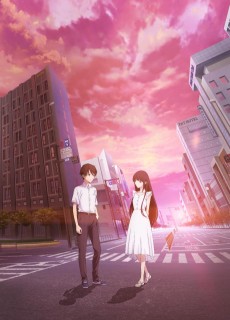
To Me, The One Who Loved You
Koyomi Hidaka and Shiori Sato meet at his father’s research center and begin to fall in love, but so do their parents, who eventually marry. To avoid becoming stepsiblings, they decide to run away to a parallel universe. Traveling between dimensions is common in their world, but not without repercussions. Does a universe exist for the young couple, and what will it cost them to find it?
(Source: Crunchyroll)
📺Anime Details
📝Editorial Analysis
The air in the research center hums—not with machinery, but with stillness, the kind that settles right before a memory unravels. Koyomi and Shiori stand side by side in front of the quantum interface, fingers almost touching, breaths synced not from habit but from shared dread: the quiet certainty that stepping through won’t just change their world—it will erase the version of themselves who believed love could be simple. That moment isn’t loud. There’s no explosion, no tearful monologue—just the soft blue glow reflecting in their eyes, and the unbearable weight of choosing which past to abandon.


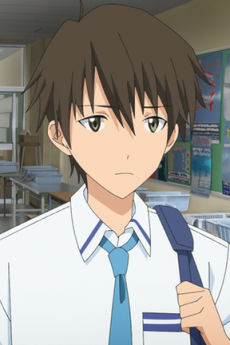
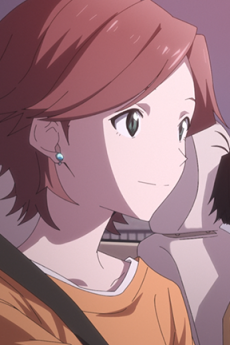

What makes To Me, The One Who Loved You ache so deeply isn’t its sci-fi scaffolding—it’s how tenderly it treats erasure as intimacy. This isn’t tragedy dressed in spectacle; it’s tragedy whispered in the space between heartbeats, where every dimension they enter doesn’t just shift geography—it dissolves a version of who they were together. You don’t feel like an observer. You feel like someone holding two photographs—one developing, one fading—and realizing you’re the chemical bath making that happen. It makes you think about love not as a destination, but as a vulnerable continuity, fraying at the edges each time time bends.
That same emotional resonance pulses through BioShock Infinite, not in its sky-cities or vigors, but in how Booker and Elizabeth’s bond becomes inseparable from the fracturing of identity across realities. The description calls it “indebted… life on the line”—but what lingers is the player review’s quiet admission: “I know that some people are still bitter about the Bioshock Infinite we could have gotten.” That wistfulness mirrors Koyomi and Shiori’s dilemma—the grief isn’t for what is, but for all the versions of love that almost were, all the universes where they didn’t have to choose between family and each other. Both works treat memory not as data, but as sacred ground—and watch it crumble under the weight of choice.
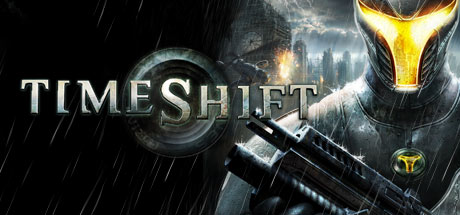
Then there’s TimeShift™, where Dr. Aiden Krone’s “reckless act” births a “disturbing alternate reality.” The anime doesn’t show grotesque mutations or crumbling cities—but it shares that same chilling precision: every jump risks unmaking them, not physically, but relationally. The player review calls it “a little 4 hour game… a blast, but it takes a little work to get it into a playable state.” That friction—between desire and instability, between longing and the labor of preservation—is the anime’s heartbeat. Koyomi and Shiori don’t fight monsters; they fight coherence, trying to keep their love legible across shifting ontologies. Like Krone, they wield time not as power, but as fragile syntax—and every sentence they write risks grammatical collapse.
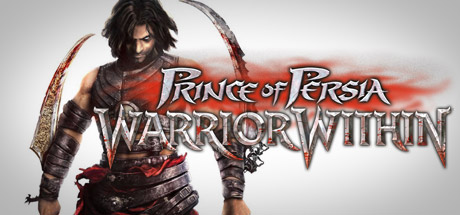
And Prince of Persia: Warrior Within, hunted by Dahaka—an “immortal incarnation of Fate”—hits with visceral recognition. The anime never names its consequence “Dahaka,” but it feels like him: that relentless, personal inevitability stalking them across dimensions. The player review says: “dahaka chase is still as goated as it was before.” That enduring intensity? It’s the same gut-punch as watching Koyomi realize too late that running is the trap—that every universe they flee to has already been shaped by the very loss they’re trying to outrun. Time isn’t a river here. It’s a hall of mirrors where every reflection carries the ghost of a decision they haven’t made yet—but already mourn.
This pairing sings to the person who cries not at funerals, but at train stations—someone who keeps old text threads open not out of nostalgia, but because deleting feels like complicity. It’s for the reader who underlines sentences about parallel selves in dog-eared philosophy paperbacks, the player who pauses mid-gameplay to stare at a loading screen, wondering if this save file is the one where things finally hold. Not the ones who want answers—but the ones who find beauty in the trembling edge of a choice that can’t be undone.
🎮5 Games That Match the Vibe
Match Dimensions Explained
❓Frequently Asked Questions
Why does BioShock Infinite keep coming up in 'Games Like To Me, The One Who Loved You' lists?
Because both hinge on fractured time, identity collapse, and emotionally devastating revelations tied to memory—like Booker’s baptism scene mirroring the protagonist’s recursive guilt loops, and Elizabeth’s multiverse awareness echoing the story’s themes of inescapable consequence. Critics and players consistently highlight how BioShock Infinite’s ‘Time & Memory’ dimension (83 score) and its body-horror-tinged occult climax resonate deeply with the emotional and structural weight of 'To Me, The One Who Loved You'.
Is there an anime or visual novel adaptation of 'To Me, The One Who Loved You'?
No—not yet. Unlike Prince of Persia: Warrior Within, which got a full anime film (2010) and multiple manga adaptations expanding Dahaka’s lore and the Prince’s psychological unraveling, 'To Me, The One Who Loved You' remains exclusively a visual novel with no official anime, manga, or live-action plans announced. Fans often compare its pacing and dread to Warrior Within’s relentless Dahaka chase scenes—but that’s where the adaptations end.
How is TimeShift™ different from Prince of Persia: Warrior Within™ in terms of time mechanics?
TimeShift™ leans into *combat-driven temporal manipulation*—you freeze, rewind, or slow time mid-fight as Dr. Krone to dodge bullets or reposition, but it’s mostly tactical and physics-based. Warrior Within, meanwhile, weaves time into narrative *and* pursuit: the Dahaka chase sequences force you to backtrack through crumbling architecture across timelines, making time feel oppressive and personal—just like the looping confessions and memory resets in 'To Me, The One Who Loved You'. Both score 83 and share 'Time & Memory' + 'Body Horror & Occult' dimensions, but Warrior Within’s time is psychological; TimeShift’s is mechanical.
What’s the best game like 'To Me, The One Who Loved You' if I want that suffocating, guilt-heavy vibe with relentless pursuit?
Go straight to Prince of Persia: Warrior Within™—especially the Dahaka chase sequences where the immortal entity hunts you through shifting ruins, forcing split-second decisions while your character’s voice cracks with exhaustion and regret. That oppressive, inescapable dread mirrors the protagonist’s spiraling confessions and the story’s cyclical emotional violence. It’s not just the 'Time & Memory' dimension (83 score) that fits—it’s how the body horror (Dahaka’s decaying form, the Prince’s self-mutilation) and occult stakes (fate as a devouring force) land with the same visceral weight.