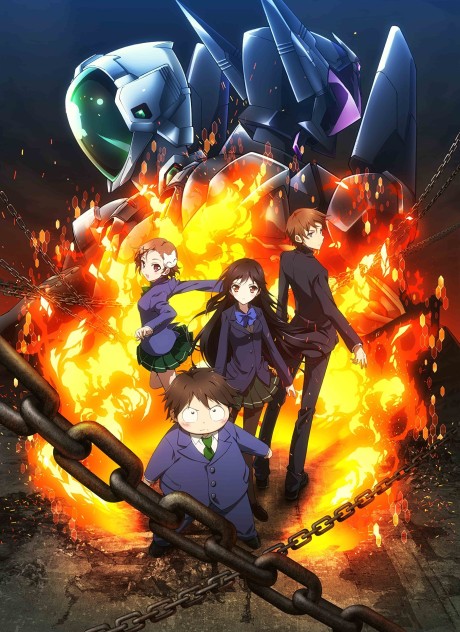
Accel World
The year is 2046. Haruyuki Arita is a young boy who finds himself on the lowest social rungs of his school. Ashamed of his miserable life, Haruyuki can only cope by indulging in virtual games. But that all changes when Kuroyukihime, the most popular girl in school, introduces him to a mysterious program called Brain Burst and a virtual reality called the Accel World.
(Source: VIZ Media)
📺Anime Details
📝Editorial Analysis
The first time Haruyuki Arita jumps—not in the game, but out of his chair, heart hammering, fingers still twitching from the phantom recoil of a Burst Link—he isn’t escaping reality. He’s reaching. Reaching for the split-second dilation where time thins like glass, where his own breath stretches long enough to see the arc of Kuroyukihime’s sword before it cuts, where shame dissolves not because it’s gone, but because he is moving faster than it can catch up. That moment isn’t spectacle—it’s relief, raw and trembling, the kind that comes only when your body finally believes it belongs somewhere.
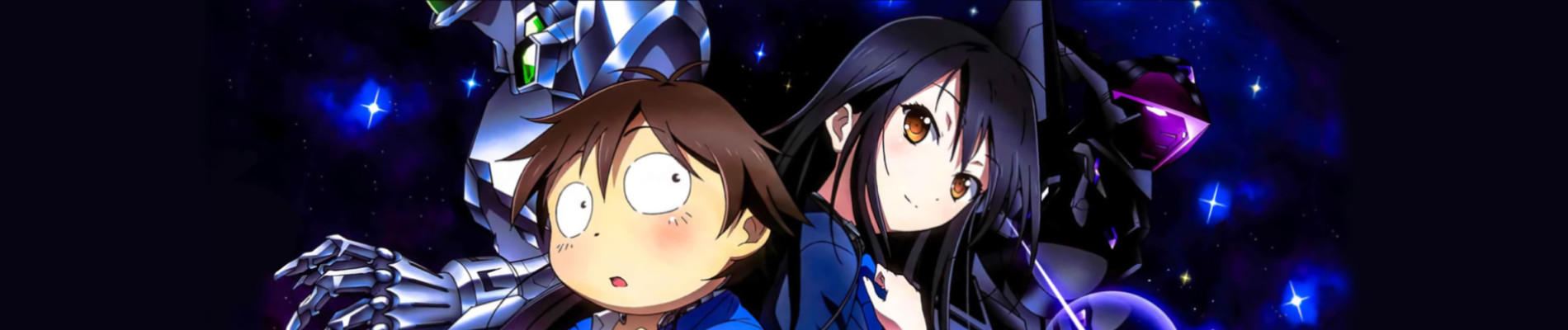
What makes Accel World vibrate at this particular frequency isn’t its sci-fi scaffolding or even its romance—it’s the weight of slowness it constantly fights against. The school hallway feels thick with gravity; every glance, every whisper, every lunchroom silence drags like wet cloth. Then—Burst Link!—and suddenly the world snaps into hyper-clarity: light fractures, motion gains texture, and Haruyuki lands, not just on a rooftop, but inside his own nervous system, recalibrated. It’s not power fantasy—it’s agency as oxygen. You don’t just watch him level up; you feel the quiet, dizzying lift of being seen—by himself first, then by her—after years of folding inward. That tension between suffocating stillness and explosive, time-bent motion? That’s the show’s pulse.
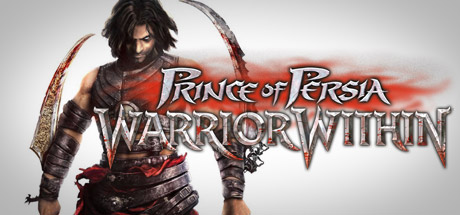
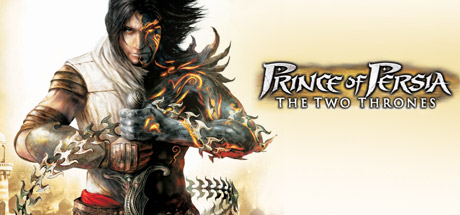
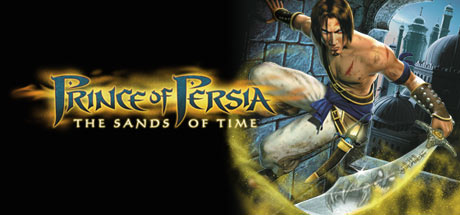
Which is why the Prince of Persia games—especially Prince of Persia: Warrior Within, Prince of Persia: The Two Thrones, and Prince of Persia®: The Sands of Time—don’t just match thematically. They breathe the same air. Look at the real description for Warrior Within: hunted by Dahaka, an immortal incarnation of fate itself. That chase isn’t just gameplay—it’s inescapable consequence made physical, echoing Haruyuki’s dread of social exposure, his fear that every burst activation might unravel him further. And the player review nails it: “Dahaka chase is still as goated as it was before”—because it’s not about winning. It’s about the relentless, rhythmic pressure, the way time becomes both weapon and cage. Just like Haruyuki rewinding seconds to dodge a blow, the Prince rewinds time to undo a misstep—but each rewind leaves a scar, a memory that sticks. That’s the DNA: time manipulation not as convenience, but as emotional triage.
Then there’s The Sands of Time, where the description anchors us in “a legend spun in an ancient tongue… ruled by deceit”—a world where power corrupts through intimacy, through trust misused. Haruyuki’s love triangle isn’t soap opera fluff; it’s structural tension. His bond with Kuroyukihime is forged in shared vulnerability, while the netorare undercurrent isn’t about jealousy—it’s about fragility of earned trust, how easily a single misstep in accelerated time can fracture something painstakingly built in real time. The player review calls the platforming “tactical… satisfying due to the locked directions”—and that’s key. Like Haruyuki learning to read enemy tells mid-combo, the Prince must commit before he knows the full shape of the fall. No free-aiming, no safety net—just precision born of repetition, of feeling the rhythm of consequence.
And The Two Thrones, where the Prince returns home only to find “his homeland ravaged by war and the kingdom in ruins”—that’s Haruyuki walking back into class after a Burst Link session, heart still racing, trying to reassemble his ordinary self while carrying the weight of another world’s stakes. The player review says “one of my best childhood games… still plays great”—because its emotional architecture hasn’t aged. The duality—the light prince versus the dark, the lover versus the warrior—isn’t schism. It’s integration. Like Haruyuki realizing his “low-rung” self isn’t separate from Silver Crow—he is the acceleration, the hesitation, the landing.
This pairing sings for the quiet kid who memorized every frame of their favorite anime fight not to mimic the moves—but to map the breath before the leap. For the player who replays the Dahaka chase not for mastery, but because the panic feels honest. For anyone who’s ever needed time to bend—not to escape, but to finally arrive in their own skin. Not as a hero. As someone who moves, at last, without apology.
🎮6 Games That Match the Vibe
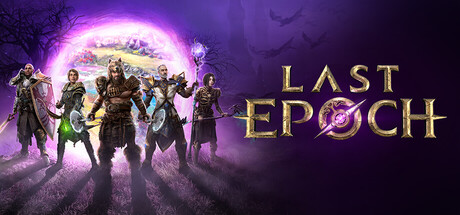
Match Dimensions Explained
❓Frequently Asked Questions
Why does the Dahaka chase in Prince of Persia: Warrior Within feel so much like Accel World’s high-stakes battles?
Because both lean hard into relentless, time-pressured pursuit—like when the Dahaka corners you in the Hourglass Chamber, forcing split-second dodges and environmental takedowns, mirroring Haruyuki’s desperate speed bursts against Bullseye or Dusk Taker. Warrior Within’s score (83) and its ‘Time & Memory’ + ‘Action Spectacle’ dimensions directly echo Accel World’s blend of temporal tension and visceral combat pacing.
Is there an anime or game adaptation of Accel World that actually captures the Brain Burst interface?
No official game adaptation exists—but Prince of Persia®: The Sands of Time (score: 83) nails the *feel* of Brain Burst’s UI-driven power fantasy. Its rewind mechanic isn’t just a tool—it’s diegetic, visualized with golden sand particles and tactile feedback during mid-air corrections, just like Haruyuki’s mental commands triggering burst actions. Fans consistently praise its ‘tactical platforming’ and ‘locked directions’ for that same precise, mind-over-muscle responsiveness.
How does Prince of Persia: The Two Thrones compare to Accel World in terms of dual-personality conflict?
It’s uncannily close: the Prince’s struggle with the Dark Prince—the snarling, impulsive alter ego who emerges after absorbing Kaileena’s essence—is basically Haruyuki vs. his own accelerated ego and Shadow Rook instincts. Both games use split-screen flashes, voice distortion, and moral choice moments (like sparing enemies in Two Thrones) to mirror Accel World’s internal duality—and it scores 83 with ‘Time & Memory’ + ‘Action Spectacle’ dimensions that match the anime’s tone.
What’s the best Prince of Persia game for someone who loves Accel World’s mix of romantic tension and high-octane action?
Go straight to the original Prince of Persia (2008 reboot, score: 84)—it’s the only one tagged with ‘Romance & Shoujo’ *and* ‘Action Spectacle’. You’ll feel that Accel World spark in scenes like the Prince and Elika’s silent, trust-based acrobatic sequences across crumbling temples, plus her magical light attacks syncing with your sword combos—just like Haruyuki and Kuroyukihime’s synchronized Burst Linker tactics.