
Aharen-san wa Hakarenai
The story follows the "indecipherable" daily life of the short and quiet Reina Aharen and Raidou who sits next to her. Aharen is not so good at gauging the distance between people, and Raidou initially felt some distance between the two of them. One day, when Raidou picked up the eraser that Aharen had dropped, the distance between them suddenly became uncomfortably close.
(Source: Anime News Network)
📺Anime Details
📝Editorial Analysis
The eraser hits the floor with a soft thunk, rolls once, stops just shy of Raidou’s worn sneaker. He bends—instinct, politeness, nothing more—and his knuckles brush Aharen’s as she reaches for it too. Her hair falls forward like a curtain; he catches the faint scent of strawberry shampoo and something quieter, like paper or rain on concrete. Neither speaks. The silence isn’t empty—it’s charged, thick with unspoken inches, misread cues, the sheer, staggering weight of proximity between two people who’ve built their whole selves around not being understood. That moment isn’t romantic tension in the usual sense. It’s recognition: the dizzying, slightly terrifying realization that distance isn’t fixed—it’s elastic, fragile, and can snap without warning.
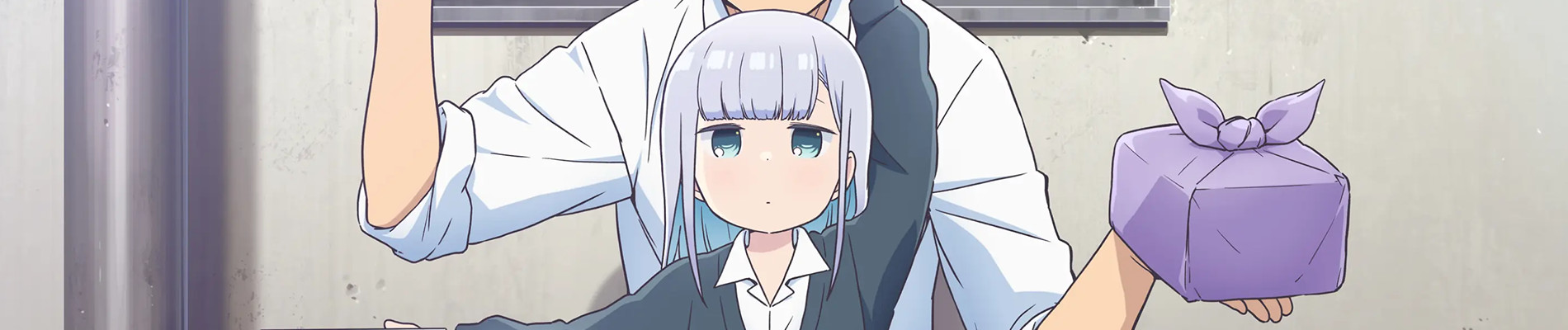
What makes Aharen-san wa Hakarenai breathe is its refusal to treat emotional nearness as linear progress. It doesn’t build toward confession or grand gesture. Instead, it lingers in the awkwardness of mutual incomprehension—how Reina’s kuudere stillness reads as alien to Raidou not because she’s cold, but because her internal logic operates on a different gravitational pull; how his earnest attempts to “read” her constantly misfire, not from malice, but from the beautiful, exhausting labor of translation between two private languages. This isn’t just comedy or romance—it’s melancholic exploration: tender, surreal, grounded in the quiet ache of trying to map someone else’s inner world while barely grasping your own. The slapstick isn’t random; it’s physics made emotional—bodies colliding, erasers dropping, desks wobbling—because feelings, here, have mass and momentum.
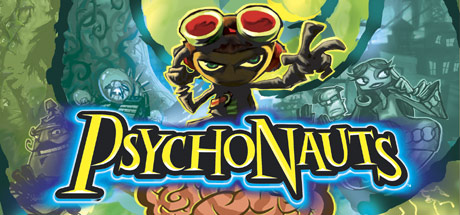
That same melancholic exploration hums through Psychonauts, where psychic landscapes aren’t metaphors—they’re literal, crumbling, deeply personal topographies. Like Aharen’s unreadable quiet, each mind in the game is a surreal, vulnerable architecture: fragile, illogical, bursting with unprocessed feeling. The player review calls it a “Psychic Odyssey Through the Minds of Misfits, Monsters, and Madmen”—and yes, Raidou navigating Aharen’s silence feels exactly like Raz navigating Coach Oleander’s militarized psyche or Dogen’s guilt-ridden labyrinth. Both ask you to move through strangeness, not past it, to find warmth in the cracks of someone else’s design.
Then there’s Garry's Mod, described simply as “a physics sandbox. There aren’t any predefined aims or goals. We give you the tools and leave you to play.” No objectives. No narrative rails. Just proximity, collision, absurd consequence—the eraser rolling, Raidou leaning in, Aharen blinking slowly as gravity reasserts itself. The game’s freedom mirrors the anime’s episodic trust: no arc must resolve, no misunderstanding needs fixing. You build a tower of chairs just to watch it collapse. You hold an eraser mid-air, suspended between hands, and let the silence breathe. The player review’s offhand nostalgia—“now that S&Box is out to a disappointing unoptimized and Ai filled release”—feels like Raidou sighing over a perfectly ordinary, unremarkable Tuesday that somehow meant everything.
And Bully: Scholarship Edition, where Jimmy Hopkins “goes through the hilarity and awkwardness of adolescence,” beating jocks at dodgeball, saving nerds, pranking preppies—this isn’t satire of school life, but inhabitation of its emotional grammar. Like Raidou learning that Aharen’s “distance” isn’t rejection but a different kind of attention, Jimmy’s chaos reveals structure beneath the surface: loyalty coded in lunchroom alliances, vulnerability masked by rebellion, tenderness disguised as mischief. The player review’s love for its unapologetic, B-movie soul—“lots of stunts and explosions and in every way, is a delight”—echoes the anime’s commitment to small, fizzy, utterly human moments: a shared umbrella, a misheard phrase, the way Aharen’s hair catches light when she finally, quietly, smiles.
This pairing isn’t for fans of tidy resolutions or emotional exposition. It’s for the person who watches Raidou stare at his own hand after touching hers—not wondering what happens next, but what this weight means. For the player who spends an hour in Garry’s Mod rigging a Rube Goldberg machine just to hear the clack-clack-clack of falling blocks, or who revisits Psychonauts’ asylum level not for the platforming, but to sit beside a lonely, flickering memory. It’s for anyone who’s ever felt the profound, soft loneliness of being close to someone—and known, deep in their bones, that the most real connections begin not with understanding, but with the brave, trembling act of reaching for the same eraser.
🎮4 Games That Match the Vibe



Match Dimensions Explained
❓Frequently Asked Questions
Why does Psychonauts match Aharen-san wa Hakarenai so well despite being a platformer?
Because both lean hard into gentle absurdity and emotionally resonant awkwardness—like when Raz explores the insecure, jellybean-obsessed kid's mind in Psychonauts, it mirrors Aharen’s quiet panic during classroom misunderstandings or her ‘wall-hugging’ moments. The melancholic exploration dimension shows up in how both use surrealism (Raz’s psychic labyrinths / Aharen’s exaggerated internal monologues) to express social anxiety with warmth, not mockery.
Is there an anime-style visual novel adaptation of Aharen-san wa Hakarenai?
No—there’s no official visual novel or game adaptation of Aharen-san wa Hakarenai. But if you love its vibe, Bully: Scholarship Edition nails the same tender-yet-funny school-life rhythm: Jimmy’s pranks on preppies and awkward dodgeball showdowns feel like tonal cousins to Raido’s failed attempts to ‘read’ Aharen’s expressions or their silent lunch scenes.
How is Bully different from Just Cause 2 when it comes to matching Aharen-san’s tone?
Bully grounds its comedy in character-driven cringe and adolescent sincerity—think Jimmy nervously rehearsing lines before talking to girls, just like Raido overthinking every glance at Aharen. Just Cause 2, meanwhile, swaps that intimacy for bombastic, physics-driven chaos (e.g., glider stunts off volcanic cliffs), making it a looser match—funny and chaotic, sure, but missing Bully’s specific brand of heartfelt, schoolyard melancholy.
What’s the best game like Aharen-san wa Hakarenai if I want something cozy, low-stakes, and quietly emotional?
Psychonauts is your best bet—it’s got that same soft-hearted core beneath the silliness. When Raz helps a shy, stuttering kid confront his fear of public speaking by literally navigating a crumbling ‘speech stage’ inside his mind, it lands with the same gentle emotional weight as Aharen silently sharing mochi with Raido after a quiet hallway encounter. It’s not flashy; it’s warm, weird, and deeply kind.