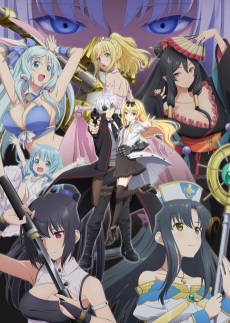
Arifureta: From Commonplace to World's Strongest Season 2
The second season of Arifureta Shokugyou de Sekai Saikyou.
Transported to another world and left behind by his former friends, Hajime had to make his rise from literal rock bottom. It was in the labyrinth where he strengthened his weak magic and found several beautiful allies. Now after saving his classmates, he ventures for Erisen to escort Myuu and her mother. He'll fight and defeat anyone he has to in order to find a way home—including a god!
(Source: Funimation)
📺Anime Details
📝Editorial Analysis
The air in the Abyssal Labyrinth tastes like rust and burnt ozone—Hajime’s knuckles split open against jagged rock as he crawls up, not out, but deeper, dragging Myuu behind him while his gun clicks empty. No music swells. No ally arrives. Just the scrape of bone on stone, the wet hitch in his breath, and the quiet, terrifying certainty that no one is coming to save him—not this time, not ever again. That moment isn’t spectacle. It’s recalibration.

What Arifureta: From Commonplace to World's Strongest Season 2 does—brutally, deliberately—is replace catharsis with continuum. It doesn’t ask you to believe in redemption arcs or triumphant returns. It asks you to sit with the weight of a mind reshaped by betrayal, then honed in silence, then weaponized without apology. This isn’t dark fantasy for shock value—it’s psychological friction made visible: every spell cast feels like a scar reopening, every angelic face carries the chill of divine indifference, every bullet fired is less about power and more about refusing to be erased. You don’t feel hopeful watching Hajime. You feel wired—alert, uneasy, strangely honored to witness someone who refuses to soften, even when love (Eris, Myuu, Yue) reaches for him like trembling hands through smoke.
That same electric, claustrophobic intensity lives in Uplink, where every firewall breach hums with the same raw, solitary tension. Its description calls it “Roguelike & Dungeon, Adult & Dark Seinen”—and yes, the labyrinth here is digital, but the feeling is identical: no cutscenes explain your moral drift; you just wake up one contract deeper in corporate rot, upgrading your ICEbreaker while your ethics quietly degrade. A player writes, “It was hot, the night we burned Chrome.” That line doesn’t celebrate victory—it captures the feverish, almost sensual exhaustion of operating just outside salvation, exactly how Hajime moves through Erisen’s ruins: not heroic, but necessary, burning systems (divine or corporate) because they stand between him and what’s his.
Then there’s Prince of Persia, described as returning “with an all-new epic journey… completely separate from the sands…”—a deliberate severing, much like Hajime’s break from his old world’s logic. The player review notes it’s the third reboot, a lineage built on discarding past rules to forge something sharper, colder, more personal. Hajime doesn’t reclaim his old self—he replaces it, like the Prince discarding sand-time for blade-time. Both reject inherited myth to build agency from scratch: one through acrobatic precision in collapsing palaces, the other through cold arithmetic in collapsing god-logic. Neither begs for forgiveness. They simply move, faster than memory.
And Dragon Age: Origins, with its “Tactical Warfare” and “Adult & Dark Seinen” dimensions, mirrors the anime’s emotional architecture—not in tone, but in consequence density. Its description asks: “What will be said about the hero who turned the tide?” Not “Will you win?” but “What will your name mean after?” Hajime doesn’t fight demons to be loved—he fights so his choices endure, so Myuu’s survival isn’t luck, so Yue’s devotion isn’t pity. A player review praises the “pause attack mechanic… help[ing] a lot to strategize your tactic”—and that’s Hajime’s entire psyche: frozen mid-lunge, calculating angles, trajectories, loyalties, costs, before committing to motion. Every battle is a paused, weighted decision—not just who dies, but who gets to define the terms of survival afterward.
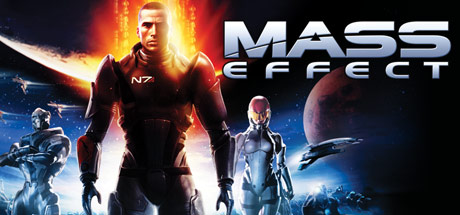
This isn’t for fans of wish-fulfillment isekai. It’s for the player who replays Mass Effect (2007) not for the galaxy-spanning romance, but for the weight in Shepard’s voice when they choose Paragon or Renegade—not as morality, but as identity under pressure. Who reads that review—“None of the follow-ups really captured what this game did”—and nods, because they know that first, unvarnished confrontation with consequence is irreplaceable. It’s for the viewer who watches Hajime reload his pistol with three fingers missing and feels not horror, but recognition: this is what happens when trauma stops being a wound and becomes your compass. You’ll love these pairings if you crave stories where love isn’t softening—it’s armor, forged in the same fire that melted your old self down. Where every choice leaves ash in your mouth—and you lick it off, just to taste what’s real.
🎮19 Games That Match the Vibe





Match Dimensions Explained
❓Frequently Asked Questions
Why is Uplink listed as similar to Arifureta Season 2 when there’s no magic or isekai?
Great question—it’s about the *vibe*, not the setting. Like Hajime in Season 2’s dungeon-crawling arc, Uplink drops you into high-stakes, claustrophobic, system-based 'dungeons' (corporate mainframes) where every misstep triggers alarms, lockdowns, or lethal countermeasures—just like the Labyrinth’s traps and adaptive monsters. The ‘roguelike & dungeon’ dimension matches Hajime’s methodical resource management, gear upgrades, and tense, consequence-heavy progression—plus that player review nails it: 'the night we burned Chrome' feels like Hajime burning through a boss floor with zero margin for error.
Is there an Arifureta anime game adaptation for Season 2?
No—there’s no official Arifureta Season 2 game adaptation. What *is* on the list are games that capture its core pillars: dark-seinen tone, tactical survival in hostile environments, and protagonist transformation from underdog to ruthless operator. For example, Dragon Age: Origins mirrors Hajime’s moral ambiguity and party-driven tactical combat (pause-and-plan like his battlefield calculations), while Mass Effect (2007) echoes his lone-wolf leadership amid galaxy-scale stakes—and both share that ‘Adult & Dark Seinen’ dimension with zero fan-service fluff.
How does Persona 5 Royal compare to Dragon Age: Origins for Arifureta fans?
If you loved Hajime’s dual life—grinding dungeons by night while navigating complex social stakes by day—Persona 5 Royal hits that rhythm hard: school life, confidant-building, and Phantom Thieves heists feel like Hajime balancing class politics with Labyrinth raids. Dragon Age: Origins leans harder into gritty, consequence-laden warfare (like Hajime’s brutal siege tactics against the Demon Lord’s forces), with pause-attack mechanics letting you micromanage every ally’s move—exactly how Hajime coordinates Yue, Shizuku, and the others mid-battle. Both score high in ‘Romance & Shoujo’ *and* ‘Adult & Dark Seinen’, but P5R’s stylish flair contrasts DAO’s grounded grimness.
What’s the best game like Arifureta S2 if I want that ‘cold, calculating survivor’ mood?
Uplink—hands down. It’s not about flashy powers; it’s about Hajime-level precision: slicing firewalls like he slices demons, upgrading your ‘gear’ (RAM, ICEbreakers) like he upgrades his cursed weapons, and choosing whether to betray factions like he weighs loyalty vs. survival in the Labyrinth’s deepest floors. That 80-score roguelike/dungeon match isn’t accidental—the tension of a failed hack triggering instant lockdown? That’s the same adrenaline spike as Hajime’s near-death trap escapes. And yes, that player review ('the night we burned Chrome') *feels* like the moment he activates his first True Longinus.