
BEASTARS
In a world populated by anthropomorphic animals, herbivores and carnivores coexist with each other. For the adolescents of Cherryton Academy, school life is filled with hope, romance, distrust, and uneasiness.
The main character is Legoshi the wolf, a member of the drama club. Despite his menacing appearance, he has a very gentle heart. Throughout most of his life, he has always been an object of fear and hatred by other animals, and he’s been quite accustomed to that lifestyle. But soon, he finds himself becoming more involved with his fellow classmates who have their own share of insecurities and finds his life in school changing slowly.
(Source: moetron)
📺Anime Details
📝Editorial Analysis
The fluorescent lights of Cherryton Academy’s drama club room hum with a low, nervous frequency. Legoshi stands frozen mid-rehearsal—paw hovering over a script, ears flattened—not because he’s forgotten his lines, but because Haru, a tiny rabbit, has just brushed past him, her shoulder grazing his forearm. His breath catches. His pulse thrums like a trapped bird against his ribs. Not from desire alone, but from the terror that his own body might betray him—that the wolf inside could surge up, unbidden, and shatter the fragile, trembling peace of this shared space. That moment isn’t about romance or danger in the abstract. It’s about weight: the weight of biology, the weight of perception, the weight of trying to hold yourself together while the world insists you’re already broken.
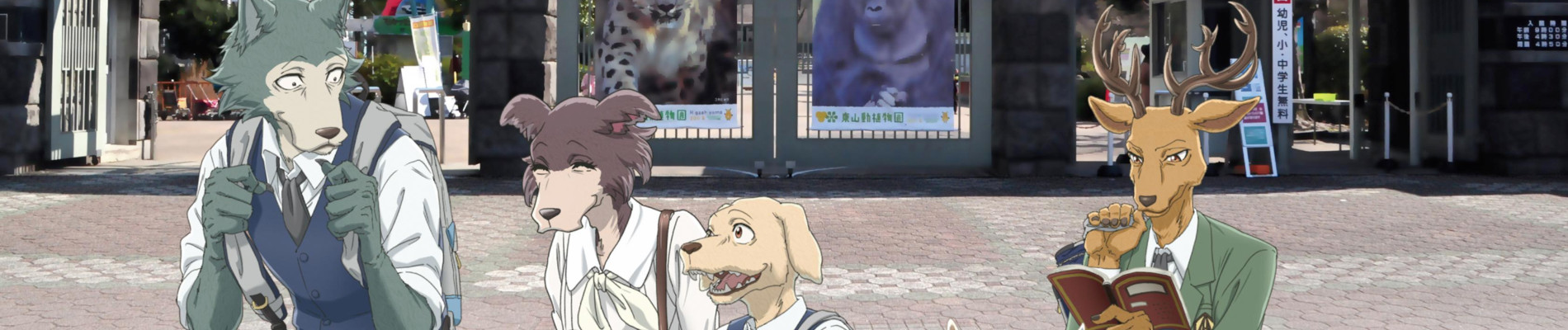
What makes BEASTARS ache so deeply isn’t its anthropomorphism as spectacle—it’s how the show turns identity into atmosphere. You don’t just watch characters navigate school life; you breathe the air thick with unspoken tension—the way herbivores subtly shift seats when a carnivore enters the cafeteria, how silence stretches after a joke lands too close to the truth of hunger, how every glance carries the residue of history and fear. It’s not dystopian in the sense of collapsing cities or tyrannical regimes, but in the quiet, suffocating pressure of coexistence. You feel the exhaustion of code-switching, the loneliness of being perpetually misread, the exhausting labor of gentleness when your very form reads as threat. It’s tremulous, unstable, intimate, and inescapably embodied—a world where emotion isn’t voiced first, but leaked: through a flinch, a swallowed breath, the tremor in a tail held too still.
That emotional DNA pulses in Persona 5 Royal, where Tokyo’s neon glow masks the same kind of internal fracture. The game’s genius lies in its seamless loop: daily life—attending class, building bonds, choosing how much of yourself to reveal—feels just as charged and consequential as storming a palace of the psyche. Like Legoshi rehearsing lines he doesn’t believe, Joker wears masks—Phantom Thief, student, friend—each one a negotiation between who he is and who the world demands. Player reviews praise the “seamless transition between daily life” and the “stunning soundtrack” that swells not during battles, but during quiet train rides home—moments where identity feels most porous, most real. That rhythm—of tenderness unfolding alongside dread, of intimacy forged in the cracks of performance—is pure BEASTARS.
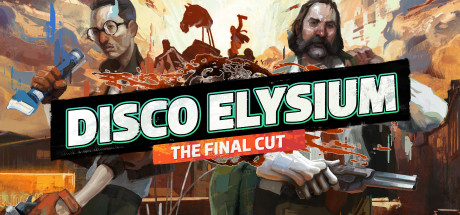
Then there’s Disco Elysium - The Final Cut, where the protagonist isn’t just haunted by his past—he’s dismantled by it, voice fragments arguing inside his skull like competing instincts. The description calls it “a groundbreaking role playing game” where you “carve your path across” a city rotting under systemic decay—and the player review quotes a line about capital subsuming critique, revealing how even resistance can be absorbed, hollowed out. That mirrors BEASTARS’s core tension: Legoshi doesn’t fight villains—he fights the architecture of his own biology and the social systems that pathologize it. There’s no clean villain to defeat, only layers of conditioning, trauma, and inherited fear—just as Disco Elysium offers no moral reset button, only choices that deepen the wound or reframe it. Both force you to sit with discomfort as substance, not obstacle.
Even Prince of Persia, though draped in mythic grandeur, shares that visceral, bodily unease. Its description frames it as an “epic journey” built on “new lands and a brand new story”—but the player review hints at something quieter: it’s the third reboot, a lineage haunted by repetition, by bodies remade, by stories told again and again to outrun their own ghosts. Legoshi’s struggle isn’t with a singular monster—it’s with the return of impulse, the cyclical nature of shame, the way healing isn’t linear but recursive. That resonance lives in the Prince’s acrobatic stumbles, his near-falls, the way grace is always balanced over abyss—not as spectacle, but as survival.
This is for the person who watches Legoshi stare at his own reflection and feels their throat tighten—not because they’re a wolf, but because they’ve ever held their breath around someone they love, terrified their truth would break the spell. For the one who plays Persona 5 Royal not for the heists, but for the way Ann’s laugh dissolves his armor for three seconds. For the one who reads that Disco Elysium review and nods, knowing exactly what it means to have your own mind turn against you. These aren’t stories about monsters. They’re about the quiet, daily courage of showing up—soft, scared, alive—in a world that keeps whispering you don’t belong.
🎮14 Games That Match the Vibe








Match Dimensions Explained
❓Frequently Asked Questions
Why does Prince of Persia keep coming up in BEASTARS comparisons when it’s not about anthropomorphic animals?
It’s less about the animal aspect and more about the shared 'Adult & Dark Seinen' + 'Romance & Shoujo' vibe — think intense emotional tension, morally gray romance (like the Prince’s fraught bond with Zola), and that brooding, cinematic weight in scenes like the sandstorm chase or the palace betrayal. Critics even noted how its 2024 reboot leans hard into psychological stakes and forbidden intimacy, mirroring Legoshi’s internal conflict in a human-but-equally-raw way.
Is there a BEASTARS anime or game adaptation I can actually play right now?
No official BEASTARS game exists — but fans who craved that layered character drama and slow-burn romantic tension landed on Persona 5 Royal (score 74). Its Phantom Thieves dynamic mirrors the Beastars cast’s dual identities: Joker’s quiet intensity echoes Legoshi’s restraint, Ann’s arc parallels Haru’s agency, and the Confidant system delivers the same intimate, choice-driven relationship growth you’d want from a BEASTARS game — all wrapped in that stylish, emotionally charged Tokyo setting.
How is Dragon Age: Origins like BEASTARS if one’s medieval fantasy and the other’s modern animal drama?
Both dig deep into systemic prejudice and identity under pressure — in DA:O, you’re an elf facing caste-based hatred in Denerim’s alienage; in BEASTARS, Legoshi navigates carnivore stigma in Cherryton Academy. The pause-and-plan combat in DA:O (which players love for tactical depth) mirrors how BEASTARS forces constant self-monitoring: every dialogue choice, every suppressed instinct, feels like hitting pause to weigh consequences — just like pausing mid-battle to reposition Alistair or Morrigan.
What’s the best BEASTARS-like game if I want that heavy, melancholic mood with sharp social commentary?
Disco Elysium — The Final Cut (score 63) nails it. It’s got the same suffocating atmosphere as BEASTARS’ rainy Cherryton nights, but dialed to eleven: your detective literally battles inner voices (like Legoshi’s ‘beast’ instincts), and every conversation in Martinaise exposes class, trauma, and ideology — like the gut-punch scene where the union leader confronts capital’s erasure of dissent, echoing Louis’s performative diplomacy or Juno’s disillusionment. It’s not about fur or fangs — it’s about the cage we all rationalize living inside.