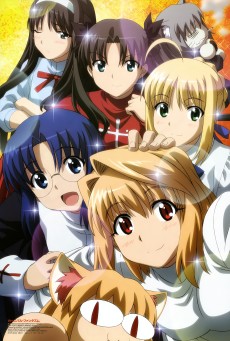
Carnival Phantasm
Carnival Phantasm is an adaption of the manga "Take Moon" by Type-Moon's Eri Takenashi, to celebrate Type-Moon's 10th Anniversary.
Carnival Phantasm shows parodies and new stories loosely based on Type-Moon's original works like Melty Blood, Fate/Stay Night, Tsukihime, and more.
📺Anime Details
📝Editorial Analysis
The clink of glasses at the Bar—not some solemn, mist-shrouded tavern, but a fluorescent-lit, slightly sticky counter where Nekomimi Shirou debates ramen toppings with a vampire who just teleported in via misplaced summoning circle—is Carnival Phantasm’s heartbeat. A stray Spearplay demonstration shatters a sake cup mid-air; someone yells “Tsukihime continuity? What’s that?” as a mythological deity flips pancakes behind the counter. There’s no setup, no apology—just pure, unfiltered recognition: this is a world where logic isn’t broken so much as gently folded, stuffed into a bento box, and handed to you with a wink.
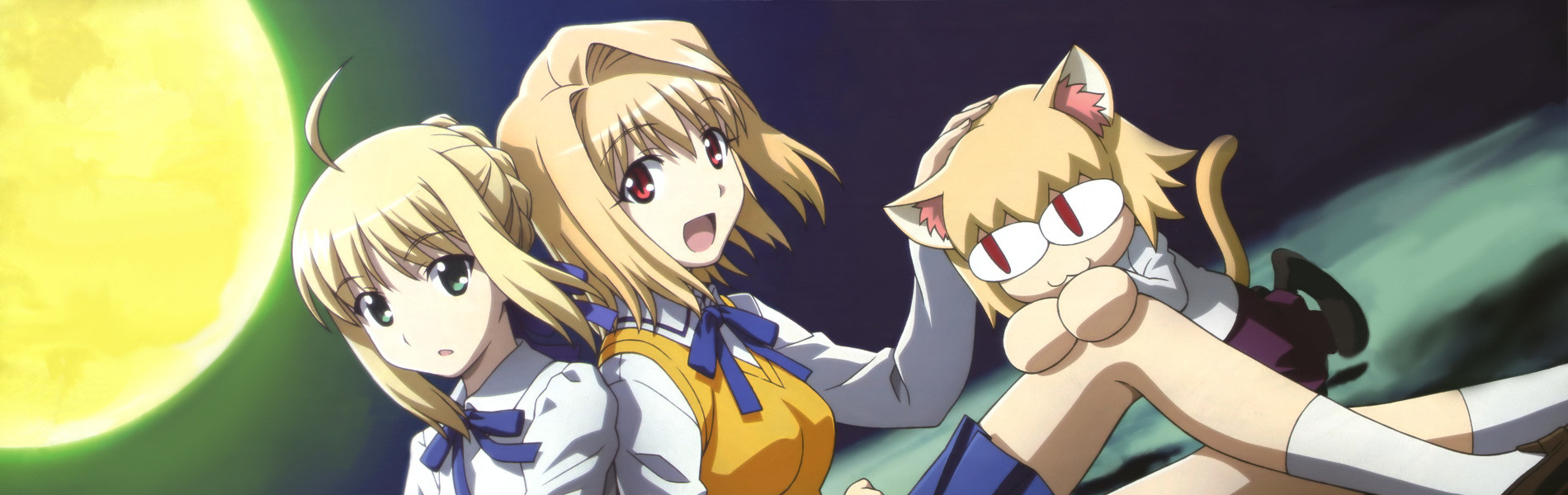
What makes Carnival Phantasm feel like stepping into a shared daydream isn’t its parody—it’s the warmth of its chaos. It doesn’t mock its source material; it hugs it, hard, while simultaneously poking fun at its own hug. You feel safe in the absurdity—not because everything makes sense, but because everyone’s in on the joke and deeply sincere about their nonsense. It’s the emotional equivalent of finding your favorite characters from five different franchises arguing over whose magic system has the worst mana efficiency… while sharing snacks. There’s no dread, no stakes beyond whether the bar’s fridge still has melon soda—and yet, it pulses with affection, nostalgia, and a kind of communal relief. Like exhaling after holding your breath through ten years of serious lore, tragic backstories, and world-ending stakes.
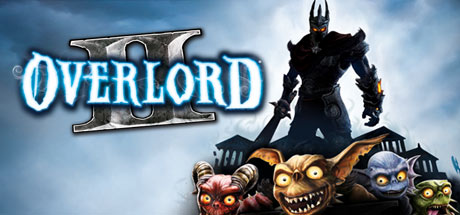
That same feeling lives in Overlord™, not in its dark fantasy trappings, but in how it performs evil with theatrical glee—“How corrupt you become depends on how you handle any given situation” mirrors Carnival Phantasm’s refusal to lock characters into fixed roles. The player review calling it “iconic” and praising its “story the humor” lands right beside the anime’s rhythm: both treat tonal whiplash as a feature, not a bug. When the Overlord monologues about domination while his minions trip over their own horns, it’s the same energy as Melty Blood’s Sion trying (and failing) to maintain dignity while wearing cat ears and reciting haiku about blood contracts.
Then there’s Overlord II, where the description promises “Bigger, badder and more beautifully destructive” Minions—and that phrase beautifully destructive is pure Carnival Phantasm syntax. It’s not destruction for horror or consequence; it’s destruction as flourish, as punctuation. The player review comparing it to Fable nails it—not because of moral choice systems, but because both revel in the theatrics of power: one lets you raise an empire of chaos; the other lets you raise a bar tab across three timelines. They share the same grin-in-the-voice, the same delight in letting competence and silliness coexist without irony.
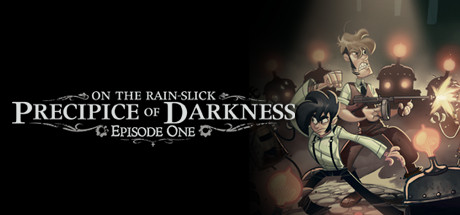
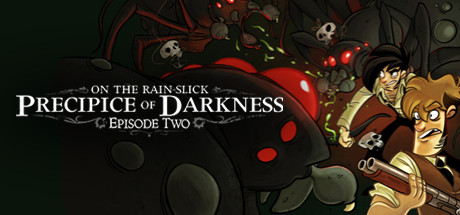
And Precipice of Darkness, Episode One—with its “RPG-Adventure game series based on the web comic Penny Arcade”—carries that same comic-strip immediacy. Its description invites you to “Create your character in the classic comic style,” and the player review says it’s “Fun as hell, especially if you enjoy the Penny Arcade style of humor.” That’s the link: Carnival Phantasm doesn’t adapt Type-Moon—it draws it, in thick ink lines and speech bubbles made of magical girl logic and spear-wielding banter. Like Precipice, it treats narrative as collage, not scripture. The second episode’s review mentioning “input delay” during special attacks? That’s the anime’s spirit too—the slight, charming glitch in execution that somehow deepens the charm, like a staff member forgetting which universe Shirou belongs to and leaning into it.
This pairing isn’t for fans of “serious” adaptations or lore-deep dives. It’s for the person who rewatches Fate/Stay Night’s Heaven’s Feel route and immediately switches to a 20-minute clip of Rin and Sakura arm-wrestling over who gets the last pudding cup. It’s for the player who grinds levels in Overlord not to win—but to watch their Minions reenact Tsukihime’s climax using rubber chickens and a toaster. It’s for anyone who feels relief, recognition, and giddy belonging when fiction stops pretending to be real—and starts laughing, loudly, with its friends, right there at the bar.
🎮9 Games That Match the Vibe


Match Dimensions Explained
❓Frequently Asked Questions
Why does Overlord feel so much like Carnival Phantasm when it's a dark fantasy game?
Because just like Carnival Phantasm, Overlord leans hard into absurd parody—imagine your Minions gleefully setting villagers on fire while cracking one-liners about bureaucracy, or the Overlord himself monologuing with Shakespearean grandeur before tripping over his own cape. The tone whiplashes between gothic spectacle and self-aware silliness (like the 'Glory' system rewarding increasingly ridiculous evil deeds), mirroring CP’s rapid-fire gags and genre-savvy chaos.
Is there an anime or visual novel adaptation of Precipice of Darkness that captures its Carnival Phantasm-style humor?
No official anime or VN adaptation exists—but Episode One and Two *are* the closest thing: they’re built like interactive Penny Arcade comics, full of fourth-wall-breaking asides, meta-jokes about RPG tropes, and characters who argue mid-battle about whether loot drops are statistically fair (just like CP’s cast debating whether Shirou’s cooking is a weapon of mass destruction). The humor’s baked into every dialogue tree and minigame.
How does Overlord II compare to Precipice of Darkness, Episode Two for fans of Carnival Phantasm’s chaotic ensemble energy?
Overlord II throws you into a massive, destructive sandbox where your Minions bicker like a sitcom cast while wrecking cities—think CP’s group scenes but with physics-based slapstick. Precipice II, meanwhile, locks you into tight, joke-dense party banter (like Tycho roasting Gabe mid-turn) and has that same ‘everyone’s a walking punchline’ vibe. Both nail CP’s rhythm: fast, referential, and never letting sincerity stick around longer than three seconds.
What’s the best Carnival Phantasm-like game if I want something silly but with actual consequences and moral weight?
Overlord (2007) — not because it’s deep, but because your choices *feel* weighty in the dumbest way possible: spare a village? Your Minions pout and your ‘Glory’ meter dips. Enslave a bard? He starts composing ballads about your tyranny… which then play during boss fights. It’s CP-level absurdity with Fable-esque cause-and-effect, all wrapped in a ‘corruptible Dark Lord’ premise that’s equal parts hilarious and weirdly resonant.