
Charlotte
The story centers around the special abilities that occur among a small percentage of boys and girls in puberty. Yuu Otosaka uses his power without others knowing, and lives a fairly normal, average school life. Before him suddenly appears a girl, Nao Tomori. Due to his meeting with her, the fate of special power-users will be exposed.
(Source: Anime News Network)
📺Anime Details
📝Editorial Analysis
The rain in Charlotte doesn’t fall—it stutters. One moment, Yuu Otosaka is sprinting across the wet pavement after Nao Tomori, breath ragged, school bag slapping his hip; the next, time snags, warping around him like heat haze off asphalt, and he’s suddenly inside her memory—her fear, her exhaustion, the weight of a secret too heavy for sixteen-year-old shoulders. Not as spectacle. Not as plot device. As intimacy. That’s the first gut-punch: power isn’t flashy here—it’s leaky, fragile, always threatening to spill over into someone else’s grief.

What makes Charlotte ache so deeply isn’t its sci-fi scaffolding—it’s how relentlessly domestic its tragedy feels. A body swap isn’t played for slapstick but for quiet horror: waking up in someone else’s skin and realizing you’ve just inherited their panic attack. Time manipulation isn’t about saving the world—it’s about buying one more minute to say something true before the clock runs out on a friend’s mind. This is urban fantasy stripped bare: no grand prophecies, no chosen ones—just teenagers trying to hold each other upright while their own abilities unravel them from the inside. It makes you feel tender, helpless, fiercely protective—like watching someone try to stitch a wound with thread made of smoke.
That emotional DNA pulses strongest in Disco Elysium - The Final Cut. Its description calls it a “groundbreaking role playing game” where you’re a detective with “a unique skill system” and “a whole city to carve your path across.” But read between the lines—the player review quotes capital subsuming critique, calls it “a cruel iro…”—and you hear the same exhaustion that lives in Charlotte’s hallways: systems collapsing under their own logic, people trying to mean something in a world that refuses coherence. Both works treat trauma not as backstory but as environment: the rain in Charlotte, the fog-drenched streets of Revachol. You don’t solve the mystery—you learn to breathe inside it.
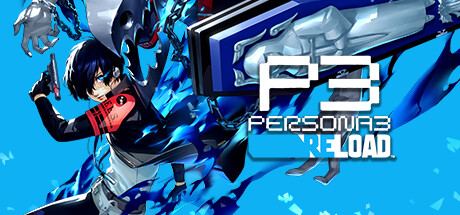
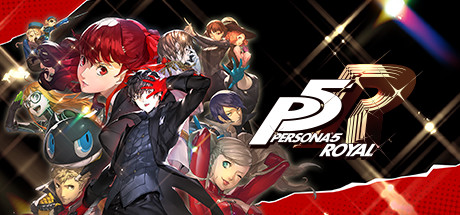
Then there’s Persona 5 Royal, whose description frames it as a “stylish turn-based RPG” where you “explore Tokyo, build relationships,” and lead “the Phantom Thieves of Hearts.” The player review praises its “stunning soundtrack” and “seamless transition between daily life…”—that rhythm, that doubleness, mirrors Charlotte’s heartbeat: the banality of club meetings and cafeteria chatter pressed right up against the vertigo of losing your memories mid-sentence. Both trap you in the suffocating beauty of adolescence—where every text message feels like a confession, every shared lunchbox a covenant, and every sunset over the city skyline carries the quiet dread of time running thin.
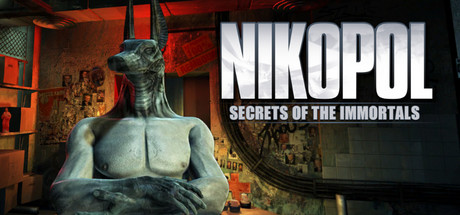
And though it’s less obvious, Nikopol: Secrets of the Immortals shares that same weight of witnessing. Its description sets it in “2023 France… ruled by an iron-fist religious dictatorship,” where “a mysterious pyramid ship suddenly appears above Paris.” The player review notes its “cyberpunk atmosphere” and how “animations and cutscenes enhance” the story. That sudden, unexplained rupture—the sky cracking open, ideology hardening into architecture—is Charlotte’s core metaphor made geopolitical. When Yuu watches his sister’s mind dissolve, or when Nao stands alone on a rooftop staring at a city that doesn’t know what it’s hiding—that’s the same stillness before the pyramid descends: awe laced with dread, wonder poisoned by consequence.
This pairing isn’t for fans of “power fantasies” or tidy resolutions. It’s for the ones who rewatch the scene where Yuu fails—not dramatically, but quietly, wiping tears with the back of his hand while pretending to check his phone. It’s for players who linger in Disco Elysium’s rain-soaked alleys not to crack the case, but to hear the radio whisper something true. It’s for anyone who’s ever loved someone while knowing, bone-deep, that love can’t stop entropy—but might just make the falling slower, softer, more human.
🎮19 Games That Match the Vibe






Match Dimensions Explained
❓Frequently Asked Questions
Why is Disco Elysium always recommended for fans of Charlotte?
Because both dive deep into fractured psyches and morally ambiguous investigations—Charlotte’s surreal, memory-laced detective work mirrors Disco Elysium’s internal monologues and skill-based dialogue where your own mind (like Logic or Empathy) literally argues with you during interrogations in Martinaise. That scene where you confront the Pale King in the rain? It hits with the same raw, existential weight as Harry DuBois piecing together his amnesia while staring at the ruined wharf.
Is there an anime or live-action adaptation of Charlotte that explains the mystery better than the games like it?
No—Charlotte itself is an anime (not a game), and none of the matching titles are adaptations *of* it. But if you loved Charlotte’s emotional whiplash and hidden-identity tension, Nikopol delivers something similar: you play as a disgraced ex-astronaut uncovering state lies in a cyberpunk Paris, with cutscenes that echo Charlotte’s slow-burn reveals—like when Nikopol first sees the pyramid ship hovering over Notre-Dame, just as Yuu’s powers start glitching unpredictably.
How does Persona 5 Royal compare to Charlotte in terms of balancing school life and supernatural mystery?
Both use daily routines to ground wild plot twists—but Persona 5 Royal makes it structural: you literally manage time between cram school, confidant hangs, and Phantom Thieves raids, much like Charlotte’s rigid class schedules punctuated by sudden power surges or blackouts. When Joker visits Shujin’s rooftop at sunset before a heist, it vibes with Yuu walking home alone after another unexplained memory lapse—quiet moments heavy with what’s unsaid.
What’s the best game like Charlotte if I want that melancholy, rain-soaked mystery vibe without combat or racing?
Go straight to Nikopol: Secrets of the Immortals—it’s all atmospheric dread, political paranoia, and quiet sci-fi sorrow, zero combat or chases (unlike Crash Time 2’s janky Autobahn sprints). Its hand-painted Paris streets drip with the same lonely beauty as Charlotte’s rainy train platforms, and its dystopian religious regime echoes the show’s themes of control vs. fragile freedom—especially in those slow, silent walks through empty metro tunnels.