
Code: Realize ~Guardian of Rebirth~
📺Anime Details
📝Editorial Analysis
The clock tower chimes midnight over London’s fog-choked streets, and Cardia’s bare feet press into cold cobblestone—her skin glowing faintly, venomous, untouchable. She doesn’t flinch when the steam-powered automaton lunges; she simply steps back, breath shallow, eyes wide—not with fear, but with the quiet, aching weight of being seen and still not believed. That suspended second—where danger hums in the air like ozone before lightning, where tenderness and threat coil around the same wrist—is where Code: Realize ~Guardian of Rebirth~ lives.
It doesn’t trade in spectacle for its own sake. This is yearning dressed in brass gears and gaslight shadows—the kind that settles deep in your ribs when someone offers you tea while knowing your hands could dissolve their skin. The world feels lived-in, not just built: corsets creak, pocket watches tick too loud, letters arrive sealed with wax and hesitation. There’s no easy magic here—only alchemy as both science and sorrow, history as wound and compass. You don’t watch it to escape time; you watch it to feel how heavy it is—to sit with the quiet dignity of a woman who’s been called monster, saint, weapon, and finally, person, without ever raising her voice to demand it.
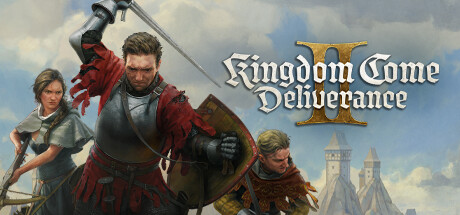
Kingdom Come: Deliverance II shares that same grounded ache—the way exhaustion settles into your shoulders after walking miles across muddy fields, the way a single misjudged parry leaves your character breathless and bleeding in the dirt. Its Emotional Narrative isn’t delivered through cutscenes alone, but through the weight of consequence: a stolen loaf matters. A broken promise echoes. Like Cardia learning to hold a teacup without gloves, every small act of reclamation in Kingdom Come: Deliverance II carries the same fragile, tremulous hope—the kind that flickers, never blazes. Player reviews mention “tactical warfare” not as flashy combos, but as reading terrain, conserving stamina, choosing mercy over momentum. That’s Cardia choosing silence over defense, choosing trust over survival instinct.
Baldur's Gate 3 resonates in its layered intimacy—the way dialogue choices aren’t just branching paths but breaths held or released, the way romance isn’t unlocked by stats but by shared silences, by witnessing vulnerability. Its JRPG Narrative dimension mirrors Code: Realize’s ensemble rhythm: each man isn’t a trope waiting to be selected—he’s a man shaped by empire, exile, betrayal, duty—and Cardia doesn’t “win” them; she meets them, again and again, in moments where armor cracks: Impey handing her a glove he’s worn himself; Finch adjusting his spectacles mid-sentence, voice catching on her name. Player reviews praise the story as “great,” yes—but what they’re really describing is the emotional narrative texture: the pause attack mechanic isn’t just tactical—it’s permission to breathe, to choose compassion over reflex, just as Cardia learns to pause before reacting, to listen before assuming.
And Dragon Age: Origins—ah, that old scarred heart of Thedas—holds the same reverence for legacy written in scars and letters. Its Emotional Narrative lives in the space between what’s said and what’s buried: a dwarf noble refusing to speak his clan’s name, an elf tracing faded ink on a forbidden text—moments that mirror Cardia deciphering her father’s journals, fingers trembling not from poison, but from the terror of understanding why she was made. Player reviews highlight how the “pause attack mechanic… help[s] a lot to strategize your tactic”—but what that really means is control reclaimed, agency returned in tiny, deliberate increments. Just like Cardia learning to walk unguarded through a garden, not because the danger vanished, but because she decided—finally—to test the air.
This pairing isn’t for fans of “strong female leads” as bullet points on a wiki. It’s for people who recognize the tremor in a hand reaching for another’s, the hush before confession, the way history doesn’t roar—it seeps, stains, softens edges over decades. It’s for those who’ve ever loved someone while holding themselves at arm’s length, who’ve measured safety in inches and trust in glances. They’ll feel it—in Cardia’s slow exhale as she lets go of a glove, in the clink of a tankard in a tavern where no one asks her name twice, in the pause before a spell lands—not as delay, but as choice. That’s the real magic. Not rebirth. Recognition.
🎮15 Games That Match the Vibe












Match Dimensions Explained
❓Frequently Asked Questions
What game is most like Code: Realize ~Guardian of Rebirth~?
Based on our matching, Kingdom Come: Deliverance II shares the strongest aesthetic connection with Code: Realize ~Guardian of Rebirth~.
How many games match Code: Realize ~Guardian of Rebirth~?
We found 15 games that share aesthetic dimensions with Code: Realize ~Guardian of Rebirth~.
What makes these recommendations accurate?
Our algorithm matches on emotional tone, atmosphere, and thematic depth — not just genre overlap.
Is there a game adaptation of Code: Realize ~Guardian of Rebirth~?
While Code: Realize ~Guardian of Rebirth~ may not have a direct game adaptation, these recommendations capture its core spirit.