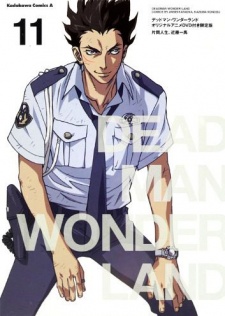
Deadman Wonderland: The Red Knife Wielder
Two years after the catastrophic tidal wave that swept over Japan, police officer Kiyomasa Senji is trying to make the world a safer place. Using his Branch of Sin powers, he stops criminals in whatever ways he can. After rescuing a boy named Izuru Tsukiyoshi from a gang called Goreless Peace, the conflict between Kiyomasa and his adversaries heats up rapidly, to the point of being explosive.
Offering a glimpse into the past of the future Deadman, the story follows Senji, helping to further develop the reasoning that drives his actions later in life.
(Source: MAL Rewrite)
Note: OVA bundled with the eleventh volume of the Deadman Wonderland manga.
📺Anime Details
📝Editorial Analysis
Rain slicks the cracked asphalt of Tokyo’s ruined districts—not gently, but in cold, insistent sheets that turn blood into rust-colored rivulets. Kiyomasa Senji stands knee-deep in a flooded alley, his coat torn, breath ragged, one hand gripping the hilt of a serrated blade still humming with residual Branch of Sin energy. A boy—Izuru Tsukiyoshi—cowers behind him, silent, eyes wide not with gratitude but with the hollow recognition of someone who’s already seen too much safety shatter. There’s no triumphant music. Just the low thrum of distant sirens, the groan of collapsing infrastructure, and the wet shink of a knife being wiped clean on denim. That moment isn’t victory. It’s exhaustion wearing the mask of duty.


What makes Deadman Wonderland: The Red Knife Wielder vibrate with such unsettling intimacy isn’t its gore or its urban decay—it’s the weight of moral erosion disguised as vigilance. This isn’t a world where justice is restored; it’s one where it’s re-routed, rerouted through a cop whose hands are stained not just by blood, but by the quiet calculus of what he’s willing to let happen next. You don’t feel heroic watching Senji act—you feel complicit. His Branch of Sin powers aren’t flashy superhuman feats; they’re brutal, surgical, intimate violations of physics—and of ethics. The tragedy isn’t abstract. It’s orphaned. It’s institutional. It’s in the way Senji’s police badge gleams under flickering streetlights like a relic from a religion no one believes in anymore.
That same suffocating gravity lives in The Witcher 3: Wild Hunt, where Geralt tracks Ciri across a continent that bleeds consequence. Like Senji, Geralt doesn’t operate in binaries—he moves through gray zones thick with collateral damage, where saving one life often means breaking another’s trust, or worse, their body. The player review calling it “a game that keeps getting better” echoes how Deadman Wonderland: The Red Knife Wielder lingers—not because it offers catharsis, but because its emotional architecture refuses closure. Both force you to carry the weight of choices long after the screen fades to black. And The Witcher 2: Assassins of Kings Enhanced Edition, praised for feeling “more thoughtfully designed” than its sequel, mirrors the anime’s tight, claustrophobic pacing—every confrontation calibrated, every political whisper laced with real-world dread. Its emphasis on consequence isn’t theoretical; it’s tactile, like the grit under Senji’s fingernails after dragging a suspect from rubble.
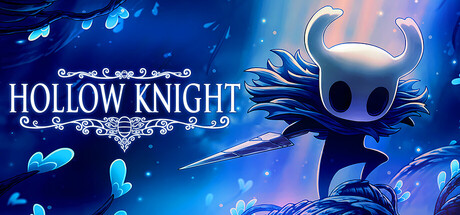
Then there’s Hollow Knight, where the ruined kingdom isn’t metaphorical—it’s geological, carved into bone and chitin, echoing the urban wasteland of post-tidal-wave Japan. The description calls it an “epic action adventure through a vast ruined kingdom of insects and heroes”—but what binds it to Senji’s world is the silence between actions. That same hush before a Branch of Sin flares. That same loneliness in wide, empty corridors. The player review notes its “beautiful art style” and “lovely story”—but the loveliness is fractured, like Senji’s resolve. Both works treat tragedy not as plot device but as atmosphere—something you breathe, something that settles in your ribs.
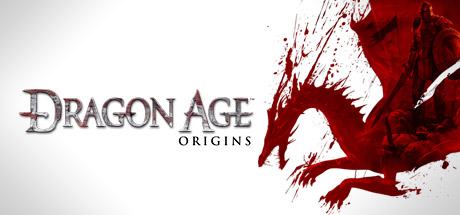
Dragon Age: Origins lands with similar resonance—not in spectacle, but in structure. Its pause-attack mechanic lets you strategize mid-battle, yes—but more crucially, it forces deliberation in moments meant to feel instinctive. That’s Senji’s entire rhythm: the split-second calculation before the knife drops, the tactical restraint before unleashing power. The review praises how it “help[s] a lot to strategize your tactic”—and that’s precisely what Deadman Wonderland: The Red Knife Wielder demands of its audience: not passive consumption, but moral triage. Who do you shield first? Whose truth do you defer? Whose pain do you absorb?
This pairing speaks directly to the viewer who watches anime not for escape, but for recognition—the kind who pauses mid-episode to stare out a rain-streaked window, thinking about how authority wears different uniforms but the same exhaustion. It’s for the player who saves before major decisions—not out of fear of failure, but out of respect for how deeply a single choice can scar. They don’t want heroes. They want people holding knives in the dark, wondering if the edge is meant to cut toward justice—or through it. They crave stories where tragedy isn’t the climax—it’s the air. Where every blade has two edges, and every savior carries the ghost of the system they swore to fix.
🎮12 Games That Match the Vibe

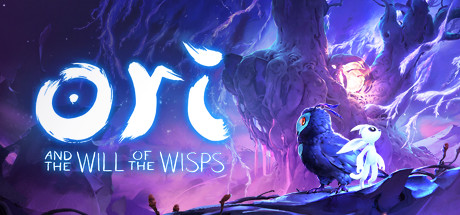
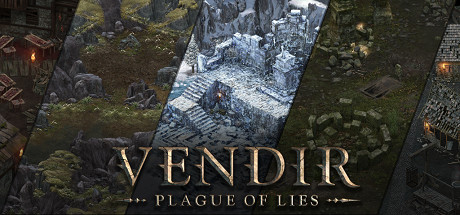
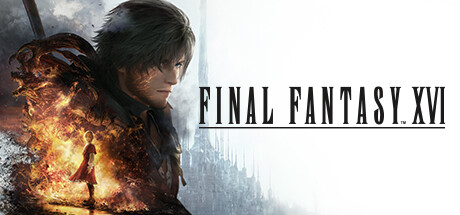
Match Dimensions Explained
❓Frequently Asked Questions
Why does Deadman Wonderland: The Red Knife Wielder match with The Witcher 3 so closely?
Because both dive deep into morally grey trauma-driven narratives where protagonists—Ganta (a wrongfully imprisoned teen wielding a blood-based weapon) and Geralt (a genetically altered monster slayer hunting Ciri amid war and betrayal)—navigate oppressive systems while wrestling with identity, loss, and violent agency. The match hinges on that shared 'Dark Fantasy + Emotional Narrative' DNA: think Ganta’s visceral prison fights echoing Geralt’s brutal, consequence-laden contracts in war-torn Velen.
Is there a Deadman Wonderland anime or game adaptation of The Red Knife Wielder?
No—'The Red Knife Wielder' isn’t an official anime or game adaptation; it’s a fan-made title referencing Ganta’s signature ability from the *Deadman Wonderland* manga/anime. But if you love that raw, tragic-yet-empowered vibe, *Hollow Knight* nails it: the Nameless Knight’s silent descent into Hallownest’s ruined, insectoid hellscape—uncovering lost heroes like the Hollow Knight and battling the Infection—mirrors Ganta’s isolation, bodily horror, and quiet resilience.
How is Hollow Knight different from Dragon Age: Origins for someone who loves Deadman Wonderland’s tone?
Hollow Knight leans into environmental storytelling and melancholic solitude—like wandering the Abyss with the Nailmaster’s journal entries slowly revealing tragedy—while *Dragon Age: Origins* gives you party banter, pause-and-plan tactical combat (that ‘pause attack mechanic’ fans love), and political weight (e.g., choosing sides in the Dalish elf vs. human conflict). Both are Dark Fantasy/Emotional Narrative matches, but Hollow Knight feels like Ganta alone in the Tower; DAO feels like leading a ragtag resistance *with* him.
What’s the best game like Deadman Wonderland if I want that oppressive, emotionally heavy prison-island vibe?
Go straight to *The Witcher: Enhanced Edition Director's Cut*—not for prisons, but for its suffocating atmosphere of moral rot and personal cost: Geralt trapped in Vizima’s plague-ridden alleys, making choices that fracture relationships (like team Yenn vs. team Tress), all while his very body rebels against him. It’s got that same claustrophobic dread and emotional weight as Ganta’s early days in Deadman Wonderland—just swapped for witcher mutations and political intrigue.