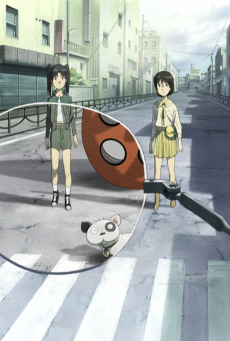
Den-noh Coil
Imagine if the internet was 'projected' over the living world and you interacted with it using a portable device - glasses and visors which connect you to an augmented reality. In 2026, this technology becomes reality...
Yuuko Okonogi moves with her family to Daikoku, home of an ever expanding tech network which makes up the interactive virtual world. Her grandmother runs an agency to investigate missing children who appear to have vanished from the 'real' world and entered the city's Dennou - literally meaning "electric brain" - a term used to differentiate between the virtual and 'real.'
A hacker culture is emerging amongst the children of the city. Yasako is soon introduced to Isako, whose powers for hunting computer viruses known as 'illegals' belie an agenda that might have sinister motives.
(Source: Siren Visual)
📺Anime Details
📝Editorial Analysis
The first time Yuuko Okonogi lifts her Den-noh glasses and sees the city breathe—a shimmering overlay of data-streams curling around lampposts, stray digital pets flickering at alley mouths, a ghostly school bell ringing only in her ears—that’s not spectacle. It’s disorientation with weight. Her fingers hover over the interface, unsure whether to touch the real brick or the translucent menu hovering just above it. The air hums—not with electricity, but with presence: the quiet, persistent hum of something alive, fragile, and half-understood, woven into the pavement, the rain-slicked streets of Daikoku, the silence between her grandmother’s words.

That hum is the soul of Den-noh Coil. Not the sci-fi premise—though AR in 2026 is precise and tactile—but the feeling of standing at the threshold where memory dissolves and code begins to remember for you. It’s the ache of amnesia that isn’t just personal, but architectural: missing children aren’t lost in space, but folded into the city’s own latent software, their traces lingering in corrupted data-ghosts and unstable overlays. The show doesn’t thrill with action—it lingers, in the pause before a glitch resolves, in the way a child’s hand hesitates mid-air, choosing between pulling a virtual vine or grasping a real one. It makes you feel tender, watchful, and quietly terrified—not of danger, but of how easily the self can blur when the boundary between lived experience and mediated trace becomes porous. This isn’t optimism about tech or dystopian warning—it’s philosophy as weather: humid, unspoken, settling into your clothes.
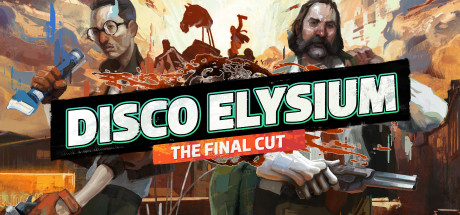
Among the games that echo this same frequency, Disco Elysium - The Final Cut lands with uncanny resonance. Its description names “Mystery & Detective” and “Emotional Narrative”—but the player review cuts deeper: “Capital has the ability to subsume all critiques into itself. Even those who would critique capital end up reinforcing it instead.” That’s the same vertigo Yuuko feels when chasing a vanished friend down a data-stream only to find the trail loops back into the city’s official network infrastructure—her investigation becoming part of the very system erasing the truth. Both works treat reality as a contested interface: not solved by logic, but navigated through fractured identity, unreliable memory, and systems that absorb dissent like static. The detective’s crumbling psyche mirrors the children’s fragmented sense of self inside the Den-noh layer—both are unmoored, not by choice, but by design.
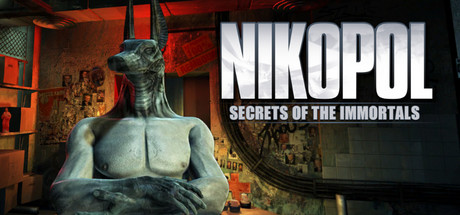
Then there’s Nikopol: Secrets of the Immortals, described as a “first-person dystopian point-and-click sci-fi adventure” set under a “religious dictatorship,” where a pyramid ship appears over Paris. The player review notes its “cyberpunk atmosphere” and how “animations and cutscenes enhance” the mood. That’s the texture: not explosive rebellion, but atmospheric pressure—the weight of ideology made visible in architecture, in surveillance shadows, in the way light bends off a floating monument. Like Daikoku’s AR network, Nikopol’s world isn’t hostile because it’s violent—it’s oppressive because it’s inescapably ambient, layered, and narratively sedimented. You don’t fight the system head-on; you parse its glyphs, listen to its distorted broadcasts, feel its presence in the grain of every pixel—just as Yuuko deciphers corrupted data-ghosts not as enemies, but as traces of someone who was here, and then wasn’t.
And though it seems tonally distant, Strong Bad's Cool Game for Attractive People: Season 1 shares something vital: its description calls it “wacky comedic adventures,” yet the player review longs for its return because of nostalgia’s emotional gravity—not just for jokes, but for the warmth of a specific, handmade digital intimacy. Like Den-noh Coil’s homemade AR tools—clunky, modded, full of kid-coded quirks—Strong Bad’s world is built from affectionate, low-fi artifice. The humor isn’t escapist; it’s protective. It wraps existential unease (amnesia, disappearance, unstable reality) in absurdity so the feeling doesn’t shatter you—it holds.
This pairing sings for the viewer who cries during loading screens, who saves game files like letters, who walks past a bus stop and wonders what data-haunt might flicker in the corner of their eye if they just tilted their head—and who knows, deep in their bones, that the most haunting mysteries aren’t about what happened, but about what remembers you, even when you forget yourself.
🎮18 Games That Match the Vibe













Match Dimensions Explained
❓Frequently Asked Questions
Why does Nikopol: Secrets of the Immortals feel like Den-noh Coil’s darker, French cousin?
Because both hinge on a quiet teen uncovering hidden digital-spiritual layers beneath a rigid society—Nikopol’s Paris has that same eerie, rain-slicked cyberpunk atmosphere as Den-noh Coil’s Katsushika, with ghostly holograms and authoritarian surveillance. The pyramid ship hovering over Notre-Dame mirrors Coil’s data ghosts and augmented-reality glitches, and just like Yasako navigating invisible networks, Nikopol’s protagonist deciphers cryptic transmissions from immortals using fragmented terminals and analog interfaces.
Is there a Den-noh Coil anime adaptation or game remake in development?
No official adaptation or remake exists—but if you’re craving that same vibe, Persona 5 Royal nails the emotional weight of teenage rebellion layered over a mystery-driven urban world. Its Tokyo feels alive with hidden truths, just like Coil’s Katsushika, and the Phantom Thieves’ heists echo Yasako’s quiet, tech-aided investigations—especially how Morgana’s banter and Ann’s empathy mirror the found-family warmth of Coil’s gang.
How does Disco Elysium compare to Den-noh Coil in terms of detective storytelling?
Both make investigation deeply personal and internal—Den-noh Coil’s Yasako pieces together data ghosts through intuition and friendship, while Disco Elysium’s Harry DuBois debates philosophy with his own skill voices (like Logic or Empathy) mid-interrogation. Neither relies on action; instead, they trust quiet moments—the way Yasako watches a flickering AR tag in a vacant lot feels kin to Harry staring at a broken streetlamp in Martina, realizing it’s not just broken—it’s *guilty*.
What’s the best Den-noh Coil–like game for when I want something melancholic but hopeful, with soft sci-fi and grounded characters?
Nikopol: Secrets of the Immortals fits perfectly—it’s got that wistful, analog-futurist tone, where even the dystopia feels tender, like when Nikopol touches the cold metal of the pyramid’s inner chamber and hears whispers of lost humanity. The player review calling its cyberpunk atmosphere 'nice' isn’t underselling it—it’s warm, textured, and emotionally precise, much like Coil’s scenes of Yasako and Isako sharing earbuds under a glitching streetlight.