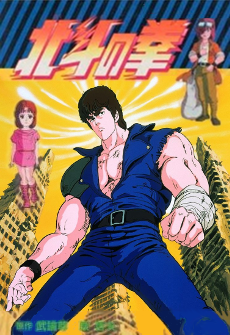
Fist of the North Star
Nuclear war has devastated the planet, turning one fertile ground into a barren, inhospitable landscape on which mankind struggles desperately to stay alive. Society has collapsed and a fight for control wages between vicious dictators, super-powerful mutants, and biker gangs that terrorize the streets.
In a world so cruel and bleak, only the chosen one can restore civilization to its former self. Kenshiro - master of the Hokuto Shinken fighting technique; a martial art so awesomely brutal that only a single being can be entrusted with its full power!
(Source: Manga Entertainment)
📺Anime Details
📝Editorial Analysis
A man stands alone in a cracked desert highway, his knuckles bleeding, his breath ragged, the wind howling like a dying god. Behind him, a warlord’s fortress lies in ruins—not from explosives or fire, but from one strike: a single, precise fist driven into the solar plexus, followed by the sickening crack-hiss of internal organs rupturing in sequence. Then—silence. Then the blood erupting from the tyrant’s mouth in a slow, arterial arc as he collapses, eyes wide with disbelief, not pain. That moment isn’t about victory. It’s about weight. The unbearable gravity of consequence. The way violence here doesn’t just end lives—it unmakes them, sentence by sentence, artery by artery.
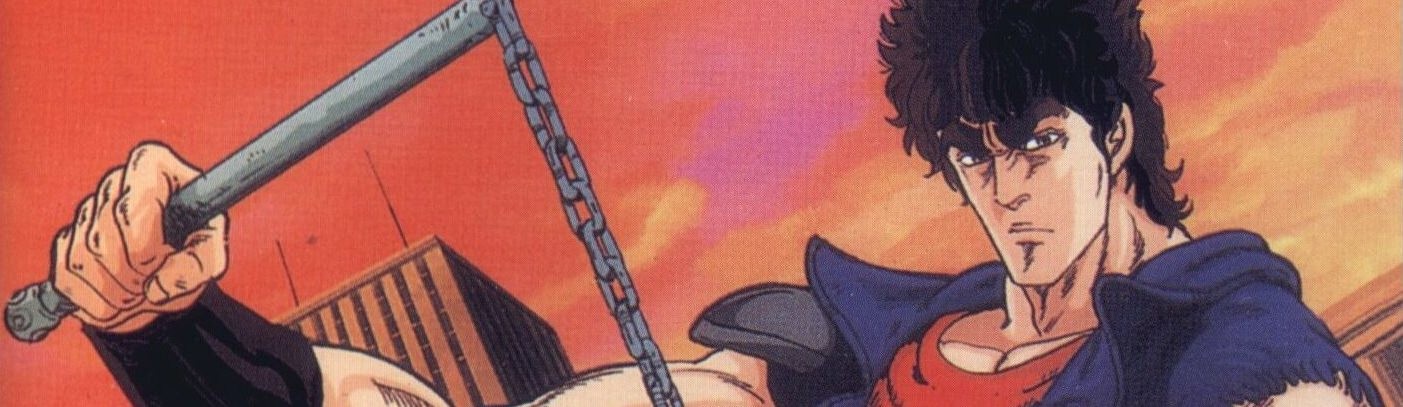
That’s Fist of the North Star: not a story about power fantasy, but about restraint, sacrifice, and the terrible cost of being the last man who remembers mercy. Its world isn’t just post-apocalyptic—it’s post-ethical. Water is hoarded like sacrament. A child’s laughter is rarer than rain. Every fight lands with the finality of a tomb sealing shut. You don’t feel pumped after a battle—you feel hollowed. The tragedy isn’t that Kenshiro loses people. It’s that he keeps surviving, carrying each death like a stone in his chest. The sci-fi isn’t lasers or AI—it’s the chilling plausibility of what happens when civilization’s thin veneer shatters and only muscle, memory, and moral exhaustion remain. It makes you think about legacy—not as glory, but as burden. Not as conquest, but as witnessing.
So which games echo that same hollow resonance? Not the flashy ones—but the ones where action has consequence, where survival isn’t a stat bar but a tremor in your hands. Chains, for all its bubble-linking surface, taps into that same ritualistic tension: “link adjacent bubbles… clear enough till you can proceed.” There’s no score, no timer—just the quiet, escalating pressure of physics-driven precision. Like Hokuto Shinken’s secret techniques, success hinges on exact placement, not speed. One misstep unravels everything. A player says it “reminds me of connect 4 in nutshell”—and yes, that’s the feeling: small, deliberate, inescapable cause-and-effect. Each chain is a choice with irreversible weight—just like Kenshiro choosing not to kill a broken enemy, or choosing to strike exactly where the body will betray itself.
Then there’s Aliens versus Predator Classic 2000, where a player calls it “fast, brutal, and absolutely unforgiving.” No regenerating health. No checkpoints. Just corridors thick with dread, motion trackers blipping like frantic heartbeats, and death that arrives instantly—a xenomorph’s tail through the chest, a predator’s wristblade across the throat. That’s the same visceral finality as a Hokuto Shinken death: no recovery, no second chances, just the brutal arithmetic of anatomy meeting intent. The game doesn’t soften its blows—it honors them. You don’t respawn; you remember the sound of your own ribs snapping under alien jaws. That’s the same emotional DNA: respect for violence as a language with grammar, syntax, and terrible punctuation.
And Dark Messiah of Might & Magic, where a reviewer calls it “a fantastic melee combat game that still holds up pretty well today,” praising its ferocious, physical swordplay—no auto-lock, no QTEs, just timing, spacing, and the sickening thud of a boot to the jaw sending an armored foe stumbling into a chasm. Its Source Engine bones make every parry feel like bone grinding on bone. That’s Kenshiro’s world translated into 3D space: combat as conversation, where hesitation means dismemberment, and mastery means reading your opponent’s breath before they breathe. Not spectacle for spectacle’s sake—but spectacle grounded in consequence, where every swing carries the weight of a life already lost.
This pairing isn’t for fans of slick power-ups or breezy progression. It’s for the person who watches Fist of the North Star and feels their throat tighten at the sight of a single drop of water falling into a child’s cup—not because it’s rare, but because it’s earned, shared, sacred. It’s for the player who pauses mid-game, fingers hovering over the keyboard, because the silence between enemy footsteps feels heavier than any boss theme. They’re the ones who don’t want to win—they want to endure, to witness, to carry the weight of what remains after the world breaks. They recognize tragedy not as plot device, but as atmosphere. And in that cracked desert, that flickering motion tracker, that perfectly timed kick into darkness—they find the same aching, the same honor, the same terrible, beautiful restraint.
🎮14 Games That Match the Vibe
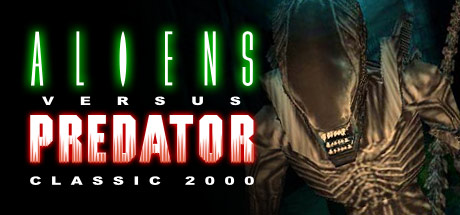



Match Dimensions Explained
❓Frequently Asked Questions
Why does Dark Messiah of Might & Magic feel like Fist of the North Star despite being fantasy?
Because its melee combat is all about brutal, physics-driven dismemberment and cinematic finishers—like when you kick an enemy into a chandelier or snap their neck with a well-timed grab—mirroring Kenshiro’s ‘You are already dead’ moments. The emotional narrative leans into betrayal and vengeance (think Biscuit’s arc), and the Source Engine’s ragdoll system makes every takedown feel as visceral and over-the-top as a Hokuto Shinken death blow.
Is there a Fist of the North Star anime adaptation game that actually captures the tone?
Not really—most licensed anime games miss the mark, but Aliens versus Predator Classic 2000 nails the *vibe*: fast, unforgiving, and brutally physical. Like Kenshiro clearing a room in one combo, the Colonial Marine mows through xenomorphs with a pulse rifle while dodging claws and acid blood—same adrenaline rush, same ‘no second chances’ energy, just swapped for sci-fi.
How does Chains compare to Fist of the North Star in terms of intensity and pacing?
It doesn’t—it’s the total opposite! Chains is a chill, physics-based match-3 arcade game where you link colored bubbles to clear stages, more like meditating than martial mayhem. While Fist of the North Star is all screaming, slow-mo arteries, Chains is soft-spoken, soothing, and emotionally narrative-driven—think ‘Zen Hokuto’ instead of ‘Hokuto Shinken’.
What’s the best Fist of the North Star-like game if I want raw, cathartic melee combat and zero patience for grinding?
Dark Messiah of Might & Magic—hands down. You’re swinging swords, kicking doors off hinges, and snapping spines within 90 seconds of starting, no level-ups or inventory menus slowing you down. Its combat feels like playing out a Hokuto Shinken cutscene: immediate, weighty, and gloriously messy—just swap Hokuto for Mordac and it’s basically Kenshiro in a leather jerkin.