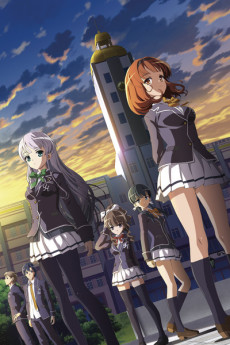
In Search of the Lost Future
📺Anime Details
📝Editorial Analysis
The chalk dust hangs in the afternoon light like suspended time—just before the astronomy club’s telescope is wheeled out, just after someone forgets their own name. That breathless, fragile pause: not silence, but the hum of something about to fracture. A girl stares at her palm, confused by the constellation chart she drew there yesterday—except she doesn’t remember drawing it. Her fingers tremble, not from cold, but from the quiet horror of realizing memory isn’t a record—it’s a wound that keeps reopening.
What makes In Search of the Lost Future ache so deeply isn’t its sci-fi scaffolding—it’s how tenderly it treats unmooring. Not grand apocalypses or world-ending paradoxes, but the slow, intimate collapse of self: amnesia that feels less like plot device and more like standing on a dock watching your own reflection ripple apart in the water. The school setting isn’t backdrop—it’s a cage of routine holding back chaos; the astronomy club isn’t just hobby—it’s the last place where logic still maps onto feeling. You don’t watch this anime to solve time travel—you watch to feel the weight of a single unanswered question hanging between two people who used to know each other’s birthdays. It makes you think about how love isn’t erased by forgetting—it just gets folded into the static, waiting for a frequency you can no longer tune.
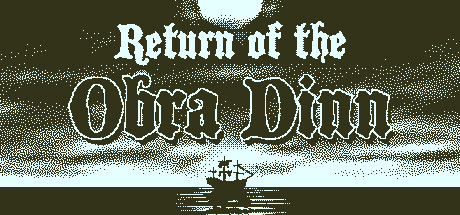
That same resonance lives in Return of the Obra Dinn, where mystery isn’t about catching a killer—it’s about reconstructing what it felt like to be alive in a moment already gone. Its score of 83 lands precisely because it shares the anime’s emotional architecture: both demand you piece together humanity from fragments—scraps of dialogue, a half-remembered gesture, the angle of light on a face frozen mid-scream. No exposition, no hand-holding—just the visceral pressure of almost remembering, of sensing truth just beyond reach. It’s not about solving time—it’s about mourning the version of yourself who still knew how to hold it.
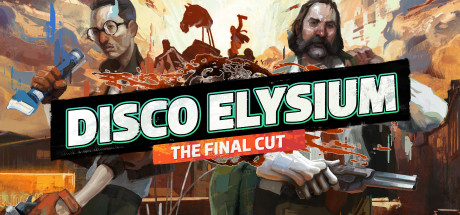
Then there’s Disco Elysium - The Final Cut, also scoring 81—not because it’s about amnesia, but because its entire narrative engine runs on fractured cognition. You play a detective whose mind is a riot of competing voices, unreliable memories, and ideological ghosts—exactly like the protagonist of In Search of the Lost Future, trying to navigate a world that insists she belongs while her own thoughts keep betraying her. The player review’s cryptic line—“Capital has the ability to subsume all critiques into itself”—mirrors the anime’s quiet tragedy: how systems (school, time, even love) absorb individual pain until it becomes indistinguishable from structure. Both works force you to inhabit confusion as ethics—to ask not what happened, but who gets to decide what matters when memory fails.
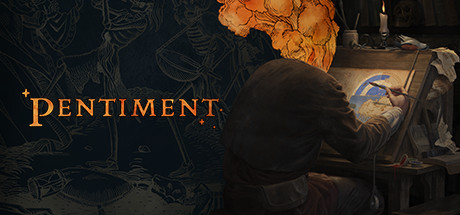
And Pentiment, another 81—its medieval scribes, illuminated manuscripts, and layered oral histories echo the anime’s obsession with how stories survive erosion. In both, truth isn’t found—it’s negotiated across gaps: between what’s written and what’s whispered, between what’s remembered and what’s buried under years of polite silence. The anime’s astronomy club charts stars that died centuries ago—their light only now arriving—while Pentiment’s characters recount events they witnessed decades prior, each retelling subtly warping the shape of fact. Neither offers clean answers. They offer weight: the gravity of a story told too late, or too quietly, or by someone who no longer trusts their own tongue.
This pairing isn’t for fans of “sad stories” or “time travel tropes.” It’s for the person who pauses mid-conversation because a phrase sounds familiar—but not right—and wonders if they’re misremembering or being haunted. It’s for the player who reloads a save not to fix a mistake, but to sit longer with the silence after a confession. For the reader who underlines a sentence not because it’s beautiful, but because it names a feeling they’ve carried for years without knowing its name: disorientation, tenderness, grief, longing, recognition. These aren’t stories about finding the future—they’re about learning how to stand, barefoot and blinking, in the wreckage of the present—and still look up.
🎮19 Games That Match the Vibe










Match Dimensions Explained
❓Frequently Asked Questions
Why is Return of the Obra Dinn listed as similar to In Search of the Lost Future?
Because both hinge on piecing together fragmented, emotionally charged memories through non-linear investigation—Obra Dinn’s time-looping deduction (replaying shipboard deaths to ID crew members) mirrors Lost Future’s narrative structure where you reconstruct relationships and trauma across shifting timelines. Critics praised Obra Dinn’s ‘quiet, melancholic weight’ and ‘character-driven mystery’, just like Lost Future’s focus on lost love and unresolved grief.
Is there an anime or manga adaptation of In Search of the Lost Future?
No—unlike The Wolf Among Us (which was adapted from Bill Willingham’s Fables comics) or Pentiment (inspired by real 16th-century Bavarian manuscripts), In Search of the Lost Future has never been adapted into anime, manga, or live-action. All official releases remain visual novel-only, with no licensed spin-offs or media expansions announced.
How does Disco Elysium compare to In Search of the Lost Future in terms of emotional storytelling?
Both dig deep into guilt, memory, and identity—but Disco Elysium does it through internal monologue and skill-check-driven dialogue (like your ‘Logic’ skill dissecting a murder scene in the rain-soaked streets of Revachol), while Lost Future uses intimate, branching character interactions (e.g., re-examining Sayuri’s diary entries after key choices). Reviewers noted Disco Elysium’s ‘philosophical density’ and ‘emotional exhaustion’—a different flavor than Lost Future’s tender, bittersweet nostalgia.
What’s the best game like In Search of the Lost Future if I want that slow-burn, melancholy detective vibe?
Pentiment is your perfect match—it’s got that same hushed, introspective tone: you play as scribe Andreas Maler investigating murders in 1546 Bavaria, cross-referencing witness testimony against historical documents and shifting perspectives. Like Lost Future, every choice reshapes relationships (think Sister Agnes’ quiet disillusionment or Brother Vitus’ buried regrets), and critics called its narrative ‘meditative, humane, and achingly precise’—no car chases, no janky physics, just layered truth and consequence.