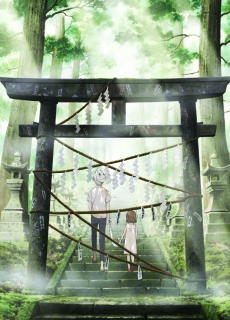
Into the Forest of Fireflies' Light
The story of Hotarubi no Mori e centers around Hotaru, a little girl who gets lost in an enchanted forest where apparitions reside. A young boy, Gin, appears before Hotaru, but she cannot touch him for fear of making him disappear.
📺Anime Details
📝Editorial Analysis
The first time Hotaru reaches for Gin’s hand—her small fingers trembling just shy of his wrist, the summer air thick with cicadas and unspoken longing—that suspended inch between them isn’t just distance. It’s weight. It’s the quiet horror of loving something you’re forbidden to hold, the ache of a warmth that exists only in proximity, never contact. Her breath hitches—not in fear, but in reverence. Not because he’s dangerous, but because he’s fragile, because every brush of skin might unravel him like smoke in wind. That moment isn’t tragedy yet. It’s tenderness held at arm’s length, sacred and suffocating all at once.
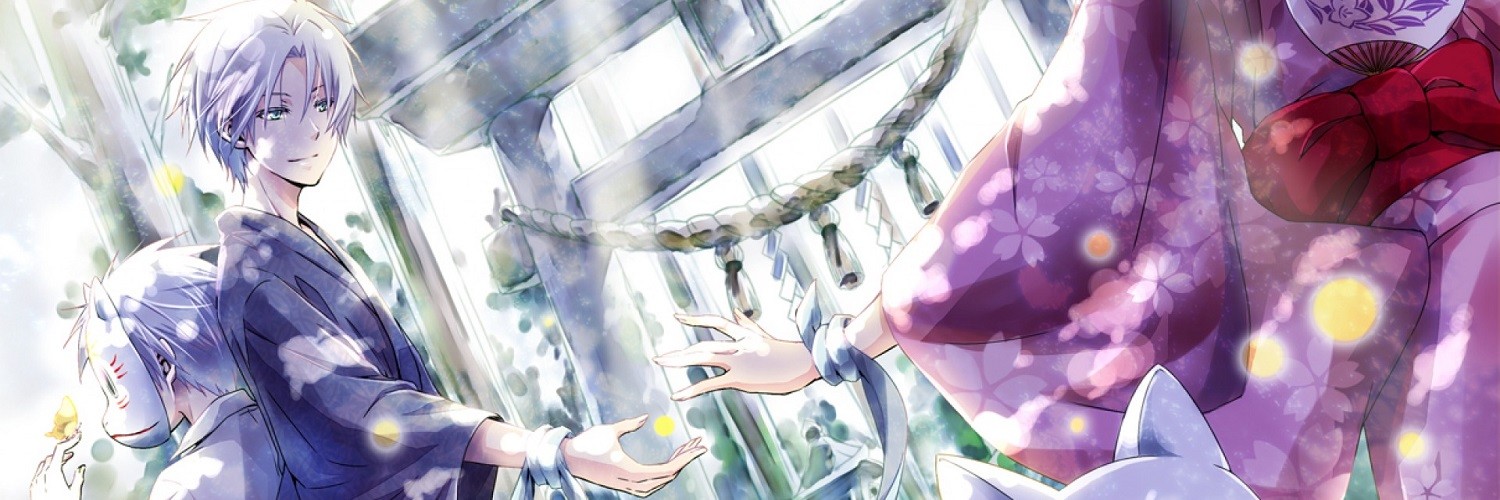
What makes Into the Forest of Fireflies' Light so singular isn’t its ghost boy or enchanted forest—it’s how it treats time as both sanctuary and sentence. The rural setting isn’t backdrop; it’s breath. The slow pace isn’t laziness—it’s reverence for seconds that won’t return. You don’t watch it waiting for plot; you sit inside its stillness, feeling the dappled light shift across moss, hearing the rustle of leaves not as ambience but as witness. It makes you think about impermanence not as abstraction, but as texture—the way sunlight catches dust motes before vanishing behind clouds, the way childhood dissolves not with fanfare, but with a single, ordinary bus ride away from the forest gate. There’s no grand battle, no villain—just the unbearable softness of love that must remain untouchable, and the quiet devastation of growing up while carrying that truth like a stone in your pocket.
That emotional DNA pulses strongest in games where slowness isn’t a flaw but a philosophy. The Sims™ 4, despite player frustrations about DLC costs and bugs, taps into the same healing & slow life dimension: the act of building tiny, imperfect lives—planting flowers, sharing tea on a porch, watching relationships bloom in quiet increments—mirrors Hotaru’s ritual visits to the forest. One reviewer laments how “this game is no fun without dlc,” but the raw, unpolished core—creating homes, nurturing bonds, living day-to-day—is where the resonance lives: the care in curation, the weight of small choices, the way love unfolds in glances and shared meals, not declarations. It’s not about fixing the world—it’s about tending to it.
Then there’s Prince of Persia, whose description promises “an all-new epic journey” and “new lands,” yet player reviews note it’s “the 3rd reboot… completely separate from the sands.” That deliberate separation echoes Gin’s existence—he’s not tied to old myths or lore; he simply is, luminous and transient, outside linear time. His romance with Hotaru isn’t built on conquest or destiny, but on presence—walking beside her, sharing stories under ancient trees, existing together in a liminal space. The game’s emphasis on movement, grace, and fleeting connection—“epic journey” stripped down to footfalls on sandstone, hands almost brushing—lands squarely in the romance & shoujo dimension where emotion moves at the speed of heartbeat, not plot.
And Chains, though seemingly distant—a match-3 arcade game—holds its own quiet kinship. Its description calls it “relaxing,” its challenge rooted in “increasingly difficult physics-driven” chain-linking. A player compares it to “connect 4 in nutshell”—simple rules, escalating tension in the linking. That’s Hotaru and Gin in microcosm: the act of connecting—color to color, hand to hand, heart to heart—is simple, beautiful, and inherently unstable. Every successful chain is temporary; gravity, timing, or misalignment threatens collapse. Just like Hotaru’s hope—each summer visit, each whispered promise, each near-touch—is a fragile link holding back dissolution. The emotional narrative here isn’t told in cutscenes, but in the quiet stress of aligning bubbles before they scatter—same breathless focus, same tender, trembling precision.
This pairing sings for the person who cries at sunsets, who saves voicemails they’ll never replay, who keeps train tickets in a drawer “just in case.” For the one who replays Stardew Valley’s festival scenes not for rewards, but to hear the town laugh again. Who pauses Prince of Persia mid-leap just to watch dust hang in light. Who builds a Sim family not to win, but to watch them age slowly, side by side, on a porch that faces east—waiting, always, for the first light. Not for answers. Just for more time. Just for one more summer.
🎮23 Games That Match the Vibe











Match Dimensions Explained
❓Frequently Asked Questions
Why does Prince of Persia keep showing up in 'Games Like Into the Forest of Fireflies' Light' lists?
It’s not about acrobatics—it’s the quiet, melancholic romance and slow-burn emotional pacing that matches Fireflies’ tone. Think of the Prince and Elika’s wordless understanding, the way they move together through misty ruins and sun-dappled forests—very much like Hotaru and Gin’s tender, fleeting moments. Both games lean hard into Healing & Slow Life + Romance & Shoujo dimensions (scored 80 each), which is rare for an action-adventure title.
Is there a visual novel or anime adaptation of Into the Forest of Fireflies' Light that’s actually a game?
No official visual novel or anime-to-game adaptation exists—but Chains nails the *feeling* of Fireflies’ gentle emotional rhythm. Its bubble-linking mechanic is meditative and tactile, like tracing firefly trails with your finger, and its Emotional Narrative dimension (75 score) mirrors the bittersweet intimacy of the film. Players even compare its calm, stage-by-stage progression to ‘sitting beside someone in silence, just breathing together.’
Stardew Valley vs. The Sims 4—which one captures Fireflies’ mood better?
Stardew Valley, hands down—especially if you play it slowly: skipping festivals, walking alone to the mountains at dusk, or gifting flowers to Sebastian in his dim basement. Its Healing & Slow Life + Romance & Shoujo blend (68 score) feels organic and heartfelt, unlike TS4, where even romance feels transactional unless you pay for DLCs (player review calls it ‘no fun without dlc’). Fireflies isn’t about building empires—it’s about small, sacred moments, and Stardew honors that.
What’s the best game like Into the Forest of Fireflies’ Light if I want something soothing but not romantic?
Chains is your best bet—it’s all about calming repetition, soft colors, and gentle cause-and-effect physics, with zero romance or dialogue. Linking bubbles feels like watching fireflies pulse in unison: no pressure, no time limits, just flow and release. It scores 75 in Emotional Narrative and Healing & Slow Life, and players say it ‘reminds me of connect 4 in a nutshell’—simple, tactile, and deeply restorative.