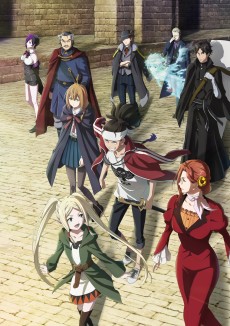
ISHURA
In a world where the Demon King has died, a host of demigods capable of felling him have inherited the world: a master fencer who can figure out how to take out their opponent with a single glance; a lancer so swift they can break the sound barrier; a wyvern rogue who fights with three legendary weapons at once; an all-powerful wizard who can speak thoughts into being; and an angelic assassin who deals instant death. Eager to attain the title of “One True Hero,” these champions each pursue challenges against formidable foes and spark conflicts themselves. The battle to determine the mightiest of the mighty begins.
(Source: Yen Press)
📺Anime Details
📝Editorial Analysis
The air doesn’t just crack—it shatters. A lancer blurs past a crumbling watchtower, and for one suspended frame, the sound barrier isn’t broken; it’s torn, leaving a vacuum that sucks dust, blood, and breath into its wake. You don’t hear the impact—you feel the silence afterward, thick with the smell of ozone and burnt leather, as a wyvern rogue lands mid-air, three blades humming in unison, already calculating the next kill before the first corpse hits the ground. That’s ISHURA—not spectacle for spectacle’s sake, but velocity as violence, precision as prophecy, and power so absolute it curdles into dread.
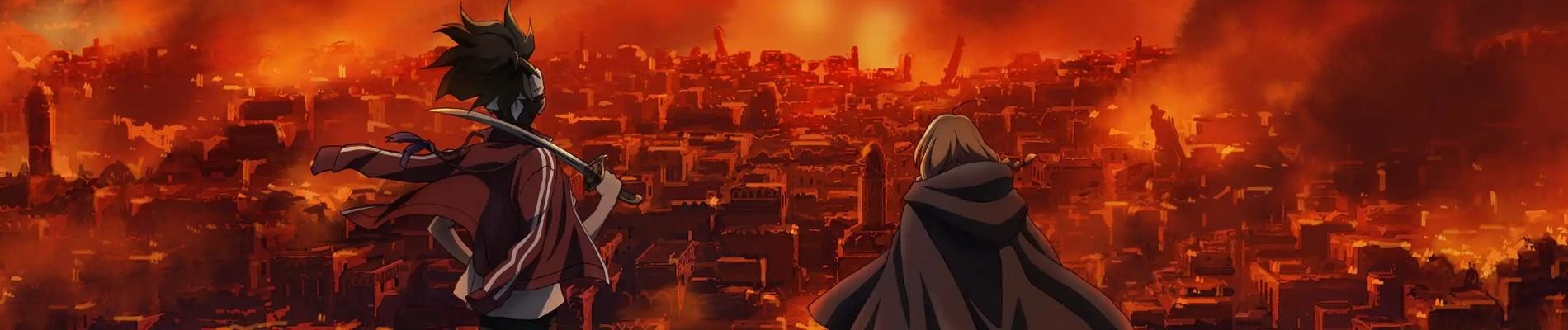
What makes ISHURA’s atmosphere singular isn’t its dragons or gore—it’s the weight of inevitability. Every duel is less a contest than a calculus of collapse: the fencer sees your death before you blink; the wizard speaks your dissolution into existence; the angelic assassin doesn’t aim—they confirm. There’s no triumph here, only succession—cold, political, and utterly final. It makes you feel small, not because the stakes are cosmic, but because every hero is already compromised, every victory a prelude to another war. You think about legacy not as glory, but as residue—what stains remain after the “One True Hero” title is carved into a tombstone no one reads.
That same gravitas hums through Assassin's Creed™: Director's Cut Edition, not in its parkour or blade-work, but in its political thriller spine. The description calls it a game that “redefines the action genre” by anchoring spectacle in ideology—not just who dies, but why the system demands it. A player admits the textures are dated, yet doesn’t flinch: “no issues with me.” That’s the ISHURA resonance—style recedes, but the tactical warfare beneath—the quiet betrayals, the chains of command snapping under pressure—remains razor-sharp. Both treat combat not as catharsis, but as bureaucracy with blood on the ledger.
Then there’s Dragon Age: Origins, where the Fifth Blight isn’t fought with flash, but with pause-and-plan precision. Its description asks: “What will be said about the hero who turned the tide?”—a question ISHURA answers with chilling economy: nothing. Just names crossed off lists. A player praises the “pause attack mechanic” that “help[s] a lot to strategist your tactic”—mirroring how ISHURA’s demigods don’t brawl; they diagnose. The wizard doesn’t cast spells—he declares outcomes. The fencer doesn’t parry—he predicts failure. That same clinical, almost surgical approach to conflict—where every decision carries tactical and moral attrition—makes Dragon Age: Origins vibrate at the same frequency: war as grim arithmetic, not myth.
Even Heroes of Might & Magic V, buried beneath its “next-generation visuals” tagline, pulses with ISHURA’s DNA. Its description frames it as “the evolution of the genre-defining strategy game,” merging “classic deep fantasy” with layered consequence—and a player declares it “Best HoMM game ever made… [that] nukes both HoMMIII and HoMMII from orbit.” That’s the ISHURA ethos again: not evolution as uplift, but as erasure. A new order doesn’t rise—it incinerates the old one, then builds on ash. No nostalgia, no reverence—just ruthless, beautiful, devastating tactical warfare, where every map hex feels like a contested throne room.
This isn’t for the viewer who wants hope handed warm and wrapped. It’s for the one who watches a dragon’s wingbeat shake the camera—not in awe, but in recognition of scale too vast to comfort. It’s for the player who replays a boss fight not to win faster, but to understand the rhythm of their own obsolescence. The kind of person who keeps a notebook open during Persona 5 Royal’s jazz-slick Tokyo nights—not for the soundtrack (though yes, stunning), but to track how every “daily life” choice tightens the noose around someone else’s future. They don’t seek heroes. They study successors. And when the lancer breaks the sky, they don’t cheer—they hold their breath, waiting for the echo to settle into something quieter, heavier, truer.
🎮12 Games That Match the Vibe





Match Dimensions Explained
❓Frequently Asked Questions
Why does ISHURA feel so much like Dragon Age: Origins during the Denerim Alienage fight?
Because both lean hard into tactical pause-and-command combat in tight, emotionally charged urban skirmishes—like when you're directing Alistair and Morrigan to flank darkspawn archers while your Warden holds the choke point. Dragon Age: Origins (score 61) nails that same weighty JRPG Narrative + Tactical Warfare blend, especially in its scripted, consequence-laden encounters where positioning and party synergy matter more than raw DPS.
Is there an anime or manga adaptation of ISHURA like there is for Assassin's Creed?
No—ISHURA doesn’t have an official anime or manga adaptation, unlike Assassin's Creed™: Director's Cut Edition (score 73), which spawned multiple canon comics and the *Assassin’s Creed: Lineage* animated short. That game’s Political Thriller + Tactical Warfare vibe clearly inspired transmedia expansion; ISHURA’s current footprint stays firmly in-game.
How does Heroes of Might & Magic V compare to ISHURA for turn-based strategy fans?
If you love ISHURA’s layered battlefield decisions and faction-driven lore, HoMM V (score 61) delivers that same JRPG Narrative depth plus Survival & Crafting resource tension—like managing your Sylvan faction’s lumber and mana while planning a siege on a necropolis. Its grid-based overworld and tactical arena battles echo ISHURA’s deliberate pacing, not Chains’ casual bubble-linking.
What’s the best ISHURA-like game if I want something moody, character-driven, and slow-burn like Persona 5 Royal?
Go straight to Persona 5 Royal (score 56)—its Emotional Narrative + JRPG Narrative dimensions match ISHURA’s focus on inner conflict and relational stakes. Think late-night confessions in Shibuya alleys or fusing Personas to unlock new dialogue paths, not just combat. It won’t give you tactical warfare, but it *will* hit that same intimate, stylish, story-first rhythm.