
Kaguya-sama: Love is War
Known for being both brilliant and powerful, Miyuki Shirogane and Kaguya Shinomiya lead the illustrious Shuchiin Academy as near equals. And everyone thinks they’d make a great couple. Pride and arrogance are in ample supply, so the only logical move is to trick the other into instigating a date! Who will come out on top in this psychological war where the first move is the only one that matters?
(Source: Aniplex)
📺Anime Details
📝Editorial Analysis
The clock ticks—too loud. Kaguya Shinomiya’s fan flutters once, twice, then freezes mid-air as Miyuki Shirogane’s voice cuts through the silence of the student council room: “I believe I’ve just devised a countermeasure to your last maneuver.” Her pen hovers over a notebook filled not with meeting minutes, but with flowcharts, probability matrices, and tiny, trembling doodles of hearts crossed out in red ink. That pause—the suspended breath before the next gambit—is where Kaguya-sama: Love is War lives. Not in confession or kiss, but in the tremor of restraint.
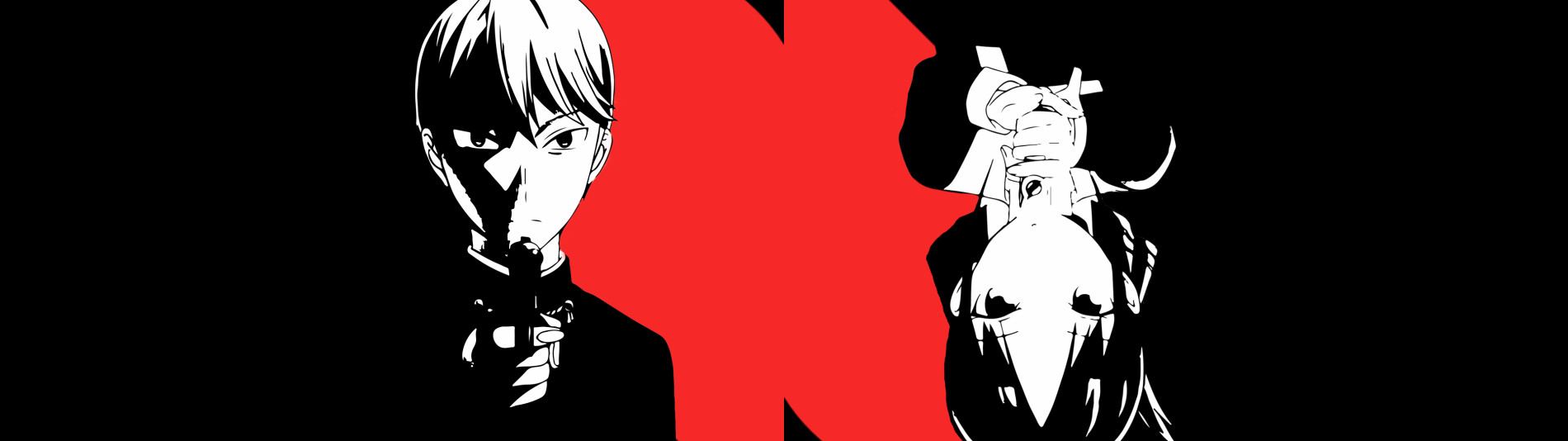
What makes it ache so precisely isn’t romance as destination—it’s romance as high-stakes paralysis. It’s the way pride doesn’t feel like ego here, but like muscle memory: trained, reflexive, exhausting. You don’t laugh at Kaguya and Miyuki—you feel the weight of their self-imposed exile from vulnerability, the surreal exhaustion of loving someone so fiercely you’d rather lose a war than surrender a single inch of dignity. The school setting isn’t backdrop; it’s a pressure chamber. Every hallway glance, every shared teacup, every misread text message vibrates with unspoken calculus. This isn’t slice-of-life as comfort—it’s slice-of-life as psychological endurance test, wrapped in slapstick, sharpened by tsundere precision, and lit by the cold, glittering logic of two geniuses who’d rather implode than admit they’re afraid.
That same emotional DNA flickers in Prince of Persia, not in its desert vistas or swordplay, but in its melancholic exploration—a phrase lifted straight from its real description. Like Kaguya and Miyuki circling each other across corridors, the Prince navigates ruins where time itself is unstable, replaying failures, recalibrating choices, haunted by consequence. The player review notes it’s “the 3rd reboot… completely separate from the sands”—echoing how Kaguya-sama’s comedy isn’t built on nostalgia or trope recycling, but on reinvention under constraint: new rules, new stakes, same unbearable, beautiful tension. Both refuse easy resolution—not because they lack heart, but because their hearts are buried under layers of protocol, legacy, and self-protection.
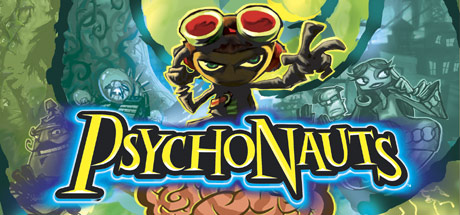
Then there’s Psychonauts, whose description calls it “A Psychic Odyssey Through the Minds of Misfits, Monsters, and Madmen.” That phrase—minds of misfits—lands like a bell. Kaguya’s inner monologue isn’t just witty; it’s a fully rendered, absurdly detailed psychic landscape: boardrooms of shame, war rooms staffed by cartoon generals, panic spirals visualized as collapsing staircases. The anime’s surreal comedy isn’t random—it’s diagnostic. Like Raz exploring a camper’s fractured psyche in Psychonauts, we’re granted access to the architecture of repression: Kaguya’s ojou-sama conditioning as gilded prison, Miyuki’s perfectionism as labyrinthine defense system. Even the player review’s baffling, oddly tender line—“his utters are beautifully rendered”—mirrors how Kaguya-sama renders emotional stammering, hesitation, and suppressed longing with almost devotional attention.
And finally, Garry's Mod, described bluntly as “a physics sandbox. There aren't any predefined aims or goals. We give you the tools and leave you to play.” That’s the quiet magic of Kaguya-sama’s episodic structure: no grand arc demands urgency—just the infinite, delicate, hilarious labor of staying present in the near-miss. Its slapstick isn’t chaos for chaos’ sake; it’s the physical manifestation of emotional physics—bodies betraying intentions, gravity failing at the sight of a blushing face, objects flying when logic short-circuits. The player review’s wistful contrast between GMod’s open-ended freedom and S&Box’s “AI-filled release” resonates: what’s precious here is the human friction, the unscripted stumble, the way Kaguya’s fan slips from her fingers not because of plot, but because her hands are shaking.
This pairing sings for the viewer who watches a character hesitate before knocking on a door—and feels their own pulse spike. For the player who replays a platforming sequence not to win, but to understand the rhythm of failure. For anyone who’s ever loved so hard they built a fortress around it, then spent years leaving tiny, coded blueprints of surrender in plain sight—waiting, breath held, for the one person sharp enough to read them.
🎮7 Games That Match the Vibe




Match Dimensions Explained
❓Frequently Asked Questions
Why does Prince of Persia keep showing up in 'Games Like Kaguya-sama: Love is War' lists when it’s got zero romance or tsundere banter?
It’s not about the romance—it’s about the *tone whiplash*: that same razor-sharp, self-aware comedy layered over melancholic, almost Seinen-grade introspection. Think Kaguya’s ‘I’m not blushing!’ denial vs. the Prince’s sardonic inner monologue while navigating crumbling palaces and existential dread—both use parody to soften heavy themes. Critics specifically flagged its 'Comedy & Parody' + 'Melancholic Exploration' + 'Adult & Dark Seinen' dimensions as the uncanny match.
Is there a Kaguya-sama: Love is War video game adaptation?
No official adaptation exists—no visual novel, no dating sim, no rhythm game. The closest you’ll get are fan-made Garry’s Mod mods (like 'Shuchiin Academy RP') that repurpose its physics sandbox for chaotic, improv-style reenactments of the staircase confession scene or Fujiwara’s ‘I’m not crying!’ moments—but even those lean hard into Garry’s Mod’s 'Comedy & Parody' + 'Melancholic Exploration' vibe, not canon storytelling.
How does Psychonauts compare to Prince of Persia for Kaguya-sama fans who love psychological mind games over action?
Psychonauts nails the 'mind-as-battlefield' energy Kaguya-sama fans adore—imagine Chika’s chaotic optimism vs. Miko’s rigid logic, but literally inside characters’ heads (like Raz exploring Coach Oleander’s militaristic ego or Sasha’s hyper-rational fortress). Both share 'Comedy & Parody' + 'Melancholic Exploration' + 'Adult & Dark Seinen' dimensions, but Psychonauts leans harder into absurdist, character-driven satire where every level is a personality unpacked—less swordplay, more emotional jiu-jitsu.
What’s the best 'Kaguya-sama-like' game if I just want chaotic, unhinged, fourth-wall-breaking humor with zero stakes?
Garry’s Mod is your answer—especially with community maps like 'Shuchiin Debate Club' where players voice-chat as Kaguya and Miyuki while ragdolling off rooftops during mock debates. It’s pure 'Comedy & Parody' + 'Melancholic Exploration' (yes, even in absurdity—the sandbox lets you build quiet, surreal moments between explosions), and unlike Just Cause 2’s scripted stunts, GMod’s zero-goal freedom mirrors how Kaguya-sama weaponizes triviality to avoid real vulnerability.