Katsugeki TOUKEN RANBU
📺Anime Details
📝Editorial Analysis
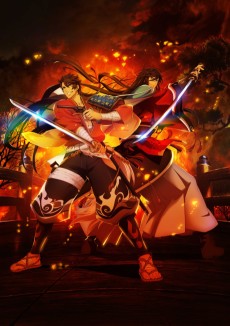
The clatter of shinai on tatami mats—sudden, sharp, breathless—then silence. A single drop of sweat falls from a clenched jaw onto the wooden floor. Not blood, not yet—but the weight is there: centuries pressing down, duty coiled tight in every tendon, history breathing down their necks. That’s the first breath of Katsugeki TOUKEN RANBU, not with fanfare or flash, but with the quiet, vibrating tension of blades that remember war.
This isn’t just swordplay—it’s remembrance made kinetic. The anime’s atmosphere lives in the gap between polished blade and scarred steel, between a boy’s voice and the ancient soul humming inside his hilt. You feel the weight of time—not as abstraction, but as physical gravity: in the way a character pauses mid-swing because a memory surges unbidden, in how a battlefield flickers with translucent echoes of Edo-period skirmishes, in the way laughter cracks under the strain of knowing you’re both weapon and witness. It makes you think about legacy not as honor rolled out like a scroll, but as something carried, unevenly, sometimes painfully—how identity fractures and reforms across eras, how loyalty bends but rarely breaks, how even CGI-rendered swords carry the ache of real hands that held them centuries ago.
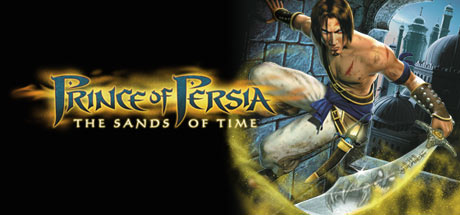
That same emotional DNA thrums in Prince of Persia: The Sands of Time—where a young prince draws a dagger “borne by blood and ruled by deceit,” and suddenly time itself unravels in his palms. Like the touken danshi, he doesn’t wield time as power; he bears it—rewinding missteps, reliving consequences, haunted by what he’s erased and what he’s preserved. A player writes: “The tactical platforming… satisfying due to the locked directions, which helps. Yet still challenging platforming.” That tension—precision demanded by consequence, movement constrained by memory—is pure Katsugeki TOUKEN RANBU: every parry, every dash, every decision weighted by what came before and what must endure after.
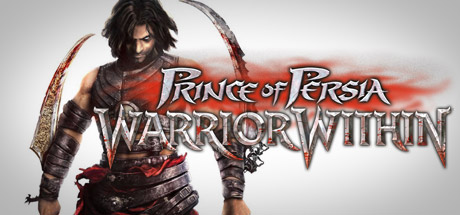
Then there’s Prince of Persia: Warrior Within, where the Prince is hunted by Dahaka—an “immortal incarnation of F” (fate? foreknowledge? the past made flesh?). The chase isn’t just action spectacle; it’s inescapable history, closing in with each footfall. A reviewer says: “Dahaka chase is still as goated as it was before…” — that raw, visceral thrill isn’t just adrenaline. It’s the same pulse that races when a touken danshi stands alone against a temporal distortion, knowing his form is borrowed, his name borrowed, his very existence a fragile stitch in a fraying timeline. Both works treat time not as a tool, but as a presence—watchful, judgmental, relentless.
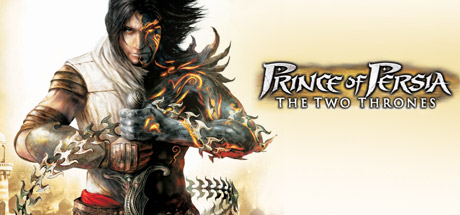
And Prince of Persia: The Two Thrones, where the Prince returns home only to find Babylon “ravaged by war and the kingdom” undone—not by enemies alone, but by the corrosion of his own choices, his own duality. His shadow self isn’t metaphor. It’s there, breathing, fighting, remembering what he tried to forget. That duality mirrors the core tension in Katsugeki TOUKEN RANBU: these are swords given human shape, yes—but also humans given sword-shape. They move with grace, but their joints remember the weight of battle; they speak with warmth, but their voices echo with centuries of silence. A player notes: “one of my best childhood games… still plays great…” — that enduring resonance? It’s the same reason fans return to the touken danshi: not for nostalgia alone, but because their struggle feels true, layered, lived-in.
Who loves this pairing? The person who cries during a perfectly timed iaido draw—not because it’s beautiful, but because it’s honest. The one who replays a ten-year-old game not for graphics, but to feel that old, familiar knot in their chest when time rewinds and the stakes haven’t changed. The reader who bookmarks historical footnotes mid-episode, then pauses to trace the real blade lineage behind a character’s name. They don’t want escapism—they want resonance. They crave stories where action isn’t spectacle divorced from soul, where memory isn’t backstory—it’s muscle memory, it’s breath, it’s the tremor in the hand before the cut. They understand that the most devastating moment in any sword story isn’t the clash—it’s the stillness after, when the echo hasn’t faded, and the weight of what was just upheld—or broken—settles, quiet and inescapable.
🎮16 Games That Match the Vibe

Match Dimensions Explained
❓Frequently Asked Questions
Why does Prince of Persia: Warrior Within feel so much like Katsugeki TOUKEN RANBU’s intense sword duels?
Because both lean hard into visceral, timing-based sword combat—Warrior Within’s parry-dodge-counter system mirrors Katsugeki’s tense blade clashes, especially during Dahaka chases where split-second decisions matter just like facing Mumei or Hōshō in battle. The gritty, weighty animations and environmental destruction (like crumbling palace walls mid-fight) echo Katsugeki’s dramatic stage presence and kinetic choreography.
Is there an anime or manga adaptation of Prince of Persia like Katsugeki TOUKEN RANBU has?
No—unlike Katsugeki’s full anime series and multiple manga adaptations, Prince of Persia has only had film adaptations (2010 live-action, 2024 Disney+ short) and no official anime or manga. The Sands of Time and Warrior Within games stand alone as the definitive narrative experiences—no serialized side stories expanding Kaileena or the Dahaka like Katsugeki’s ‘Touken Danshi’ lore.
How does DRAGON QUEST HEROES II compare to Katsugeki TOUKEN RANBU for team-based sword fights?
DQ Heroes II nails the flashy, co-op-friendly spectacle—imagine fighting alongside Yangus and Jessica while spamming combo-heavy skills, which feels like commanding a squad of Touken Danshi in large-scale battles (e.g., Kyoto Castle siege). But unlike Katsugeki’s historically grounded dialogue and character-driven tension, DQ Heroes II leans into lighthearted JRPG banter and over-the-top monster designs—think ‘Naginata’ vs ‘Slime’ energy.
What’s the best game like Katsugeki TOUKEN RANBU if I want melancholy historical atmosphere with time-bending action?
Prince of Persia: The Sands of Time is your perfect match—it wraps Persian myth in poetic regret and memory, just like Katsugeki’s Edo-period sorrow. The Dagger’s rewind mechanic mirrors Katsugeki’s ‘memory fragments’ cutscenes, and moments like the ruined palace flashback or Farah’s quiet resolve hit that same bittersweet, time-tinged gravitas—plus the tactical platforming feels like navigating Katsugeki’s branching battlefield paths.