
Kids on the Slope
The beginning of summer, 1966.
Because of his father's job situation, freshman high school student Kaoru Nishimi moves by himself from Yokosuka to Kyushu to live with relatives. Until then, Kaoru was an honor roll student who tended to keep to himself, but meeting notorious bad boy Sentaro Kawabuchi starts to change him. Through his devil-may-care classmate, Kaoru learns the attractions of jazz and finds the first person he can call a "friend". He also discovers how much fun it is to play music with a pal.
Other characters include Sentaro's kind childhood chum, Ritsuko, who is the daughter of a record shop owner; the mysterious upperclassman, Yurika; and Brother Jun, the much-admired leader among their peers. Set against the backdrop of a seaside town with a scent of American culture, this series is a drama about young people coming into their own, crossing each other's paths, and finding friendship, love, and music!
(Source: Official Website)
📺Anime Details
📝Editorial Analysis
The smell of rain on hot asphalt, the low thrum of a double bass vibrating through floorboards, Kaoru’s fingers slipping on piano keys—then stopping, breath held, as Sentaro leans in and says, “Listen again.” Not to fix it. Not to judge. Just to feel it. That moment—small, unscripted, drenched in humidity and hesitation—is where Kids on the Slope lives: not in grand declarations or plot twists, but in the quiet surrender to something larger than yourself—jazz, friendship, the terrifying openness of becoming.
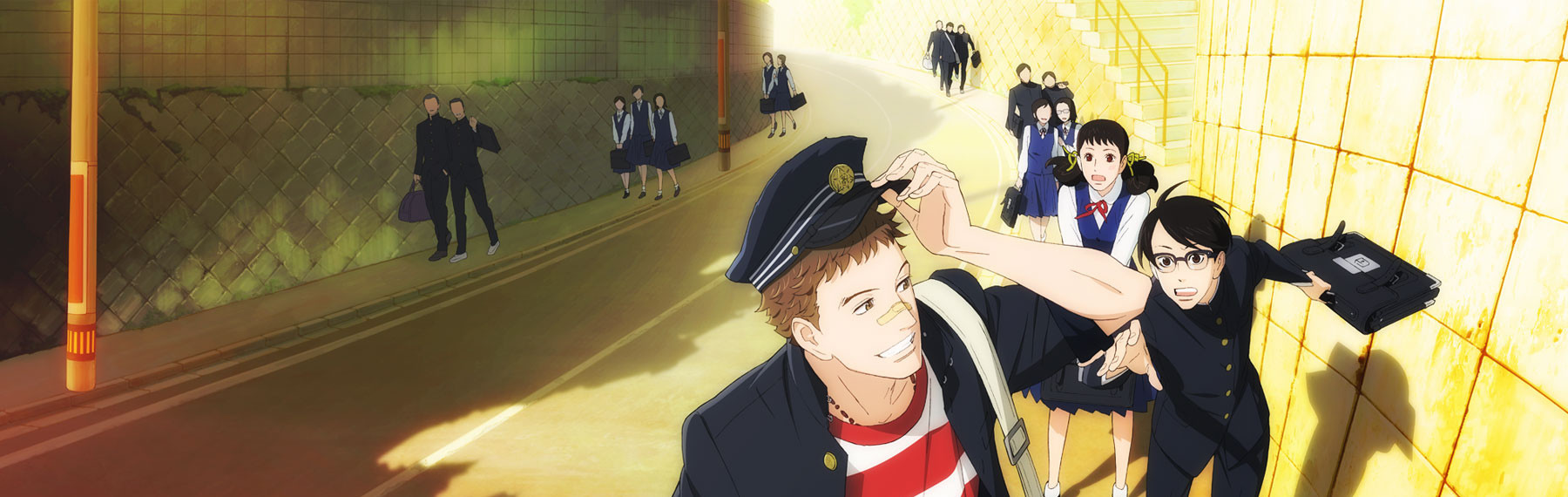
What makes this anime’s atmosphere singular isn’t its 1966 Kyushu setting or its jazz soundtrack—it’s how it treats time. Not as a countdown to graduation or a race toward resolution, but as porous, breathing space: the pause between chords, the walk home after practice, the way sunlight lingers on a dusty record sleeve left open on a tatami mat. It makes you feel tender, like your own memories have been gently lifted and held up to the light—not polished, not narrativized, just there, warm and slightly fragile. It asks you to sit with uncertainty—not as tension to be resolved, but as texture to be inhabited. You don’t watch it to see what happens next. You watch it to remember what it felt like to be sixteen and suddenly aware that joy could arrive sideways, through a cracked-open door, a shared cigarette, a wrong note held just long enough to become right.
That emotional resonance echoes sharply in Persona 5 Royal, where the “seamless transition between daily life” mirrors Kaoru’s slow, rhythmic immersion into Sentaro’s world—school days bleeding into basement rehearsals, confessions unfolding over convenience store bentō, romance blooming in glances across crowded train platforms. Its stunning soundtrack doesn’t just accompany emotion; it is the emotional architecture—like the way a saxophone solo in Kids on the Slope doesn’t underscore Kaoru’s loneliness so much as become the shape of it. Both works treat music not as decoration, but as lived language—the grammar of connection when words fail.
Dragon Age: Origins shares that same reverence for unhurried intimacy. Its description frames legacy not as conquest, but as choice—“Determine your legacy and fight for Thedas”—which lands with the same weight as Kaoru choosing, quietly, to keep playing even when he’s afraid he’ll never be good enough. The player review notes how the “pause attack mechanic is amazing… help a lot to strategist your tactic”—and that’s the key: both Dragon Age: Origins and Kids on the Slope grant you space to think, to breathe mid-moment, to weigh intention against impulse. When Alistair cracks a joke mid-battle or Kaoru hesitates before asking Ritsuko to the festival, it’s not filler. It’s the narrative leaning in, trusting you to feel the gravity of the ordinary.
Even Disco Elysium - The Final Cut, with its dense, philosophical sprawl, taps into the same core frequency—not through jazz or high school, but through its radical commitment to emotional honesty as process. The player review quotes a line about capital subsuming critique—but what sticks is the cruel irony beneath it: the ache of self-awareness without resolution. Like Kaoru realizing his “honor roll” self was armor, or Sentaro masking vulnerability with bravado, Disco Elysium forces you to inhabit contradiction without rushing to reconcile it. Its city isn’t Tokyo or Kyushu—it’s the interior landscape of a mind learning, painfully, how to listen to itself.
This pairing sings for the person who cries at a perfectly timed cymbal crash, who saves letters they’ll never send, who replays a conversation in their head not to fix it—but to savor its texture. For the one who keeps a notebook full of half-sketched melodies and unfinished confessions. For anyone who’s ever stood on a sunlit slope, heart pounding—not because something’s about to happen, but because, for the first time, they’re here, fully, and it’s enough.
🎮12 Games That Match the Vibe



Match Dimensions Explained
❓Frequently Asked Questions
Why does Persona 5 Royal keep coming up when I search for games like Kids on the Slope?
Because both center on emotionally rich coming-of-age stories where music isn’t just background—it’s core to character expression and narrative rhythm. In Persona 5 Royal, you hang out with Ann Takamaki after school, jam to the iconic soundtrack while riding the Yamanote Line, and build bonds that deepen through shared vulnerability—just like Kaoru and Sentarō’s piano-and-sax duets under the train tracks in Kids on the Slope.
Is there a Kids on the Slope video game adaptation?
No official adaptation exists—but Strong Bad's Cool Game for Attractive People: Season 1 captures that same offbeat, character-driven charm with musical interludes and intimate, dialogue-heavy scenes. While it swaps jazz for absurdist indie rock and anime sincerity for cartoonish meta-humor, its episodic structure and focus on personal growth through creative collaboration (like writing songs or staging performances) hits a similar emotional frequency.
How does Disco Elysium compare to Dragon Age: Origins for someone who loves Kids on the Slope’s melancholy vibe?
Both deliver deep emotional narratives, but Disco Elysium leans into raw, internalized melancholy—think Detective Harrier’s voice-over monologues echoing Kaoru’s quiet piano solos—while Dragon Age: Origins channels collective struggle and loyalty, like the Fifth Blight’s weight mirroring the postwar uncertainty in Kids on the Slope. If you want introspective solitude and jazz-club-level moodiness, go Disco Elysium; if you crave found-family warmth and morally complex group dynamics, DA:O’s party banter and pause-and-plan combat feel more like late-night jam sessions with friends.
What’s the best game like Kids on the Slope if I’m craving that warm, nostalgic, music-filled summer feeling?
Persona 5 Royal is your top pick—its Tokyo summer arc has you biking across Shibuya at golden hour, practicing guitar with Ryuji, and hearing the soundtrack swell during rooftop confessions. The way daily life flows into emotional crescendos (like the Phantom Thieves’ final heist set to ‘Rivers in the Desert’) mirrors how Kids on the Slope uses jazz improvisation to turn ordinary moments—waiting for a train, sharing earbuds—into something luminous and tender.