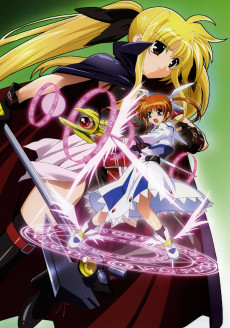
Magical Girl Lyrical Nanoha
3rd grader Takamachi Nanoha stumbled upon an injured talking ferret after hearing his telepathic cries for help. The ferret turned out to be Yuuno, an archeologist and mage from another world who had accidentally scattered the dangerous Jewel Seeds throughout Earth. Without the strength to collect the Jewel Seeds, Yuuno had resumed a ferret form and needed someone else to take on the task for him. He gave a red jewel to Nanoha explaining to her with this she could transform and use magic to combat the monsters that threatened them due to the Jewel Seeds. But the monsters are the least of their worries, as Yuuno and Nanoha are not the only ones out to collect the Jewel Seeds.
📺Anime Details
📝Editorial Analysis
The first time Nanoha raises her hand and shouts “Raising Heart—ready!”—her small frame trembling not with fear but with determination, light bursting from the red jewel like a held breath finally released—that’s the heartbeat of Magical Girl Lyrical Nanoha. Not the explosion, not the spell effects, but the weight in her voice: a third grader choosing responsibility before she’s even learned long division, her sneakers still scuffed from recess, her ferret-shaped mentor curled silently on the floor behind her.
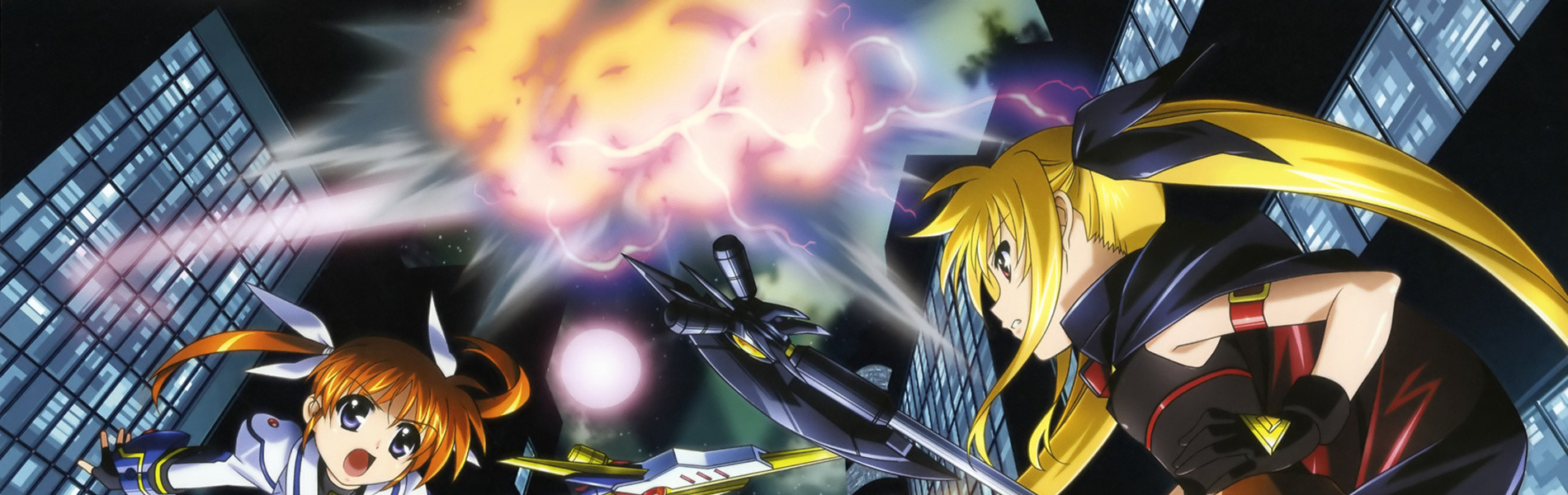
This isn’t magic as whimsy or wish-fulfillment. It’s magic as consequence: fragile, exhausting, deeply personal. The urban skyline of Mid-Childa isn’t backdrop—it’s witness. Every beam blast fractures pavement; every shield flickers under strain; every memory manipulation leaves quiet, unspoken gaps in someone’s laughter. You feel the tenderness of childhood shoulders bearing adult stakes—the way Nanoha’s hands shake after a battle, how she counts her breaths while bandaging her own knee, how she hesitates before erasing a classmate’s memory—not because she doubts the necessity, but because she feels the loss like a bruise. It’s warmth wrapped in steel, trust forged in shared exhaustion, care that insists on showing up—even when your body is eight years old and your magic could level a city block.
That emotional DNA pulses strongest in the Prince of Persia trilogy—especially the original Prince of Persia: The Sands of Time, where the Prince rewinds time not to undo fate, but to repair connection: catching Kaileena’s falling hand, correcting a misstep that cost a life, learning that power isn’t control—it’s attention. Just like Nanoha doesn’t blast enemies into oblivion; she pins them, contains, asks questions first. The player review calls it “tactical platforming… satisfying due to the locked directions”—and yes, it’s the precision, the intentionality: every rewind is a choice to try again with more care, just as Nanoha recalibrates her barrier mid-combat, adjusting for wind resistance, for her friend’s position, for the person behind the enemy’s spell.
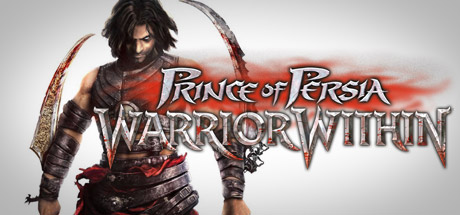
Then there’s Prince of Persia: Warrior Within, where Dahaka hunts the Prince across crumbling ruins—not as a villain, but as time’s consequence made flesh. The player says, “Dahaka chase is still as goated as it was before”—and that’s the resonance: relentless, inescapable accountability. Nanoha faces no cosmic horror, but she faces fallout: the guilt of nearly harming Yuuno during her first uncontrolled surge, the silence after a Jewel Seed’s corruption is lifted, the way her mother’s eyes linger a second too long when Nanoha comes home late, hair singed, knuckles split. Both stories treat power as something that leaves marks—on the world, on memory, on the self.
And Prince of Persia: The Two Thrones, where the Prince returns to Babylon only to find his kingdom ravaged by war—not by invaders, but by the shadow he carries within. The player calls it “one of my best childhood games… still plays great”—because its core ache is recognition: you return changed, and the people who love you have to learn you all over again. Nanoha doesn’t get a triumphant homecoming after saving Earth; she gets detention for missing math class, then sits cross-legged on her bedroom floor, tracing the cool surface of Raising Heart, wondering if she’ll ever stop hearing the echo of a spell she almost couldn’t hold.
These pairings aren’t for fans of flashy transformations or epic battles alone—they’re for the viewer who holds their breath when Nanoha reaches out to steady Fate’s shaking hand, for the player who pauses mid-leap to watch sand swirl back into the hourglass, for anyone who’s ever loved something so fiercely they’d rewrite time—or reshape magic—to keep it safe. They’re for those who know that the most heroic thing isn’t winning the fight—but remembering why you started fighting in the first place.
🎮6 Games That Match the Vibe
Match Dimensions Explained
❓Frequently Asked Questions
Why does Prince of Persia (2023) show up in 'Games Like Magical Girl Lyrical Nanoha' lists?
Because it leans hard into Romance & Shoujo vibes — think tender, slow-burn chemistry between the Prince and Elika, emotionally charged dialogue scenes, and stylized, almost balletic combat that mirrors Nanoha’s graceful magical duels. Unlike the gritty time-manipulation trilogy, this reboot prioritizes heartfelt connection and visual storytelling reminiscent of early Nanoha character moments, like Nanoha and Fate’s tentative trust-building in episode 10.
Is there a Magical Girl Lyrical Nanoha game adaptation I can actually play?
No — there’s never been an official Nanoha video game adaptation, not even in Japan. That’s why fans turn to matches like Prince of Persia: The Sands of Time, where the dagger’s rewind mechanic echoes Nanoha’s ‘Reinforce’ spell timing, or Warrior Within’s Dahaka chase sequences that deliver that same breathless, high-stakes tension as Nanoha’s battle against Reinforce in season 2.
Prince of Persia: The Two Thrones vs. The Sands of Time — which one feels more like Nanoha’s blend of action and emotional weight?
The Two Thrones wins for emotional resonance — Kaileena’s tragic arc and the Prince’s internal struggle with his darker self mirror Nanoha’s growth from timid girl to resolute protector, especially during her confrontations with Jail Scaglietti. Meanwhile, Sands of Time nails the tactical, precise action-spectacle feel of early Nanoha fights (like the rooftop duel with Fate), thanks to its locked-direction platforming and satisfying rewind-based puzzle combat.
What’s the best Prince of Persia game if I want that warm, hopeful, shoujo-tinged magical girl vibe?
Go straight to the 2023 Prince of Persia — it’s the only one tagged with Romance & Shoujo in the match list, and player reviews highlight its heartfelt bond-building and luminous art style. Scenes like the Prince and Elika sharing quiet moments amid glowing ruins echo Nanoha and Yuuno’s gentle mentorship or Nanoha and Fate’s late-season reconciliation — all wrapped in soft light and sincere emotion.