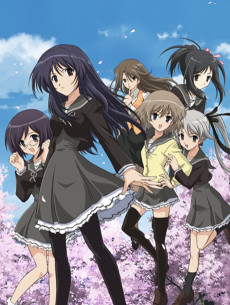
Myself; Yourself
For the sake of parents' business plans, Hidaka Sana moved to Tokyo. Five years later, he has become a high school student, and returned to his hometown, Sakuranomori. He feels uneasy because the streets of his hometown and his old friend he meets again have changed a lot since five years ago. The most changed thing is his childhood friend, Yatsushiro Nanaka. She used to smile sweetly with innocent eyes, but now she has withdrawn herself and is gloomy.
(Source: AnimeNfo)
📺Anime Details
📝Editorial Analysis
The scent of rain on hot pavement in Sakuranomori—sharp, metallic, thick with memory—hits Hidaka Sana the moment he steps off the train. His fingers tighten around the strap of his school bag. Nanaka stands a few meters away, arms crossed, gaze fixed somewhere past his shoulder. Her hair is longer. Her posture is closed. That smile—the one that used to light up summer festivals and shrine stairs—is gone, buried under five years of silence no one names aloud. You don’t see the tragedy first. You feel it: a hollow resonance in your ribs, like stepping into a room where someone just stopped breathing.
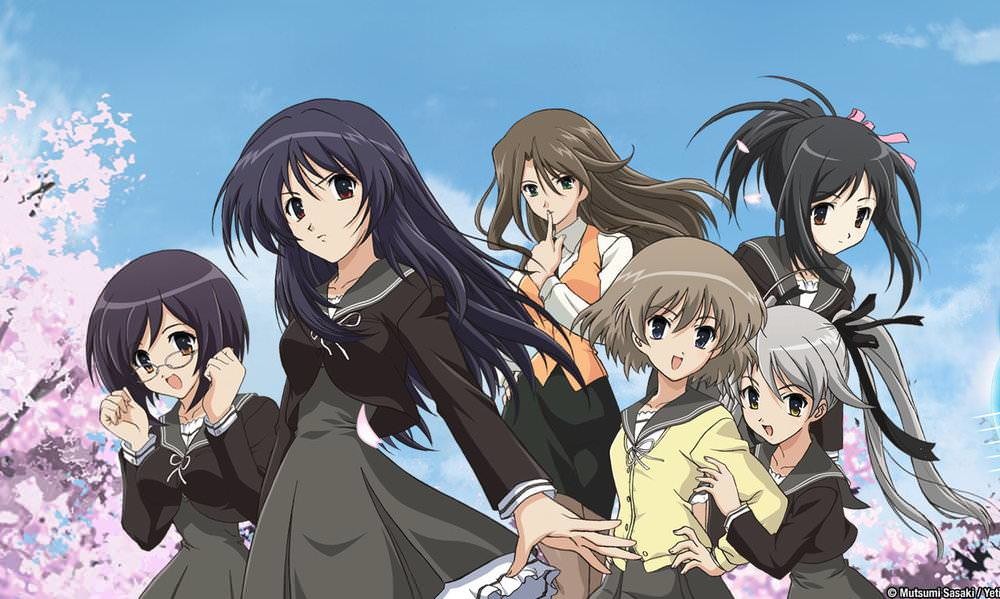
That’s what Myself; Yourself does—it doesn’t dramatize loss. It lives inside the aftermath. Not the scream, but the quiet after. Not the suicide attempt itself, but the way Nanaka’s hands tremble when she reaches for tea, how her voice catches on old nicknames, how the shrine maiden robes hang slightly too loose on her frame. This isn’t teenage angst dressed up as depth. It’s the suffocating weight of unspoken causality: every changed glance, every withheld confession, every flicker of guilt in Sana’s own eyes—all orbiting a trauma that remains off-screen, yet shapes every frame. You don’t get answers. You get atmosphere thick with what was lost, who knew, and why no one spoke. It makes you question memory—not as unreliable narration, but as emotional architecture slowly collapsing under its own weight.
Among the games listed, Disco Elysium - The Final Cut shares this same aching interiority. Its description calls it “a groundbreaking role playing game” where you’re “a detective with a unique skill system… and a whole city to carve your path across.” But read the player review: “Capital has the ability to subsume all critiques into itself. Even those who would critique capital end up reinforcing it instead.” It's a cruel iro…” That fragmented, self-devouring logic? That’s Nanaka’s withdrawal—not as plot device, but as systemic collapse. Both works refuse catharsis. They sit with contradiction: grief that won’t name itself, systems (social, economic, psychological) that absorb pain without transforming it. The detective’s fractured psyche mirrors Nanaka’s silence—not as mystery to solve, but as terrain to inhabit.
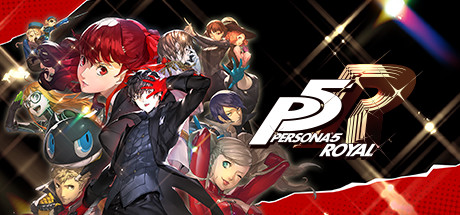
Then there’s Persona 5 Royal, whose description highlights “building relationships” while exploring Tokyo—but crucially, its player review praises “the seamless transition between daily life…” That seamlessness is vital. In Myself; Yourself, nothing is compartmentalized: a math test bleeds into Nanaka’s flinch at thunder; a shrine visit cracks open a childhood promise; lunchtime chatter curdles into unasked questions about who she was before. Like P5R’s rhythm, Myself; Yourself forces you to hold mundane routine alongside unbearable weight—no cutaways, no tonal relief. The emotional narrative isn’t layered on top of school life. It is the school life. The bell rings. You walk to class. Your heart feels like glass holding back floodwater. That is the shared breath.
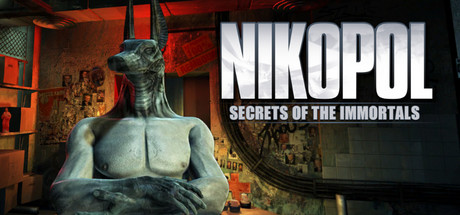
And Nikopol: Secrets of the Immortals, described as a “first-person dystopian point-and-click sci-fi adventure” where “2023 France is ruled by an iron-fist religious dictatorship” and “a mysterious pyramid ship suddenly appears above Paris”—its player review notes “the whole cyberpunk atmosphere gives it a nice vibe. The animations and cutscenes enhance…” Here, it’s the layered oppression that resonates. Nanaka isn’t just sad—she’s constrained: by family expectation, by shrine tradition, by the unspoken pact of silence among friends. Like Nikopol’s world, her reality is built on visible hierarchies (shrine maiden status, parental authority) and invisible ones (who remembers what, who’s allowed to grieve, who bears the shame). The pyramid ship hovers—ominous, inexplicable, present. So does the suicide attempt: never shown, never explained, but always there, altering gravity.
This pairing isn’t for fans of tidy resolutions or triumphant confessions. It’s for the person who watches Nanaka trace the edge of a shrine gate with one finger and feels their throat close—not because they know what happened, but because they recognize the weight of holding something too heavy to name. It’s for the player who lingers in Disco Elysium’s rain-slicked alleys not to solve the case, but to feel the city’s exhaustion seep into their bones. For the one who replays Persona 5 Royal’s quiet evenings—not for romance flags, but for how Mitsuru’s offhand comment about “carrying things alone” lands like a stone. These are stories for those who understand that some truths aren’t revealed—they accumulate, silently, until the air itself tastes like regret. That is the shared pulse. That is the ache that connects them.
🎮18 Games That Match the Vibe

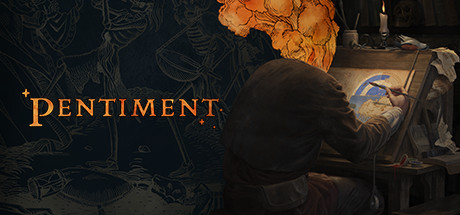
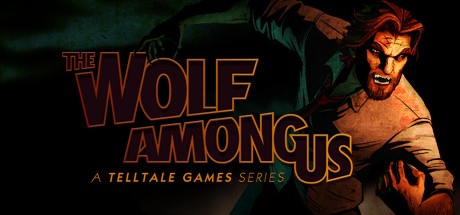
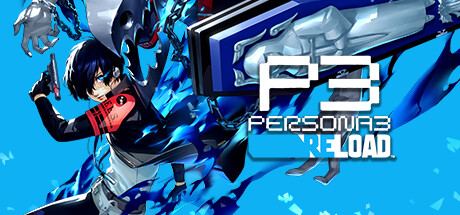
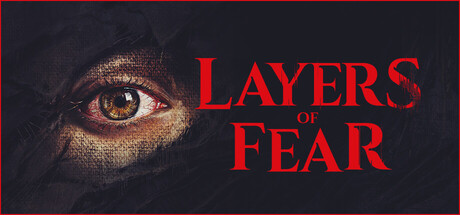






Match Dimensions Explained
❓Frequently Asked Questions
Why is Disco Elysium listed as similar to Myself; Yourself when it’s a detective game and not a romantic visual novel?
Great question—it’s about the emotional weight and branching intimacy, not genre. Like Myself; Yourself, Disco Elysium leans hard into quiet, character-driven moments where dialogue choices reshape relationships (think your fragile bond with Kim Kitsuragi or the haunting vulnerability of the 'Shivers' skill scenes). Both games make you *feel* the consequences of every confession, silence, or misstep—just swap high school hallways for rain-soaked streets of Revachol.
Is there a Myself; Yourself anime or manga adaptation I can watch/read instead of playing?
No official anime or manga adaptation exists—unlike Persona 5 Royal, which got a full anime series and multiple manga spin-offs (including the beloved 'Persona 5: The Animation' and 'Daisuke Hasegawa' manga), Myself; Yourself remains exclusively a visual novel. That said, fans often cite Nikopol’s dystopian atmosphere and morally layered storytelling as the closest *vibe-wise* animated experience—if you imagine its cyberpunk Paris cut with the same emotional pacing as Myself; Yourself’s rooftop confessions.
How does Persona 5 Royal compare to Myself; Yourself in terms of romance and daily life balance?
They’re kindred spirits in structure but different in tone: both juggle school life, social links/relationships, and mystery arcs—but Persona 5 Royal spreads its romance across 13+ Confidants (like Ann Takamaki’s arc at the Velvet Room or Futaba’s late-game trust-building), while Myself; Yourself focuses tightly on six core characters with overlapping emotional timelines. You’ll get more combat and urban exploration in P5R, but the same tender, time-sensitive rhythm—like choosing between helping Ryuji study or visiting Makoto at the shrine—echoes Myself; Yourself’s 'choose who to walk home with' tension.
What’s the best game like Myself; Yourself if I want that melancholy, rainy-day introspection vibe?
Disco Elysium — hands down. It nails that same slow-burn, emotionally raw atmosphere: think sitting alone in your hotel room listening to your own Skill checks whisper doubts (like 'Logic' dissecting a memory or 'Empathy' catching someone’s hidden grief), just like Myself; Yourself’s quiet scenes under the train bridge or Haruka’s notebook entries. Even the score—jazzy, sparse, heavy with silence—mirrors the hushed intimacy of those rainy afternoon conversations in Sakuranomori.