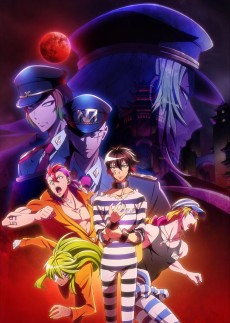
NANBAKA - Part Two
The gang is back to their usual antics and things have returned to normal in Nanba prison. However, the status quo is upset when a former guard turned inmate enacts a plan of his own.
(Source: Anime News Network)
📺Anime Details
📝Editorial Analysis
The fluorescent lights of Nanba Prison’s cafeteria flicker—not ominously, but absurdly, just as Jyugo flips a tray of curry onto a guard’s head while Kaito backflips off a lunch table, mid-scream, and the entire mess hall erupts in synchronized, chaotic laughter that doesn’t stop even when the sprinklers burst on cue. No one ducks. No one panics. They lean in. That’s the feeling: not safety, not control—but shared, unapologetic momentum, where slapstick isn’t relief from tension, it’s the tension’s native language.
What makes NANBAKA - Part Two’s atmosphere singular isn’t its prison setting or its male ensemble—it’s how it treats memory manipulation and revenge not as grim plot devices, but as unstable comedic infrastructure. A former guard turned inmate upends the status quo—not with a coup or a weapon, but by weaponizing narrative expectation: he knows how the gang performs chaos, so he scripts their chaos back at them. The result is a world where every punchline lands with the weight of a betrayal, and every betrayal unravels into something funny—not because it’s trivial, but because the characters refuse to let gravity win. You don’t feel dread here. You feel recognition: the giddy, slightly dangerous thrill of watching people who’ve been stripped of dignity build their own absurd, glittering scaffolding out of it. It’s neon noir without the shadows—just neon, bouncing off sweat, steel, and the glint of a stolen hairpin worn like a crown.
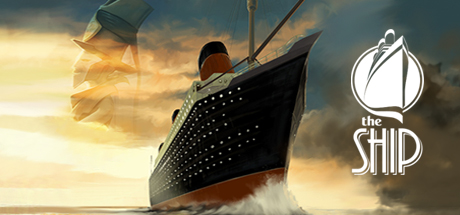
That same electric, rule-bending energy lives in The Ship: Murder Party, where players aren’t just pretending to be murderers—they’re performing deception as farce, leaning hard into parody until the line between “role” and “self” blurs in real time. The player review nails it: “videos of this game are great and even playing solo the game is genuinely really funny”—because the humor isn’t scripted; it’s emergent, born from the same anarchic trust in ensemble chemistry that makes Nanba’s cafeteria brawl land. Both treat identity as costume, consequence as punchline, and stakes as optional—as long as everyone commits to the bit.
Then there’s Saints Row 2, whose description promises “true freedom to open-world gaming. Players can play as who they want, how they want, and with whomever they want”—a direct echo of Nanba’s ethos. The gang doesn’t reform. They rebrand. They don’t escape the system—they hijack its aesthetics, its logic, its uniforms—and wear them better. The player review’s nostalgic sigh—“Juiced Patch and the DLC make the PC port finally the best way to play the game. RIP IdolNinja…”—carries that same affectionate, slightly exhausted reverence for a world that rewards audacity over alignment. Like Nanba’s inmates, Saints Row’s crew turns trauma into theater, revenge into runway, and prison-yard hierarchy into a fashion show.
And you can’t ignore Grand Theft Auto: San Andreas, where Carl Johnson returns to a city “tearing itself apart with gang trouble, drugs and corruption”—yet the player review calls it a “timeless open-world masterpiece packed with insane freedom, detail, and personality.” That duality is Nanba’s heartbeat: systemic rot treated not with despair, but with personality—with dance-offs in the yard, impromptu karaoke in solitary, and revenge plots disguised as talent shows. The game doesn’t ask you to fix Los Santos. It asks you to live in it, loudly, colorfully, defiantly—even when the system’s rigged. Just like Nanba’s inmates, CJ doesn’t wait for permission to reclaim space. He takes the mic, adjusts the mic stand, and starts rapping about it.
This is for the viewer who laughs during the flashback—not because it’s light, but because the memory’s been reclaimed. For the player who modded their GTA character with a sequined jumpsuit and a pet flamingo, then drove it straight into a police barricade just to see if the feathers would fly. For anyone who’s ever turned a locked door into a stage, a uniform into drag, and a sentence into a setlist. Not because life’s a joke—but because you are the punchline and the puncher, the inmate and the architect, the joke and the joy—all at once.
🎮7 Games That Match the Vibe
Match Dimensions Explained
❓Frequently Asked Questions
Why is The Ship: Murder Party listed alongside GTA games for NANBAKA vibes?
Because like NANBAKA’s chaotic, rule-bending energy, The Ship drops you into a neon-drenched, darkly comedic murder mystery where everyone’s a suspect—and the laughs come from absurd improvisation (like pretending to be a waiter while plotting a kill in the ballroom). It shares that same ‘Neon Noir’ aesthetic and tonal whiplash with Saints Row 2 and San Andreas, where over-the-top parody meets genuine personality—just swap yakuza hijinks for yacht-based assassination.
Is there an anime or live-action adaptation of The Ship: Murder Party?
Nope—no anime, no live-action, and no official manga. Unlike NANBAKA, which got its own anime series, The Ship remains purely a cult-favorite multiplayer game (though those hilarious community videos—like the infamous 'cruise ship chaos' clips—feel like unofficial animated shorts). Fans keep hoping, but right now it’s just you, a fake ID, and the chilling sound of elevator music before someone shoves you off the deck.
How does Saints Row 2 compare to Grand Theft Auto: Vice City for pure 80s-style mayhem?
Vice City nails the pastel-suit, synthwave vibe with Tommy Vercetti’s slick rise—but Saints Row 2 goes full cartoon satire: think Johnny Gat doing parkour off a flaming bus while wearing roller skates and a unicorn onesie. Both are Neon Noir and Comedy & Parody, but Saints Row 2 leans harder into self-aware absurdity (hello, Juiced Patch DLC), whereas Vice City keeps one foot in grounded (if exaggerated) crime storytelling—like comparing Nanbaka’s Kaito to his rival Shiro’s deadpan intensity.
What’s the best game like NANBAKA if I want that same unhinged, laugh-out-loud, ‘why is this happening’ energy?
Go straight to Saints Row 2—it’s the gold standard for that specific flavor of controlled chaos. Remember when you hijack a police helicopter *just* to drop a watermelon on a rival gang’s BBQ? Or when the Juiced Patch lets you sprint across rooftops like a caffeinated ninja? That’s the exact same ‘wait, I can DO that?!’ euphoria as watching Nanbaka’s Hachiman pull off a prison break using a rubber duck and sheer audacity.