
Nichijou - My Ordinary Life
Nichijou primarily focuses on the daily antics of a trio of childhood friends—high school girls Mio Naganohara, Yuuko Aioi and Mai Minakami—whose stories soon intertwine with the young genius Hakase Shinonome, her robot caretaker Nano, and their talking cat Sakamoto. With every passing day, the lives of these six, as well as of the many people around them, experience both the calms of normal life and the insanity of the absurd. Walking to school, being bitten by a talking crow, spending time with friends, and watching the principal suplex a deer: they are all in a day's work in the extraordinary everyday lives of those in Nichijou.
(Source: MAL Rewrite)
📺Anime Details
📝Editorial Analysis
The crow bites Mio’s finger—not metaphorically, not in a dream, but right there on the sidewalk, mid-sentence, as she walks to school like any other Tuesday. Her yelp is sharp, real; blood beads, tiny and red. Then the crow speaks, deadpan, about municipal bylaws. She doesn’t scream. She sighs—deep, weary, utterly ordinary—and flicks it off her sleeve like lint. That sigh is the heartbeat of Nichijou.

What makes this anime vibrate isn’t its surrealism—it’s how casually it refuses to treat surrealism as extraordinary. The talking cat Sakamoto files taxes. Nano’s robot body glitches mid-tea ceremony, her head tilting 37 degrees while reciting haiku. Hakase builds a time machine to retrieve a dropped eraser—and it works, briefly, before fizzling into glitter and static. There’s no exposition, no awe, no “how is this possible?” Just presence. It makes you feel grounded inside chaos—like your own life, too, contains absurdities so routine they’ve become furniture. You don’t laugh at the madness; you exhale into it. It’s warm, tired, affectionate—like watching your smartest, weirdest friends quietly dismantle reality with glue sticks and sarcasm.
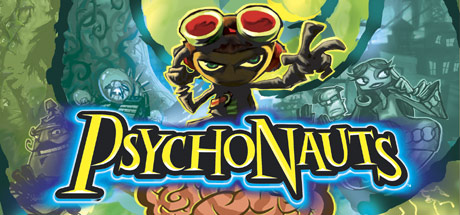
That same emotional DNA hums in Psychonauts, where psychic exploration isn’t about power—it’s about tenderness disguised as slapstick. The description calls it “A Psychic Odyssey Through the Minds of Misfits, Monsters, and Madmen”, and the player review—oddly poetic, even broken—says “his utters are beautifully rendered”. Not “his powers”, not “his combat”—utters. Speech. Vulnerability. Like Mio’s sigh, or Yuuko’s deadpan non-sequiturs, or Mai’s silent, slow-burn exasperation: the humor lives in how characters voice their inner weather, not hide it. The melancholic exploration isn’t sorrow—it’s the quiet ache of being known, of seeing someone else’s cluttered, ridiculous, deeply human mind laid bare in surreal architecture. Just as Nichijou finds dignity in a girl arguing with a crow over littering, Psychonauts finds gravity in a boy’s fear of his own shadow, rendered in rubber-hose limbs and floating couches.
Then there’s Garry’s Mod, described bluntly as “a physics sandbox. There aren't any predefined aims or goals. We give you the tools and leave you to play.” No narrative spine. No win state. Just collision, weight, unintended consequence—like when Nano trips over her own feet and sends a stack of textbooks into orbit, or when Hakase’s latest invention turns the classroom ceiling into sentient origami. The player review mentions S&Box’s “disappointing unoptimized and Ai filled release”—a longing, buried in complaint, for the unmediated mess of pure, uncurated play. That’s Nichijou’s rhythm: no stakes, no arc, just the sheer, giggling physics of being alive among people who talk to crows and build robots that forget how to blink.
And Bully: Scholarship Edition, whose description nails adolescence as “hilarity and awkwardness”—beating jocks at dodgeball, saving nerds, pranking preppies. The review? A technical gripe (“crashes on PC”) wrapped around deep affection: “I played this game on my Steam Deck and it worked great.” That’s the tone—love expressed through reliability, through functioning, through the quiet pride of something holding up despite its flaws. Nichijou doesn’t romanticize youth; it treats teen life like a slightly dented lunchbox you keep using because it still holds your sandwiches. So does Bully: no grand rebellion, just Jimmy Hopkins navigating social gravity with spitballs and skateboards, his world absurd but lived-in, consequential only in the moment—like Mai forgetting her umbrella and getting soaked, then sharing it silently with Yuuko under one dripping corner.
This pairing sings for the person who laughs when their coffee spills and when their toaster starts singing show tunes—someone who knows that surrealism isn’t escape, it’s just attention paid closely enough to see how weirdly tender reality already is. They’re the ones who rewatch the crow scene not for the joke, but for Mio’s sigh—the sound of a person breathing with the world, not against it.
🎮7 Games That Match the Vibe





Match Dimensions Explained
❓Frequently Asked Questions
Why does Psychonauts keep coming up in Nichijou comparisons when it's about psychic kids and not high school girls?
Because both use surreal, physics-defying gags to expose emotional vulnerability—like Nichijou’s silent teacher floating mid-air during a meltdown, Psychonauts has Raz literally juggling his own anxieties as sentient, screaming thought-balloons in the ‘Motherly Love’ level. The humor isn’t just wacky; it’s tender, absurd, and deeply character-driven, which is why fans say it ‘feels like Nichijou with telekinesis and more duct tape.’
Is there a Nichijou anime-to-game adaptation?
No—there’s never been an official Nichijou game adaptation, and none of the titles on the match list (Psychonauts, Garry’s Mod, Just Cause 2, or Bully) are based on the anime. They’re all standalone games that happen to share Nichijou’s rare blend of deadpan comedy, melancholic undercurrents, and wildly escalating absurdity—like Bully’s Jimmy failing a history test *while* accidentally launching a flaming trashcan into orbit via catapult.
How does Bully compare to Psychonauts for Nichijou-style school-life absurdity?
Bully nails the cringe-comedy of adolescent social hierarchies—think Jimmy getting chased by the jocks after gluing their shoes to the cafeteria floor—while Psychonauts dives deeper into internal, dream-logic chaos, like navigating a paranoid janitor’s mind where mops multiply and whisper gossip. Both nail Nichijou’s rhythm: mundane setting → tiny escalation → full-blown surreal collapse.
What’s the best game like Nichijou if I want that specific vibe of quiet melancholy wrapped in ridiculous slapstick?
Go straight to Bully: Scholarship Edition—the way Jimmy stares blankly at rain-streaked windows after a failed prank, then immediately trips over a skateboard while trying to look cool? That’s pure Nichijou tonal whiplash. Even the player review mentions its ‘hilarity and awkwardness of adolescence,’ mirroring how Nichijou frames existential dread with a rubber chicken and a silent, floating teacher.