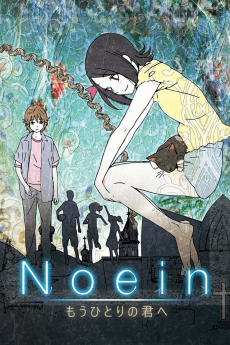
Noein: To Your Other Self
In the near future, a violent battle takes place between the dimension La'cryma (protector of humanity) and the dimension Shangri-La, bent on the annihilation of all space-time. A group known as the Dragon Calvary is dispatched through space and time, searching for the only thing that can stop the invasion: the Dragon's Torque.
In the present, twelve-year old Haruka and her friend Yuu, are contemplating running away from home when they meet a member of the Dragon Calvary named Karasu (Crow). He believes that Haruka possesses the Dragon's Torque and claims to be Yuu from fifteen years in the future...
(Source: DVD Complete Series Box Set)
📺Anime Details
📝Editorial Analysis
The static hum of a CRT monitor flickers in Haruka’s dim bedroom—her fingers hovering over the keyboard, not typing, just waiting. Outside, rain streaks the window like time itself bleeding at the edges. A voice—Karasu’s—cuts through the silence: “You’re not just in time. You are time.” Not as metaphor. Not as poetry. As physics, as wound, as inheritance. That moment isn’t exposition. It’s vertigo made audible—the floor tilting under twelve-year-old feet while the universe fractures into branching corridors of what if, what was, what must end.
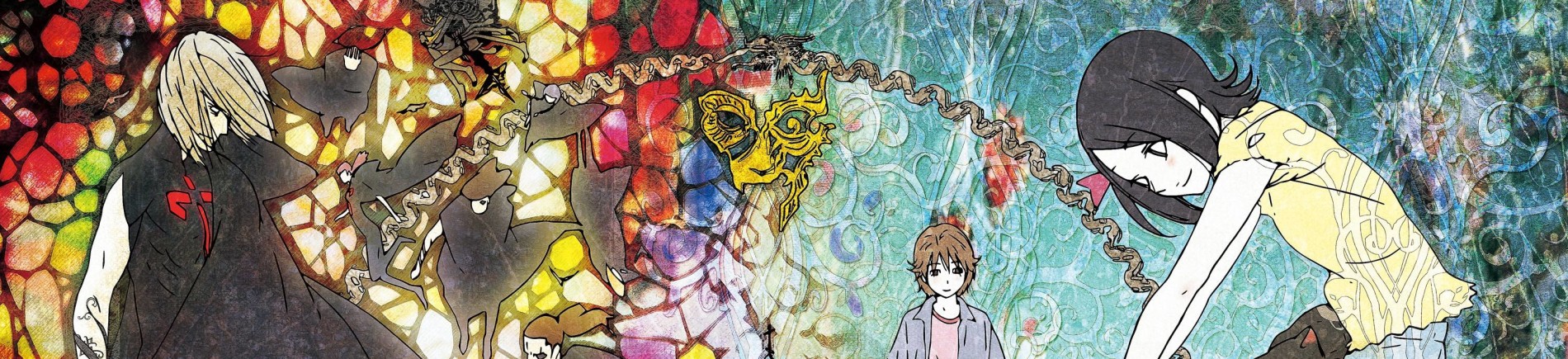
Noein: To Your Other Self doesn’t trade in spectacle first. It trades in resonance: the low thrum of quantum uncertainty vibrating in your molars, the way grief folds backward into memory and forward into prophecy, the suffocating intimacy of watching someone you love become a variable in an equation they don’t understand. It’s dread, yes—but also tenderness, because every alternate Haruka, every fractured Yuu, every dying La’cryma soldier is tethered to the same trembling heart. This isn’t sci-fi about galaxies or tech; it’s about how identity dissolves when you realize your choices echo across dimensions—not as echoes, but as wounds. The post-apocalyptic ruins aren’t rubble. They’re silences where futures used to breathe. The gore isn’t shock—it’s consequence, rendered in stark, unflinching CGI that refuses to aestheticize loss.
That emotional DNA pulses strongest in BioShock Infinite, where Booker DeWitt doesn’t just chase Elizabeth—he chases himself, across lattices of guilt and erased timelines. The description calls him “indebted to the wrong people, with his life on the line”—but the player review cuts deeper: “I know that some people are still bitter about the Bioshock Infinite we could have gotten.” That ache—the phantom limb of other versions of the story, the self, the ending—is pure Noein. Both force you to hold multiple truths at once: that love and violence share the same origin point; that salvation requires confronting not just enemies, but every version of yourself that chose differently.
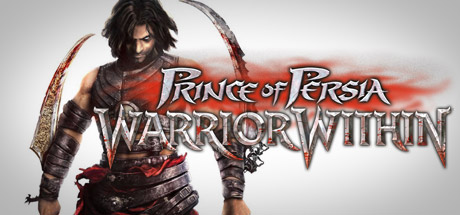
Then there’s Prince of Persia: Warrior Within, hunted by Dahaka—an “immortal incarnation of Fate” who doesn’t kill you once, but repeats the killing, again and again, until you learn to move with time instead of against it. The player review says: “Dahaka chase is still as goated as it was before…”—that breathless, visceral panic isn’t just gameplay tension. It’s the exact sensation of Haruka running from her own reflection in a thousand mirrors, each one showing a different death, a different surrender. Both works weaponize persistence: time isn’t a river here. It’s a cage with doors that only open when you stop fighting the lock.
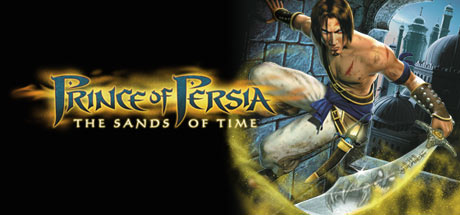
And Prince of Persia: The Sands of Time, where a young prince draws power from a dagger that rewinds seconds, minutes, lifetimes—not to win, but to unmake consequence. The description frames it as legend spun “in an ancient tongue… ruled by deceit,” but the player review nails its soul: “The tactical platforming that is satisfying due to the locked directions… yet still challenging.” That constraint—locked directions, finite rewinds, irreversible costs—is Noein’s rhythm too. Every rewind in Persia has weight. Every dimensional jump in Noein carries the gravity of a child realizing her laughter might already be a memory in another world.
Chains, though? Its description calls it “a relaxing arcade match 3 casual game.” Its review calls it “connect 4 in nutshell.” There’s no resonance here—no shared dread, no layered time, no ontological stakes. Its score (57) and dimensions (“Emotional Narrative, Survival & Crafting”) don’t align. It’s a bubble-popping interlude, not a companion piece. It belongs elsewhere.
This pairing speaks to the viewer who cries not at funerals, but at crossroads—who feels time as pressure in their temples, who stares at old photos and wonders which version of themselves is real, and whether “real” even matters when love persists across fractures. It’s for the player who replays Warrior Within after a decade not for nostalgia, but because the chase still fits their bones. For the one who watches Haruka press her palm to the rain-streaked glass—not to escape, but to feel the cold proof that this moment, right now, is real, even if it’s already unraveling. That’s the quiet, fierce heart of it all: not saving the world, but holding one truth tenderly, fiercely, across every broken mirror—and knowing, deep in the marrow, that tenderness is the only thing that doesn’t collapse under the weight of infinity.
🎮7 Games That Match the Vibe
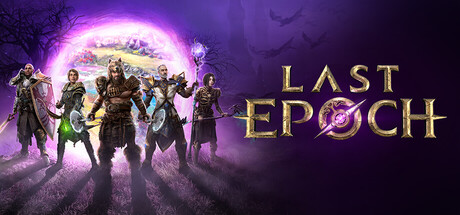
Match Dimensions Explained
❓Frequently Asked Questions
Why is Prince of Persia: The Sands of Time listed as similar to Noein?
Because both hinge on time manipulation as a core emotional and narrative device—not just a gimmick. In Sands of Time, the Prince rewinds moments after mistakes (like falling or mis-timing a jump), mirroring Noein’s obsession with branching timelines and the weight of choice—especially in scenes where he hesitates before pulling the dagger’s trigger, much like Haruka’s pivotal decisions across realities.
Is there a Noein anime game adaptation?
No—there’s never been an official Noein anime tie-in game. But if you’re craving that same blend of metaphysical stakes and grounded emotional tension, BioShock Infinite nails it: Booker’s journey through Columbia’s fractured realities, especially the tear-filled confrontation with Elizabeth in the lighthouse, echoes Noein’s themes of identity collapse and parallel selves far more than any licensed adaptation ever could.
How does Prince of Persia: Warrior Within compare to BioShock Infinite for Noein fans?
Both hit that ‘haunted by time’ vibe hard—but differently. Warrior Within’s Dahaka chase sequences force split-second time-dodging while your past literally hunts you down (like when the Dahaka bursts through walls mid-combo), whereas BioShock Infinite layers time paradoxes into dialogue and setting—think the Songbird cage scene where Elizabeth’s bleeding hands reveal truths across timelines. If you loved Noein’s dread + revelation rhythm, Warrior Within gives visceral urgency; Infinite gives cerebral unraveling.
What’s the best game like Noein if I want that melancholy, rain-soaked late-night introspection?
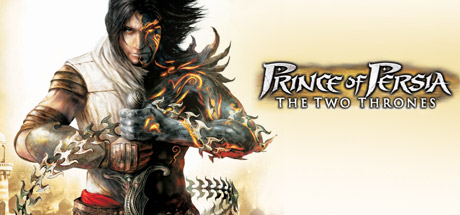
Prince of Persia: The Two Thrones—hands down. The Prince’s internal struggle with the Dark Prince (that whispering, dagger-wielding alter ego) mirrors Haruka’s duality, and the Babylon siege sequences—rain slicking crumbling palaces, torchlight flickering on bloodstained sand—create the exact brooding, emotionally saturated atmosphere Noein fans seek. Even the player review nods to its lasting childhood resonance, which tracks with Noein’s bittersweet coming-of-age ache.