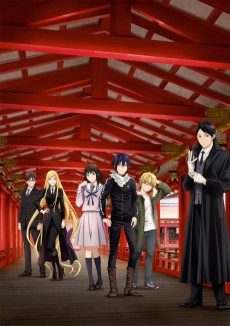
Noragami Aragoto
The second season of Noragami.
Life for minor god Yato isn't getting any easier. He's still broke, shrineless, and his partner-slash-sword-regalia has zero respect for him. Worse yet, Bishamon, one of the deadliest war gods, is after his life. Blaming him for the death of her past regalia, she won't stop until she kills him. But there's more to that story than she could ever realize. And as if that's not bad enough, there's someone working against her behind the scenes! Can Yato take on a god as powerful as Bishamon? Or will things take a more dangerous turn?
Between all of this godly drama and even more dangerous battles, Yato still needs to figure out how to help Hiyori. But all options lead to losing her, and he's not willing to make that choice – no matter what.
Five yen doesn't even begin to cover his trouble!
(Source: Funimation)
📺Anime Details
📝Editorial Analysis
Rain slicks the pavement of Tokyo’s back alleys like spilled ink, and Yato’s sandals slap against wet concrete as he sprints—not with grace, but with desperation. His cheap umbrella flips inside out. A shuddering breath catches in his throat. Behind him, Bishamon’s divine aura doesn’t roar—it compresses the air, thick and silent as a blade drawn across bone. He doesn’t look back. He can’t. Not because he’s fearless, but because every glance risks seeing what he already knows: that her hatred is real, that his past is a wound she keeps reopening, and that the god who sells five-yen blessings has no shrine, no followers, no safety—just a sword who calls him “trash” and a girl who still believes in him when he doesn’t believe in himself.
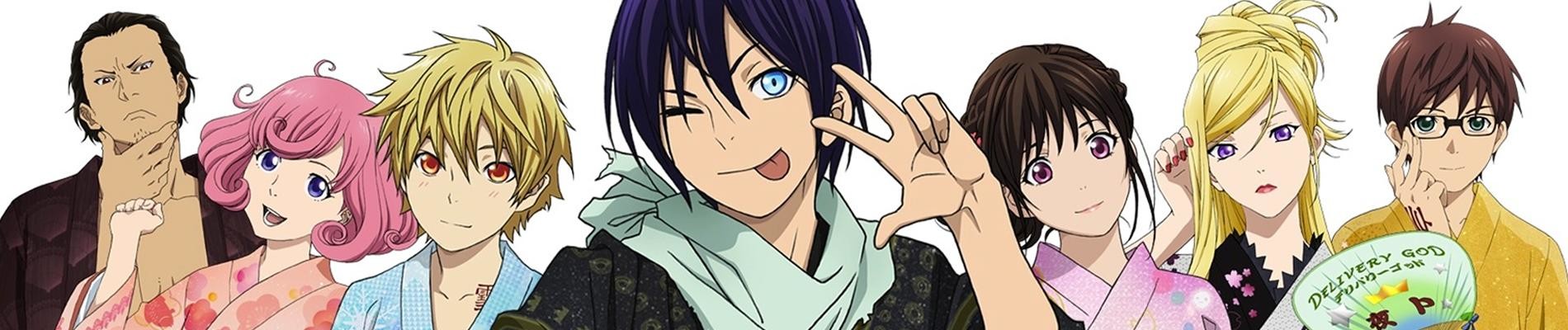
That’s the heart of Noragami Aragoto: not spectacle, but weight. It’s the ache of being seen—but only as a weapon, a mistake, a ghost haunting someone else’s grief. The urban fantasy isn’t about cool powers or flashy youkai battles; it’s about how divinity wears thin under rent payments and broken promises. The comedy doesn’t undercut the pain—it anchors it. When Yato trips over his own sandals mid-sermon to a stray cat, or when Yukine mutters “pathetic” while polishing a rusted blade, the laughter lands because the stakes are so devastatingly human. This isn’t myth as grand allegory—it’s myth as scar tissue. Gods bleed. Regalia fracture. Loyalty isn’t earned in victory—it’s forged in the quiet, unglamorous act of showing up, again and again, for someone who refuses to be left behind.
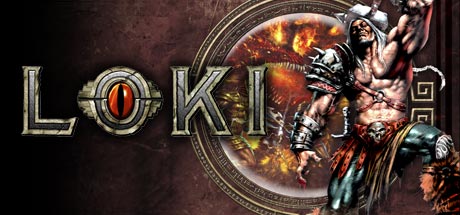
Loki, with its “fantasy voyage through the great mythologies” and “Action Spectacle,” shares that same raw, destabilizing energy—but not in how it depicts gods, rather in how it fractures them. Like Yato, Loki’s heroes aren’t paragons; they’re volatile, contradictory, burdened by legacies they didn’t choose. The player review calling it “similar to Diablo… filled with annoying glitches and game crashes” unintentionally mirrors Noragami Aragoto’s aesthetic: both feel unstable, deliberately unpolished—not as flaws, but as texture. That jank? It echoes Yato’s fraying control, the way his divine form flickers when he’s exhausted or ashamed. The anticlimactic ending the reviewer laments? It resonates with Aragoto’s refusal to grant catharsis on demand—Bishamon’s rage doesn’t vanish with a final blow; it lingers, unresolved, like smoke after fire.
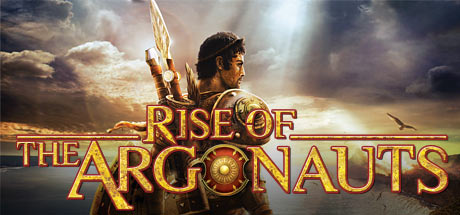
Rise of the Argonauts, where Jason vows “to do anything to restore her life” after his fiancé’s murder, hits the same emotional nerve—not in scale, but in motivation. Both Yato and Jason move through worlds saturated with divine consequence, yet their driving force is stubbornly, achingly mortal: love that persists beyond death, guilt that reshapes identity, vengeance that masquerades as justice. The player review praising how it “does ancient history right” hints at something deeper: this isn’t about accuracy—it’s about gravity. Like Aragoto, Rise of the Argonauts treats myth not as backdrop, but as psychological architecture. Every choice Jason makes bends under the weight of loss—just as every decision Yato makes bends under the weight of what he failed to protect.
And then there’s Jade Empire™: Special Edition, where you “step into the role of an aspiring martial-arts master” and choose between “the open palm or the closed fist.” Its “Emotional Narrative” dimension aligns with Aragoto’s core tension: morality isn’t abstract—it’s embodied, tested in split-second choices that cost something real. The player’s struggle to launch the game (“copy and paste ‘steam.dll’”) feels weirdly kinesthetic—like Yukine’s early resistance to Yato’s guidance, or Bishamon’s rigid adherence to doctrine. Both require work, friction, persistence—not to reach perfection, but to endure. That effort is the point.
This pairing isn’t for fans of clean power fantasies or tidy resolutions. It’s for the ones who pause mid-episode when Yato kneels in the rain just to fix a child’s broken toy—not because it matters to the plot, but because it matters to him. It’s for players who replay a boss fight not to win faster, but to see if they can land one more parry before the screen fades to black. They’re the ones who feel the hollowness behind a god’s laugh, the tremor in a regalia’s voice, the exhaustion in a hero’s silence—and recognize it not as weakness, but as the only honest kind of strength.
🎮8 Games That Match the Vibe
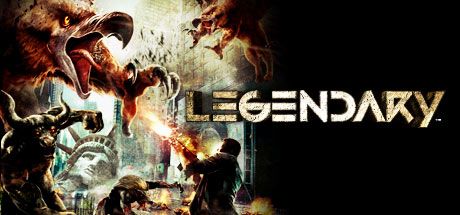
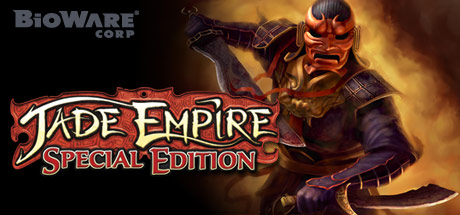
Match Dimensions Explained
❓Frequently Asked Questions
Why is Rise of the Argonauts recommended for Noragami Aragoto fans?
Because both lean hard into mythic tragedy with visceral action—Jason’s grief-fueled quest to resurrect his murdered fiancée mirrors Yato’s desperate, emotionally raw journey to earn recognition and protect Hiyori. The game’s combat has that same weighty, spectacle-driven flair as Noragami’s divine battles (like Yato vs. Yukine in the shrine arc), and it nails the ‘ancient world with modern emotional stakes’ vibe reviewers praised: ‘If you love games based on ancient history this one does it right…’
Is there a Noragami Aragoto video game adaptation?
No—there’s never been an official Noragami game, anime or manga adaptation. But fans who love its blend of Shinto lore, morally grey gods, and stylish supernatural fights often reach for titles like Legendary, where a thief named Deckard unleashes eldritch myth-beasts from Pandora’s Box—think Yukine’s unstable power or Bishamon’s cursed blades, but with PS3-era body horror and killer animations reviewers called ‘incredible… better than most modern games.’
How does Jade Empire compare to Rise of the Argonauts for Noragami-style storytelling?
Rise leans into mythic action-spectacle (Jason’s sword-swinging vengeance, big set-pieces), while Jade Empire goes deeper into Noragami’s emotional narrative layer—like choosing between the Open Palm (compassion, like Yato’s hidden kindness) or Closed Fist (rigidity, like Kazuma’s early loyalty code). Its martial-arts mastery system even echoes how characters evolve through relationships: ‘Fantastic game,’ says one player, though it took Reddit workarounds to run smoothly.
What’s the best game like Noragami Aragoto if I want that melancholy-but-hopeful godly vibe?
Jade Empire™: Special Edition—it’s the only match with ‘Emotional Narrative’ as a core dimension, and its themes of spiritual duty, fractured identity, and quiet redemption hit the same notes as Yato’s arc: a minor deity seeking purpose amid cosmic indifference. You’ll feel that Noragami warmth in moments like guiding your master’s ghost or choosing mercy over dogma—exactly why players call it ‘fantastic’ despite the janky launch.