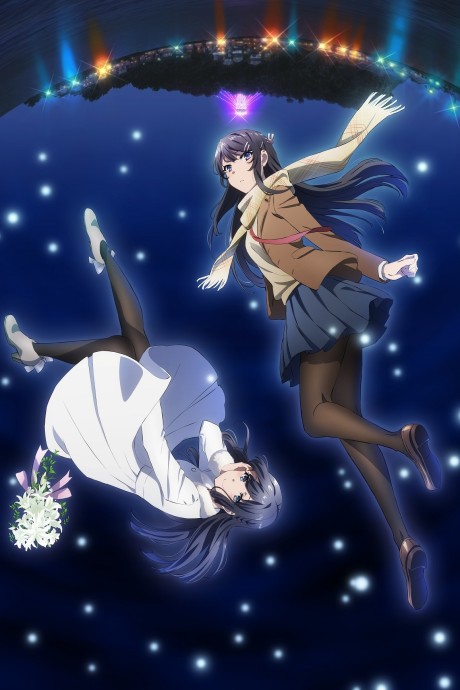
Rascal Does Not Dream of a Dreaming Girl
In Fujisawa, where the skies are bright and the seas glisten, Sakuta Azusagawa is in his second year of high school. His blissful days with his girlfriend and upperclassman, Mai Sakurajima, are interrupted with the appearance of his first crush, Shouko Makinohara. For reasons unknown, he encounters two Shouko's: one in middle school and another who has become an adult.
As Sakuta finds himself helplessly living with the Shouko's, the adult Shouko leads him around by the nose, causing a huge rift in his relationship with Mai.
In the midst of all of this, he discovers that the middle school Shouko is suffering from a grave illness and his scar begins to throb...
(Source: Aniplex USA)
📺Anime Details
📝Editorial Analysis
The salt wind off Fujisawa’s coast hits like a memory you didn’t ask for—warm, insistent, carrying the ghost of sunscreen and seaweed. Sakuta stands on the train platform, backpack slung low, watching the adult Shouko walk ahead of him in heels that click like clockwork on concrete. Her posture is calm. Her voice, when she turns, is light—but her eyes don’t blink long enough. That tiny lag—the way time stutters around her—is the first real crack in the world’s surface. Not a scream, not a collapse, just this quiet, unbearable slippage, as if reality were thin paper held over a flame.
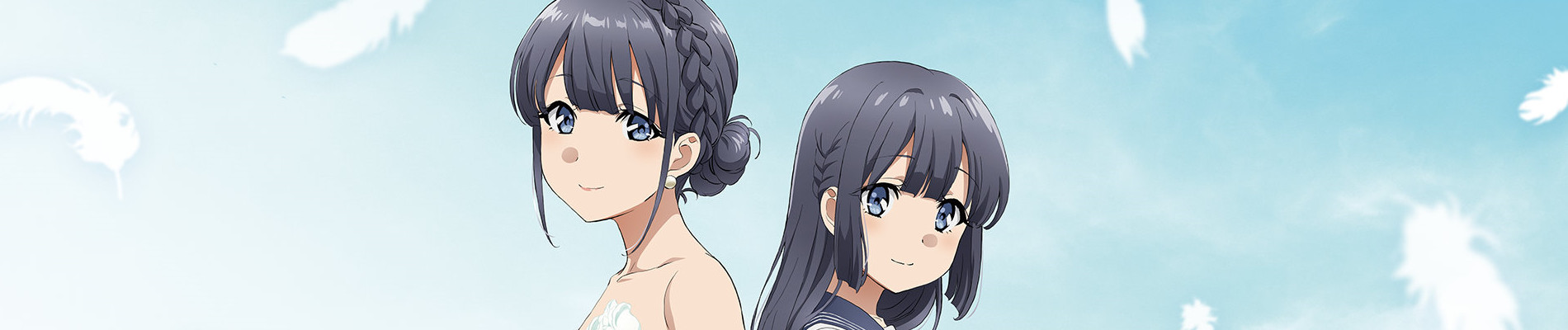
What makes Rascal Does Not Dream of a Dreaming Girl ache so deeply isn’t its tragedy—it’s how tenderly it treats time as a wound that keeps scabbing over wrong. It doesn’t shout about loss; it lingers in the space between Sakuta’s fingers brushing a middle-school Shouko’s wrist and the same gesture, years later, falling short because her hand is now too still, too known. The urban fantasy isn’t in magic spells or glowing runes—it’s in the uncanny weight of a hallway that smells exactly like last summer, or the way Mai’s laugh echoes just a half-second too late in Sakuta’s head. This is grief disguised as routine, love measured in missed bus schedules, identity fraying at the edges where memory and presence refuse to align. You don’t feel sad watching it—you feel vertiginous, like standing on a balcony with no railing, staring down at versions of yourself who made different choices and somehow ended up in the same hollow.
That vertigo? It’s why BioShock Infinite resonates—not because of Columbia’s spires or Songbird’s wings, but because Booker DeWitt walks through a city built on fractured causality, where every choice bleeds into another life, another self. The description says he’s “indebted to the wrong people, with his life on the line”—but the player review cuts deeper: “I know that some people are still bitter about the Bioshock Infinite we could have gotten.” That phrase—we could have gotten—is pure Sakuta. It’s the whisper behind every “what if” Sakuta swallows, every glance he gives Mai knowing the cost of holding on. Both stories weaponize hope as both lifeline and liability, making you question whether love is salvation—or just the most beautiful trap time ever built.
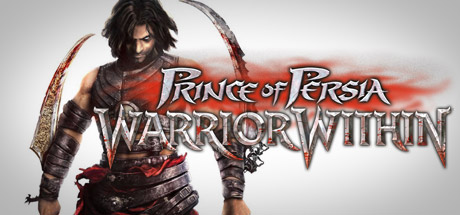
Then there’s Prince of Persia: Warrior Within, where the Prince is hunted by Dahaka—an “immortal incarnation of Fate.” The description doesn’t say guilt, but the player review does: “Dahaka chase is still as goated as it was before.” That breathless, relentless pursuit mirrors Sakuta’s own race—not against a monster, but against the slow erosion of meaning, against the dread that every kindness he offers Shouko might be another stitch in the unraveling of someone else’s timeline. Dahaka doesn’t roar; he appears, always just behind, always inevitable—like the realization that Sakuta’s care for Shouko is also, unavoidably, an act of erasure.
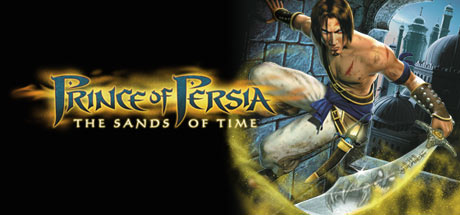
And Prince of Persia: The Sands of Time, where a young prince draws power from a dagger that bends time itself. The description calls it “a time borne by blood and ruled by deceit”—and the player review praises its “tactical platforming… satisfying due to the locked directions.” That tension—between control and constraint, between rewinding and repeating—is Sakuta’s entire emotional architecture. He doesn’t wield a dagger, but he carries the weight of undoing, of second chances that never quite land right. Every time he chooses to stay with Shouko, he locks himself into a path where Mai’s absence grows heavier—not louder, just denser, like fog settling in the lungs.
This pairing isn’t for fans of “sad stories” or “time travel plots.” It’s for the person who replays the final five minutes of Rascal Does Not Dream of a Dreaming Girl not to cry, but to verify—to check if the light on Sakuta’s face really does change when he looks at the sea one last time. It’s for the player who, after finishing Warrior Within, sits motionless for ten minutes, staring at the pause screen, because Dahaka’s footsteps haven’t faded yet—and neither has the echo of their own heartbeat syncing to them. It’s for anyone who’s ever loved someone so fiercely they started measuring time not in seconds, but in how much silence they could bear before speaking again. That’s the shared pulse: tenderness, dread, resistance, longing, grace—all folded into the same trembling hand reaching out, knowing it might pass right through.
🎮6 Games That Match the Vibe

Match Dimensions Explained
❓Frequently Asked Questions
Why does BioShock Infinite keep coming up in Rascal Does Not Dream of a Dreaming Girl discussions?
Because both hinge on gut-punch revelations about time, memory, and identity—like Booker DeWitt’s drowning-as-atonement mirroring Sakuta’s realization that the 'girl' he’s saving is already gone, layered with guilt and fractured timelines. The lighthouse reveal in BioShock Infinite hits with the same emotional weight as the school rooftop confrontation where Mai’s illness collapses into Sakuta’s own unresolved trauma.
Is there a Prince of Persia game adapted from Rascal Does Not Dream of a Dreaming Girl?
No—there’s no official adaptation, but fans often draw parallels between *Prince of Persia: Warrior Within* and *Rascal* because of how both use relentless pursuit (Dahaka chasing the Prince / Sakuta chasing fading realities) to externalize inner turmoil. That Dahaka chase sequence? It’s like watching Sakuta sprint through collapsing hallways in the dream world—same breathless, existential dread.
How is Prince of Persia: The Sands of Time different from Rascal Does Not Dream of a Dreaming Girl in tone?
While both explore time manipulation and regret, *Sands of Time* leans into wry, self-aware charm—the Prince’s snarky narration and playful dagger mechanics contrast sharply with *Rascal*’s quiet melancholy and heavy silence before Mai’s hospital scenes. Still, when you rewind after failing a platforming jump in *Sands*, it feels emotionally adjacent to Sakuta desperately rewinding his choices to save her.
What’s the best game like Rascal Does Not Dream of a Dreaming Girl if I want that bittersweet, slow-burn longing vibe?
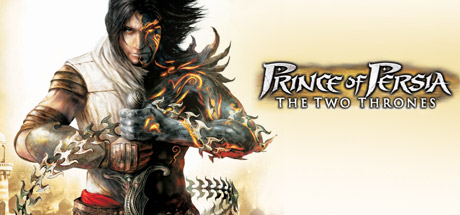
Go straight to *Prince of Persia: The Two Thrones*—especially the split-personality combat where the Dark Prince emerges mid-fight, echoing Sakuta’s dual role as protector and unwitting catalyst. That moment Kaileena sacrifices herself while the Prince watches, voice breaking? It lands with the same aching tenderness and inevitability as Sakuta holding Mai’s hand in the final classroom scene.